2017 archives
Discussion Group 102: September 19 – 28, 2017
"Some of the best memories of my childhood are memories of my siblings and me entering a sort of united hysteria while we were being yelled at. Within that hysteria, no one could get at us. We were freely improvising within a situation we could not control, we were turning language against the lecture. It was so necessary to us that I knew I had to preserve it here. The voice I use in Priestdaddy is not one that I specially developed for this book — it is the voice of those memories, of that first awareness that laughter was on our side." — Patricia Lockwood as interviewed by Tara Bagnola and Charlotte Bruell for Medium
 This year, acclaimed poet, essayist and Twitter celeb
Tricia Lockwood published her memoir
Priestdaddy.
In just ten days, this group will not be able
to read the entire memoir, but many sections of it, closely together.
We'll take Tricia's own word quoted above as a lens through which to
read the memoir, reveling in and digging deeper into this book's unique
tone(s), from the high holy to the farcical to the deeply affecting to
what some would deem the profane, and all the way back and through and
around again. We'll bring in Tricia's poetry and even some of her
tweets (!) to our close reading too. On the second to last day of our
group Tricia herself will visit the KWH in a free and open to all
reading. If you're not able to attend in person, you can live-stream the
reading from home. We'll discuss the reading together on the final day
of the group as a wrap-up.
This year, acclaimed poet, essayist and Twitter celeb
Tricia Lockwood published her memoir
Priestdaddy.
In just ten days, this group will not be able
to read the entire memoir, but many sections of it, closely together.
We'll take Tricia's own word quoted above as a lens through which to
read the memoir, reveling in and digging deeper into this book's unique
tone(s), from the high holy to the farcical to the deeply affecting to
what some would deem the profane, and all the way back and through and
around again. We'll bring in Tricia's poetry and even some of her
tweets (!) to our close reading too. On the second to last day of our
group Tricia herself will visit the KWH in a free and open to all
reading. If you're not able to attend in person, you can live-stream the
reading from home. We'll discuss the reading together on the final day
of the group as a wrap-up.
We will make excerpts from the memoir available to participants in this group, but strongly encourage you to purchase your own copy to enjoy reading the entire text, and to support Tricia!
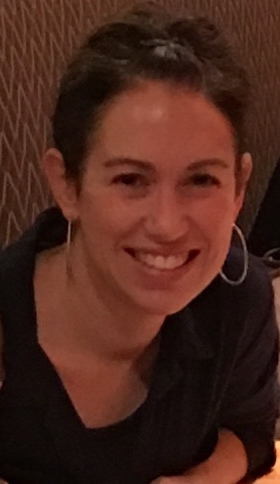
Lily Applebaum works at the Kelly Writers House as the Assistant to Faculty Director Al Filreis. She received her BA in English and Environmental Studies in 2012 from Penn, and the 2017/2018 school year marks her 10th (!) year of involvement with this community. Through her work at KWH, she coordinates the Kelly Writers House Fellows program, serves as a TA for ModPo, and for 8 years coordinated the Brodsky Gallery in the first floor of the house, among many other projects. If you see her at the House, say hello and ask her about today's weather.
Discussion Group 103: October 2 – 11, 2017
 MK Asante has been called “the voice of a new generation” by Essence
magazine and is the youngest tenured professor at Morgan State
University. He is a best selling author, award winning filmmaker, and
recording artist. But he wasn’t always this man. In his memoir, Buck,
Asante shares with us his childhood growing up a black boy, a young
buck, in North Philadelphia. Asante’s book makes us question how we
treat the youngest members of our society, how we address mental illness
and what schools do and don’t provide for the children who walk their
halls.
MK Asante has been called “the voice of a new generation” by Essence
magazine and is the youngest tenured professor at Morgan State
University. He is a best selling author, award winning filmmaker, and
recording artist. But he wasn’t always this man. In his memoir, Buck,
Asante shares with us his childhood growing up a black boy, a young
buck, in North Philadelphia. Asante’s book makes us question how we
treat the youngest members of our society, how we address mental illness
and what schools do and don’t provide for the children who walk their
halls.
In this group we’ll explore Asante’s journey from vulnerable child to powerful writer. We’ll look at it through the lens of resilience theory, the power of language and voice and the role a teacher and school can have on the development of our next generation. We can all think back and recognize the people and experiences that helped to define our path in life. By the end of this discussion I hope you will have a clearer understanding of the effects of institutional racism and trauma on children and the ways that all adults can help children to define their path and find their voice.
Later in October, Asante will visit in Philadelphia for a few different events for educators that participants will have an opportunity to join if they are local to the city.
**Please note: participants will need to have access to their own copy of Buck**
Allaire Wohlgemuth is a Licensed Clincal Social Worker in Philadelphia. She graduated from Swarthmore College where she double majored in Elementary Education and Sociology. She also attended Bryn Mawr Graduate School of Social Work and Social Research where she obtained a Master of Social Service. Allaire has worked as a teacher and social worker with families and children in Philadelphia for over 20 years. She is currently the Education Programs Manager at Safe Kids Stories and has a private therapy practice where she specializes in work with adult victims of childhood sexual abuse.
Discussion Group 104: October 23 – November 20, 2017
 Robert Frost famously observed that "Some say the world will end in
fire, / Some say in ice." In the early 1960s — influenced by the spectre
of the Cuban Missle Crisis and his own harrowing POW experience as a
survivor of the firebombing of Dresden — Kurt Vonnegut imagined Frost's
latter apocalyptic option in his much-beloved novel, Cat's Cradle
(1963).
Robert Frost famously observed that "Some say the world will end in
fire, / Some say in ice." In the early 1960s — influenced by the spectre
of the Cuban Missle Crisis and his own harrowing POW experience as a
survivor of the firebombing of Dresden — Kurt Vonnegut imagined Frost's
latter apocalyptic option in his much-beloved novel, Cat's Cradle
(1963).
Graham Greene would hail the book as "one of the three best novels of the year by one of the most able living writers," and in 1971 the University of Chicago would accept the novel as Vonnegut's masters thesis, finally granting him the degree in Anthropology that he'd abandoned twenty-four years earlier. Vonnegut himself, in a 2000 interview with the Harvard Crimson, named the book as his "flagship."
The book's origins go almost as far back, dating from the author's time as a public relations agent for GE in Schenectady, NY, where he witnessed the postwar pursuit of "pure science" firsthand. Irving Langmuir, GE's head scientist, first came up with the notion of water whose crystalline structure caused it to solidify at room temperature, and he tried to interest H.G. Wells in the concept during a visit to the plant in the 1930s. Wells didn't take the bait, but decades later Vonnegut would, crafting the novel that grapples with weighty issues (nationalism, faith, morality, the growing role of technology in our lives) while maintaining an irreverent, engaging perspective.
Whether you're a dedicated Vonnegut fan or this is your first time reading his work, I hope you'll enjoy the opportunity to explore this 20th century classic, which takes on an eerie resonance in light of current events.
**Please note: participants will need to have access to their own copy of Cat's Cradle**
Michael Hennessey is the editor of both PennSound (an online poetry audio archive) and (with Julia Bloch) Jacket2 (a journal of poetry and poetics), both of which are part of UPenn's Center for Programs in Contemporary Writing. He also teaches at the University of Cincinnati on a variety of topics from the Beats to Baseball Literature, including a popular semester-long course on Kurt Vonnegut's life and writing. His critical writing has appeared in The Journal of Electronic Publishing, Interval(le)s, English Studies in Canada, MELUS, Jacket2, as well as in several books; creative work has been published in EOAGH, Jacket, Cross Cultural Poetics, Zen Monster, Moss Trill, Jupiter88, Elective Affinities, and Noon, among others.
Discussion Group 105: November 7 – 16, 2017
 Which poet is best
known for writing sonnets? If the first poet that comes to mind is
"William Shakespeare," then this workshop is for you. Many contemporary
black poets have written sonnets, including Harryette Mullen, who
parodied Shakespeare's Sonnet 130 in her work "Dim Lady."
Which poet is best
known for writing sonnets? If the first poet that comes to mind is
"William Shakespeare," then this workshop is for you. Many contemporary
black poets have written sonnets, including Harryette Mullen, who
parodied Shakespeare's Sonnet 130 in her work "Dim Lady."
According to many critics, "page" poetry is formal and canonical, what we should be learning about in English class, while "slam" poetry is amateurish, lacking structure and craft. This critique often invalidates the work of young writers with marginalized identities, while uplifting the work of older, white writers. Based on this definition, Shakespeare is a "page" poet for being an influential white man, despite being a playwright who wrote work to be performed on stage.
In this 10-day workshop, we will explore Black poets who write in form, paying special attention to those who have been pigeon-holed as "slam" poets. We will discuss how form influences the content of their work and the sociopolitical implications of Black writers using historically white forms. Forms to be discussed include the sestina, the pantoum, and the elegy.
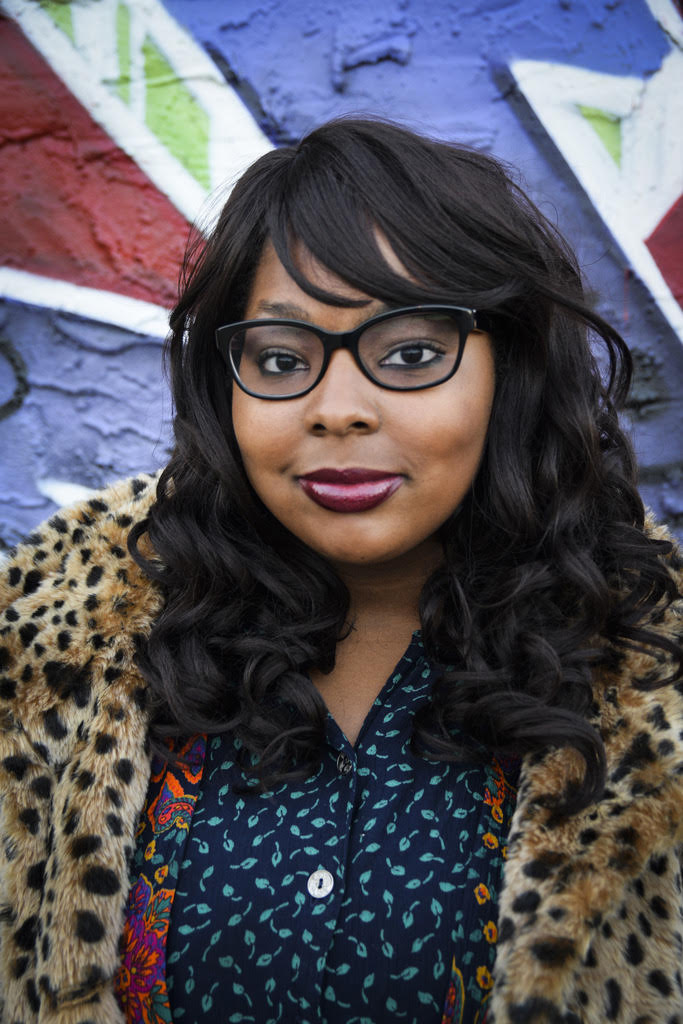
Lauren T. Yates is a writer from Oceanside, CA. In 2012, Lauren earned her B.A. in English with a Creative Writing Emphasis from the University of Pennsylvania. Her work has appeared, or is forthcoming, in ANOMALY, Connotation Press: An Online Artifact, and Rust + Moth. For more information, visit laurentyates.com.
Discussion Group 106: December 3 – 12, 2017
 2017 has been engulfed in conversations about identity and swelled in
sociopolitical discussions about the importance, and for some the
impairment, of identity politics. Curiously absent from these
conversations about identity is whiteness. Through critical reading and
dialogue, this group will look at a range of essays, letters, and short
stories to analyze the construction of white identity in America—what
forces have shaped it and what are its dominant characteristics? What is
the theoretical definition of identity politics and how has the term
been mis/employed and dismantled from its roots in black female
intellectualism? By answering these questions, we can move closer to
defining whiteness, and perhaps more, how whiteness prompts reckonings
with beliefs rooted in white supremacy, white fragility/victimhood, and
white guilt. Finally, we will urgently seek to understand how authors of
past and present frame whiteness as an identity that necessitates a
transformation of shame to one of responsibility.
2017 has been engulfed in conversations about identity and swelled in
sociopolitical discussions about the importance, and for some the
impairment, of identity politics. Curiously absent from these
conversations about identity is whiteness. Through critical reading and
dialogue, this group will look at a range of essays, letters, and short
stories to analyze the construction of white identity in America—what
forces have shaped it and what are its dominant characteristics? What is
the theoretical definition of identity politics and how has the term
been mis/employed and dismantled from its roots in black female
intellectualism? By answering these questions, we can move closer to
defining whiteness, and perhaps more, how whiteness prompts reckonings
with beliefs rooted in white supremacy, white fragility/victimhood, and
white guilt. Finally, we will urgently seek to understand how authors of
past and present frame whiteness as an identity that necessitates a
transformation of shame to one of responsibility.
Victoria Ford is a poet and essayist living in Washington, D.C. She graduated from the University of Pennsylvania with a B.A. in English. While at Penn, Victoria was a program assistant at the Kelly Writer's House, an intern at Makuu: Black Cultural Center, and a member of the Excelano Project. Her writing has appeared in Connotations Press, LitHub, and The Nation.
Discussion Group 107: December 4 – 18, 2017 [break] January 3 – 17, 2018
This group will read and discuss a range of poems by Bernadette Mayer. The session will be conducted inside the ModPo site. Those not already enrolled in ModPo can do so here: coursera.org/learn/modpo.
Al Filreis is Kelly Professor of English, Faculty Director of the Kelly Writers House, Director of the Center for Programs in Contemporary Writing, Co-Director of PennSound, Publisher of Jacket2 magazine, and creator and lead teacher of ModPo, a massive open online course on modern and contemporary American poetry. Among his books are Modernism from Right to Left, Stevens and the Actual World, and Counter-Revolution of the Word: The Conservative Attack on Modern Poetry, 1945-60.
Discussion Group 108: February 1 – March 1, 2018
 This winter, Modern and Contemporary American Poetry
(ModPo)'s Teacher Resource Center coordinators and ModPo TAs, erica
kaufman and Max McKenna, will lead a month-long discussion on poetry and
pedagogy. Building off of our rich conversations in the TRC, we will
take a closer look at some of the concepts, poets, and teachers that
inform ModPo's pedagogical approach. Some of the thinkers we'll explore
will include: Joan Retallack, Juliana Spahr, John Cage, Charles
Bernstein, and Amiri Baraka. We welcome all interested participants--you
do not need to be a teacher to participate in this group. We encourage
everyone to contribute to and join us in the TRC this fall in
preparation for this off-season discussion. As always, any and all
suggestions of readings and topics are appreciated! The session will be
conducted inside the ModPo site. Those not already enrolled in ModPo can
do so here: coursera.org/learn/modpo.
This winter, Modern and Contemporary American Poetry
(ModPo)'s Teacher Resource Center coordinators and ModPo TAs, erica
kaufman and Max McKenna, will lead a month-long discussion on poetry and
pedagogy. Building off of our rich conversations in the TRC, we will
take a closer look at some of the concepts, poets, and teachers that
inform ModPo's pedagogical approach. Some of the thinkers we'll explore
will include: Joan Retallack, Juliana Spahr, John Cage, Charles
Bernstein, and Amiri Baraka. We welcome all interested participants--you
do not need to be a teacher to participate in this group. We encourage
everyone to contribute to and join us in the TRC this fall in
preparation for this off-season discussion. As always, any and all
suggestions of readings and topics are appreciated! The session will be
conducted inside the ModPo site. Those not already enrolled in ModPo can
do so here: coursera.org/learn/modpo.
Max McKenna is a six-time ModPo TA and has hosted several KWH book groups across multiple genres and media. He received his BA in English from the University of Pennsylvania and his MA from the University of Chicago in 20th Century American Literature. He lives and works in Chicago, where he also holds regular ModPo meet ups.
erica kaufman is the author of INSTANT CLASSIC (Roof Books, 2013) and censory impulse (Factory School, 2009). she is also the co-editor of NO GENDER: Reflections on the Life and Work of kari edwards (Venn Diagram, 2009), and of Adrienne Rich: Teaching at CUNY, 1968-1974 (Lost & Found: The CUNY Poetics Document Initiative, 2014). Prose and critical work can be found in or is forthcoming in: The Color of Vowels: New York School Collaborations (ed. Mark Silverberg, Palgrave MacMillan, 2013), the MLA Guide to Teaching Gertrude Stein (eds. L. Esdale and D. Mix), and in THE SUPPOSIUM: A Wager (ed. Joan Retallack, Litmus Press, 2018). kaufman is the Director of Faculty and Curriculum Development for the Bard College Institute for Writing & Thinking and teaches in the Master of Arts in Teaching and First Year Seminar Programs.
Discussion Group 109: May 9 – May 18, 2018
This group will pair and discuss two short stories, to be announced soon. Text of the stories will be provided to participants of the group. Each story will be discussed an analyzed on its own, but also each story will influence how we read and make meaning from the other story. A great group for all who love the form of the short story, regardless of whether or not you're familiar with the work of the two authors we'll be comparing here!
Al Filreis is Kelly Professor of English, Faculty Director of the Kelly Writers House, Director of the Center for Programs in Contemporary Writing, Co-Director of PennSound, Publisher of Jacket2 magazine, and creator and lead teacher of ModPo, a massive open online course on modern and contemporary American poetry. Among his books are Modernism from Right to Left, Stevens and the Actual World, and Counter-Revolution of the Word: The Conservative Attack on Modern Poetry, 1945-60.
David Roberts is a member of the Kelly Writers House Advisory Board, a denizen of the KWH book groups and when he is not reading, works in Manhattan in the investment business. He is a 1983 graduate of the University Of Pennsylvania.