

FEBRUARY 24, 2022: A CONVERSATION WITH FASHION CRITIC RACHEL SEVILLE TASHJIAN
- watch: a video recording of this program via our YouTube channel
Rachel Seville Tashjian (C'11) is the fashion critic at GQ and the creator of the newsletter Opulent Tips. She was formerly the deputy editor of Garage Magazine and a writer at Vanity Fair.
FEBRUARY 10, 2022: "PRACTICING COOPERATION: MUTUAL AID BEYOND CAPITALISM"
- watch: a video recording of this program via our YouTube channel
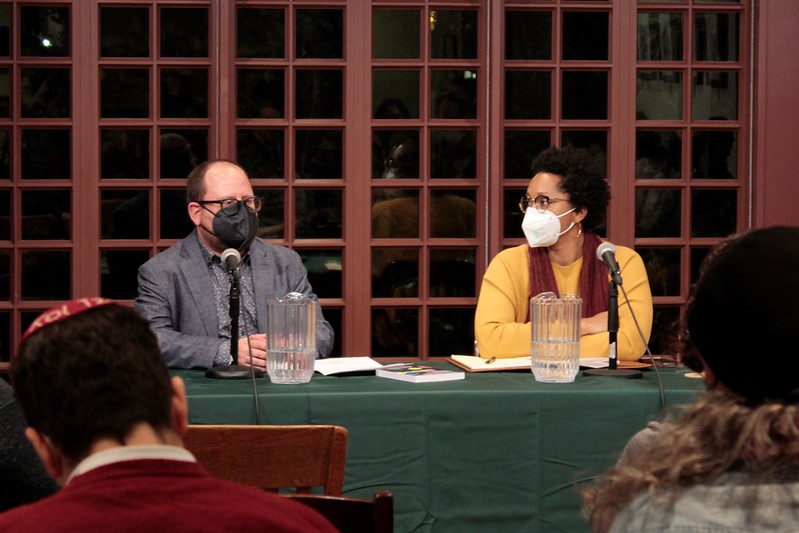
From the crises of racial inequity and capitalism that inspired the Black Lives Matter movement and the Green New Deal to the coronavirus pandemic, stories of mutual aid have shown that, though cooperation is variegated and ever-changing, it is also a form of economic solidarity that can help weather contemporary social and economic crises. Addressing this theme, Andrew Zitcer's new book Practicing Cooperation delivers a trenchant and timely argument that the way to a more just and equitable society lies in the widespread adoption of cooperative practices. But what renders cooperation ethical, effective, and sustainable? Providing a new conceptual framework for cooperation as a form of social practice, Practicing Cooperation describes and critiques three U.S.-based cooperatives. Through these case studies, Zitcer illuminates the range of activities that make contemporary cooperatives successful: dedicated practitioners, a commitment to inclusion, and ongoing critical reflection. He asserts that economic and social cooperation must be examined, critiqued, and implemented on multiple scales if it is to combat the pervasiveness of competitive individualism.
Andrew Zitcer is an associate professor of Urban Strategy at Drexel University. He studies cooperative social and economic practices as well as the arts as a vehicle for community transformation. He is also the co-founder of the Rotunda, a community arts venue, and Kol Tzedek Synagogue, a progressive Jewish congregation.
Jamila Medley is an organizational development consultant, leadership coach, and educator/advocate for the solidarity economy. From 2012-2021 she served in governance roles and then as executive director of the Philadelphia Area Cooperative Alliance (PACA). Jamila, a UPenn alum, lives in Philadelphia's Mt. Airy neighborhood and serves on the boards of directors of Food Co-op Initiative, Movement Alliance Project, All Together Now PA, and the Independence Public Media Foundation.
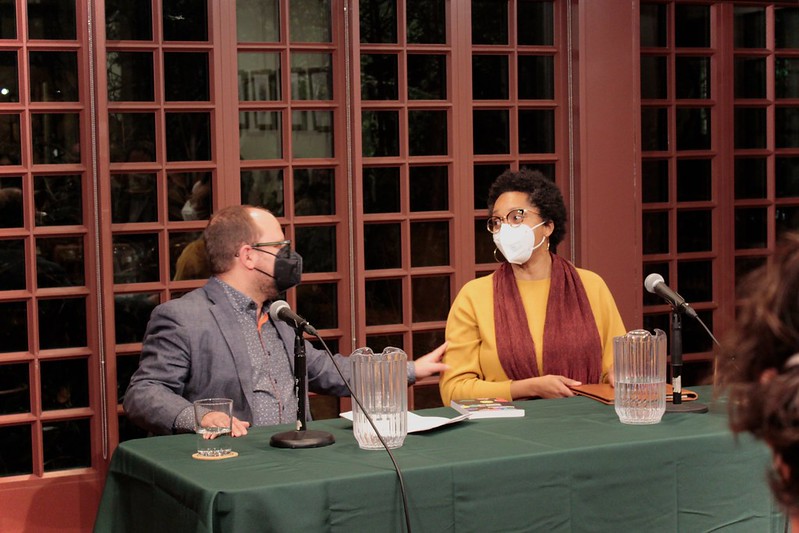
NOVEMBER 11, 2021: A CONVERSATION WITH CLAYTON NEUMAN
- watch: a video recording of this program via our YouTube channel
In his twelve years with AMC, Clayton Neuman has been influential in developing their social and digital content programs and building the company's award-winning gaming business from the ground up. Throughout his tenure and in the broader gaming and digital content industries he is recognized as a creative, strategic, and revenue-driven leader that has created one of the top IP portfolios in entertainment. This event will be online only.
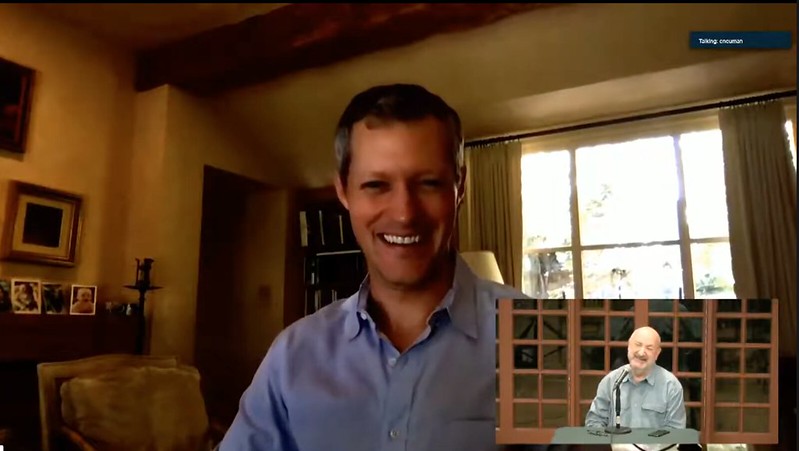
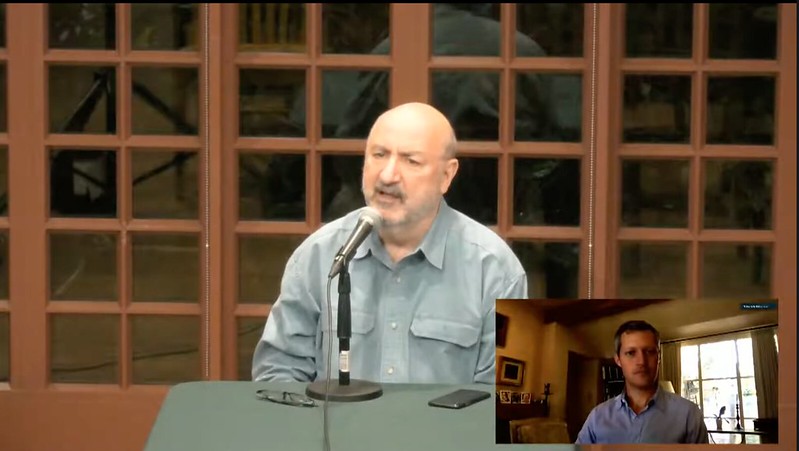
OCTOBER 28, 2021: A CONVERSATION WITH JESSICA GOODMAN
- watch: a video recording of this program via our YouTube channel
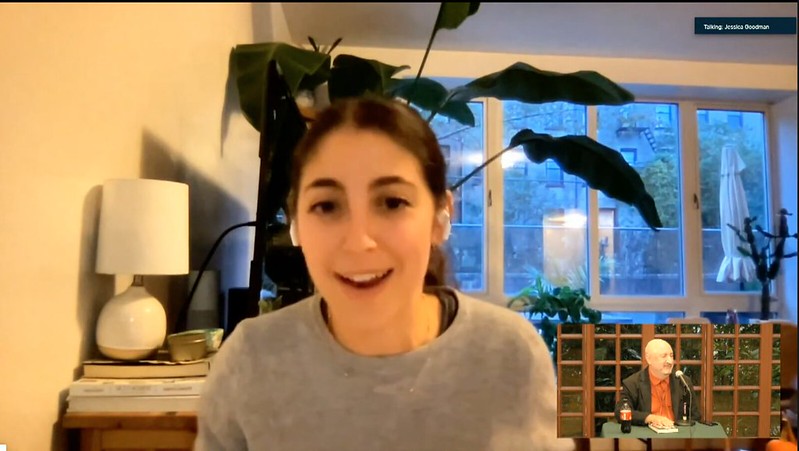
JESSICA GOODMAN is the New York Times bestselling author of young adult thrillers They Wish They Were Us, They’ll Never Catch Us, and The Counselors (out in 2022) from Razorbill/ Penguin Teen. She is the former op-ed editor at Cosmopolitan magazine, and was part of the 2017 team that won a National Magazine Award in personal service. She has also held editorial positions at Entertainment Weekly and HuffPost, and her work has been published in outlets like Glamour, Condé Nast Traveler, Elle, and Marie Claire.
APRIL 15, 2021: MARATHON READING: ALICE’S ADVENTURES IN WONDERLAND
- watch: a video recording of this program via our YouTube channel
Each year, the Writers House Planning Committee selects a book to read aloud, straight through from beginning to end. This year we're reading Alice’s Adventures in Wonderland and Through the Looking Glass – and anyone can sign up for a ten-minute reading slot. We encourage readers to use your Zoom backgrounds to get creative and immerse yourself in Wonderland. Some options created by our staffers can be found and downloaded here. We’ll be having a raffle filled with cool gifts available for entry to all readers. If you’re on campus or in Philadelphia, we will be giving out grab bags full of otherworldly reader treats.
March 31, 2021: PLANTS AND POETICS: A PANEL DISCUSSION
- watch: a video recording of this program via our YouTube channel
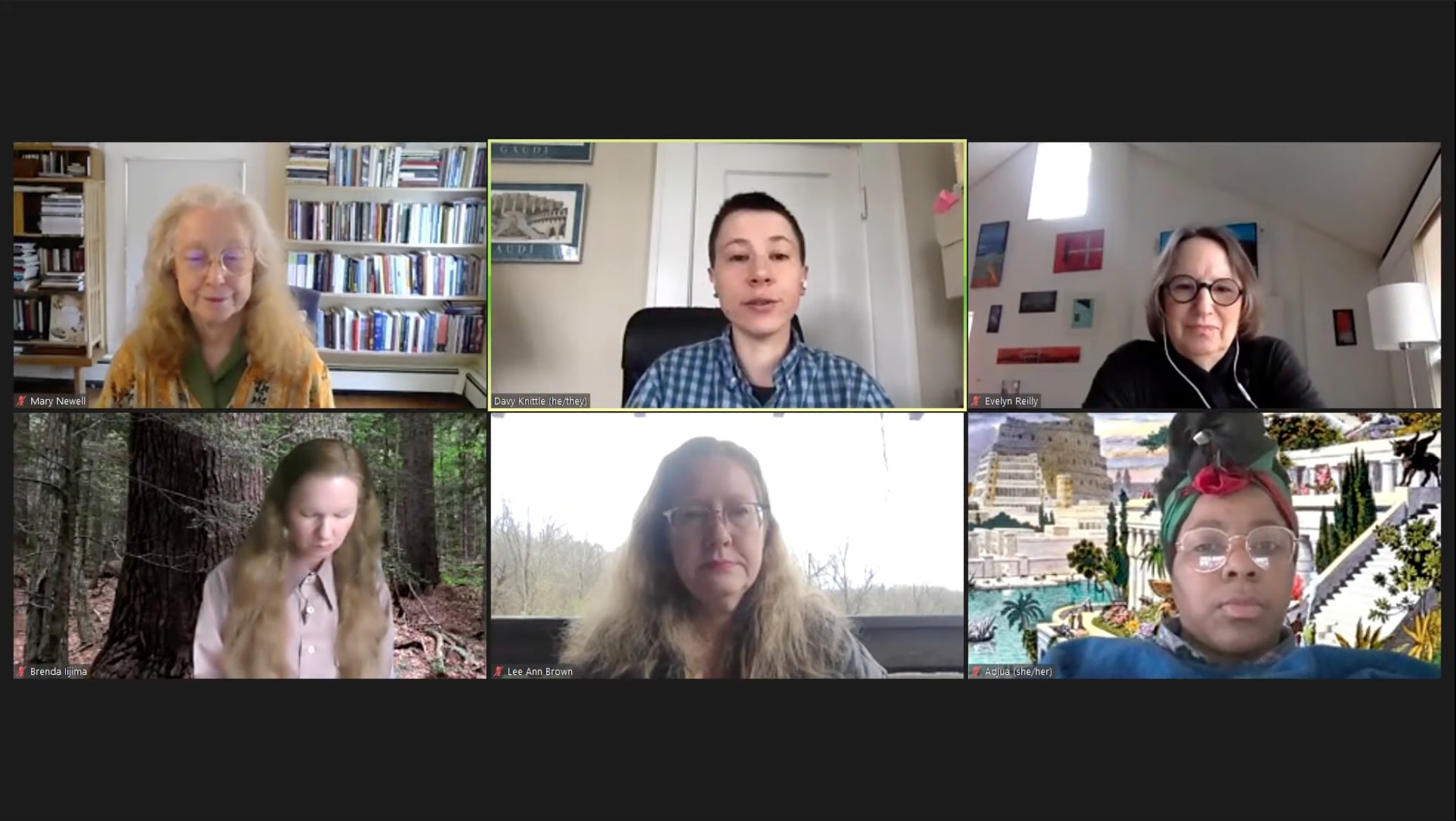
Plants have long-standing importance in human life and in the human imaginary. In their study of metaphor in daily life, George Lakoff and Mark Johnson defined a number of conceptual metaphors that they claim underlie many thought processes. One of these, “People are plants,” is easy to spot in phrases such as “a budding artist,” “in the flower of youth,” “late bloomer,” or “gone to seed.” Such expressions are semi-conscious. How can we reclaim this deep relationship and honor it intentionally in our practices and vocalizations? As writers and artists concerned about the biosphere, we ask ourselves and our communities: What practices of culture, cultivation, and language support our interconnectedness with plants and release our green- and sap-blooded companions from cultural appropriation? How might the sundry manifestations of our intra-species friendships inform our desire for honorable, ethical, sustainable, and joyous inter-species companionship with members of floral communities? The panelists approach this topic through these lenses:
Lee Ann Brown: Poetry herbariums: meditations on native plants and herbs, writing while infused with the herb's influence from ingesting teas or gardening.
Adjua Gargi Nzinga Greaves: Living indoors with plants across space and time—folklore and histories of the twenty-six plant species I cohabitate with and their relationships to commonly housed plants in the Americas in the 20th and 21st centuries.
Brenda Iijima: Flora as witnesses to human animal activity through time and to other sentient presences. How to reckon with humans’ impacts on plant life, and the living relationships that plants intersect with and nourish, their inter-worlding capacity.
Mary Newell: Approaches toward plant/human connections from the inside out (chlorophyll and hemoglobin), and the question of vegetal expression.
Evelyn Reilly: The many ways plants inhabit our conscious and liminal mental landscapes—dream trees and flowers, planetary imaginary forests, superorganismic sublimities—and resulting visions, nostalgias, insomnias.
These approaches will intersect and fugue with one another in our discussions.
March 15, 2021: CITY PLANNING POETICS 10: URBAN FUTURES
- watch: a video recording of this program via our YouTube channel
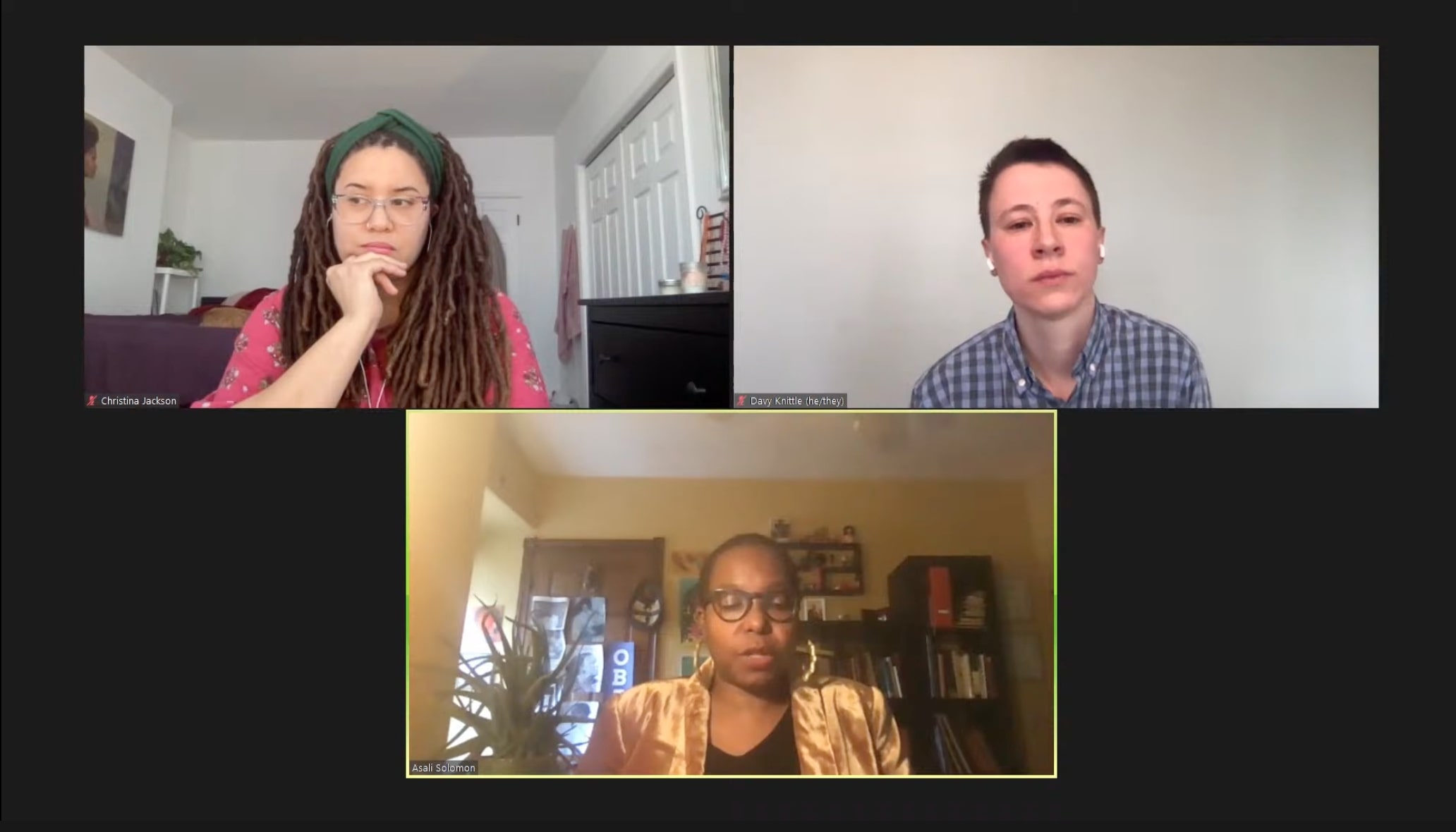
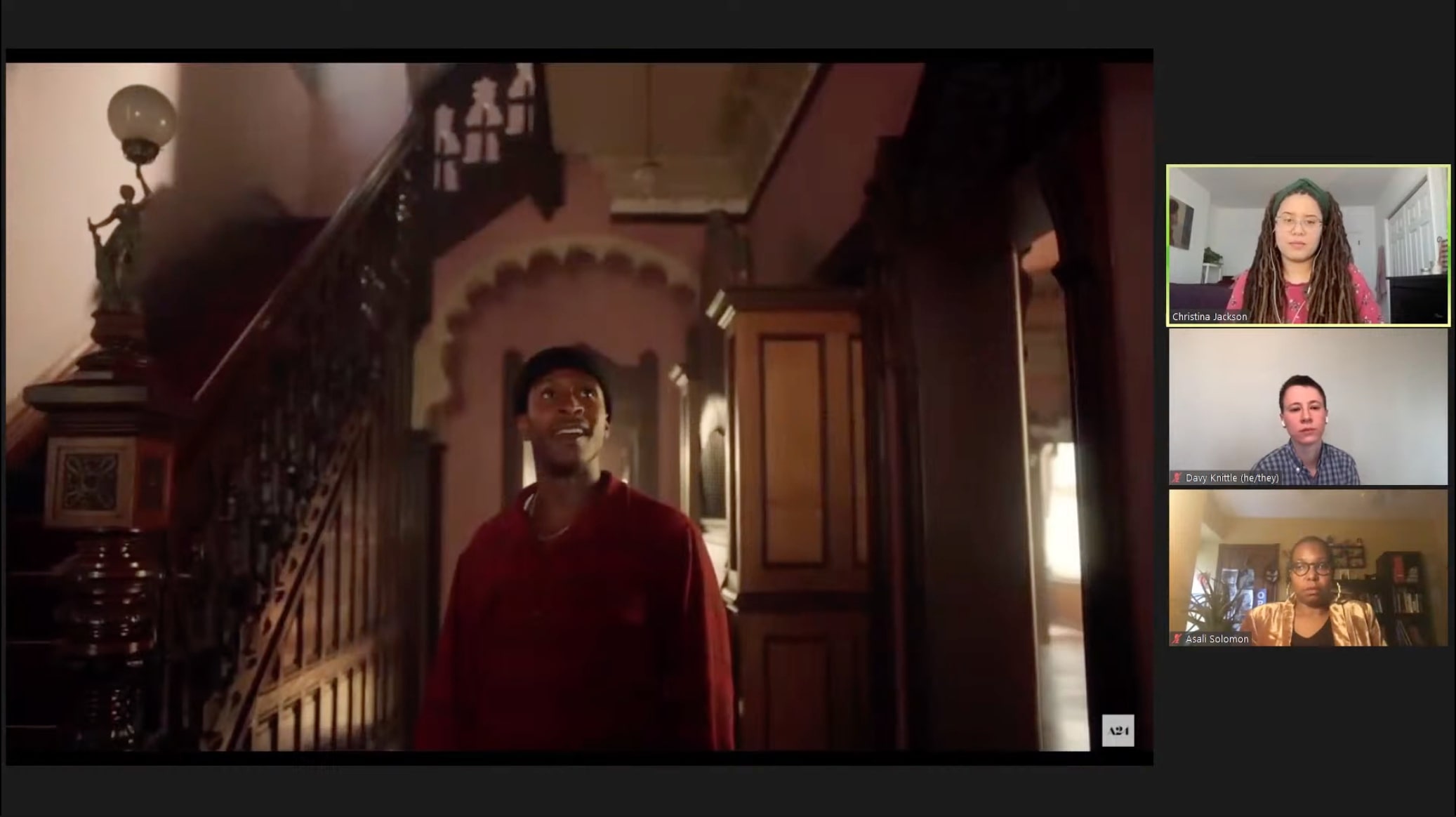
Curated by Davy Knittle, City Planning Poetics is a semesterly series that invites one or more poets or more planners, designers, planning historians, or others working in the field of city planning to discuss a particular topic central to their work, to ask each other questions, and to read from their current projects.
Christina Jackson, PhD is a resident of West Philadelphia. She is an urban sociologist and scholar-activist with interests in the relationships between poor/middle class neighborhoods of color, their environments and city entities/institutions. She takes a social justice approach by centering the stories and lives of residents through immersing herself within community struggles. Christina is a professor of Sociology at Stockton University in New Jersey. Christina received her PhD from University of California Santa Barbara and completed her postdoctoral studies in Africana Studies at Gettysburg College. She is co-author of "Embodied Difference: Divergent Bodies in Public Discourse" (Lexington Books) and "Black in America: The Paradox of the Color Line" (Polity Inc). She is also on the board of Camp Sojourner Girls Leadership program and Land health Institute.
Asali Solomon is the author of The Days of Afrekete, a novel forthcoming from Farrar, Straus & Giroux in September. Her novel Disgruntled was cited as one of the best books of 2015 by the San Francisco Chronicle and the Denver Post; the short stories in her first book, Get Down earned her a Rona Jaffe Foundation Writer’s Award and the National Book Foundation’s “5 Under 35” honor. Her writing has appeared in McSweeney's, Kenyon Review, O: The Oprah Magazine, Vibe, Essence, the Paris Review Daily, and in the anthology How We Fight White Supremacy: A Field Guide to Black Resistance. Solomon teaches fiction writing and African American and Caribbean Literature at Haverford College, and has become increasingly chauvinistic about being a near-lifelong West Philadelphian.
February 18, 2021: RECYCLING YOUR WORDS: A ZINE WORKSHOP
Nia Hampton is an artist, educator, organizer, and most importantly a West Baltimore native. Her self published zine “Cicatrizes” was featured in AfroPunk.com. Her cultural reviews and features about the global black experience have been featured in Vice.com, VillageVoice.com, City Paper, Dazed Digital.com, Genius.com, and Paste Magazine.com. Her creative non-fiction has been featured in True Laurels, Griots Republic.com, The Coalition Zine and Hysteria Zine. Her poetry has been featured in GlitterMOBMag.com.
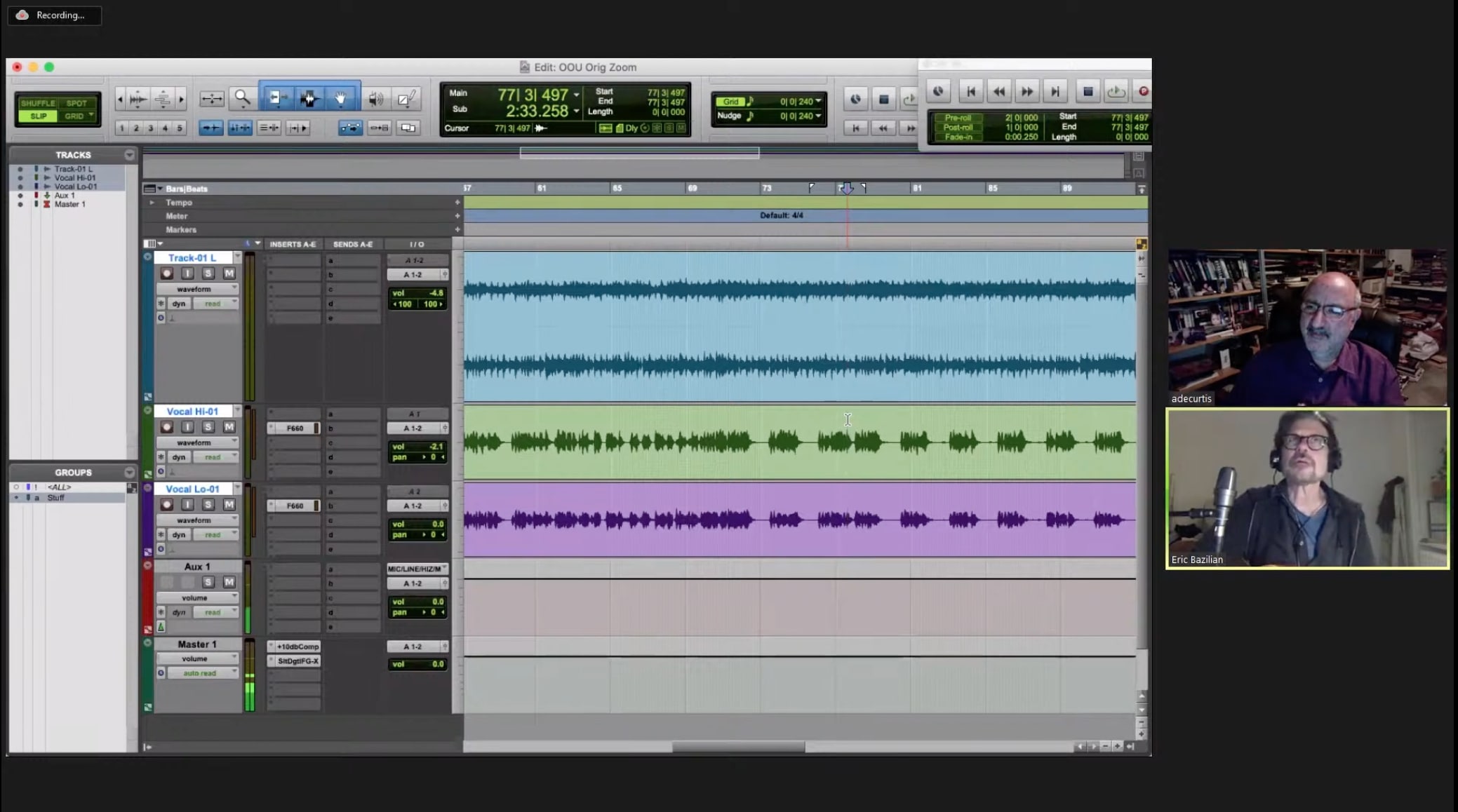
November 5, 2020: ERIC BAZILIAN: "MY LIFE AS A SONG"
- watch: a video recording of this program via our YouTube channel
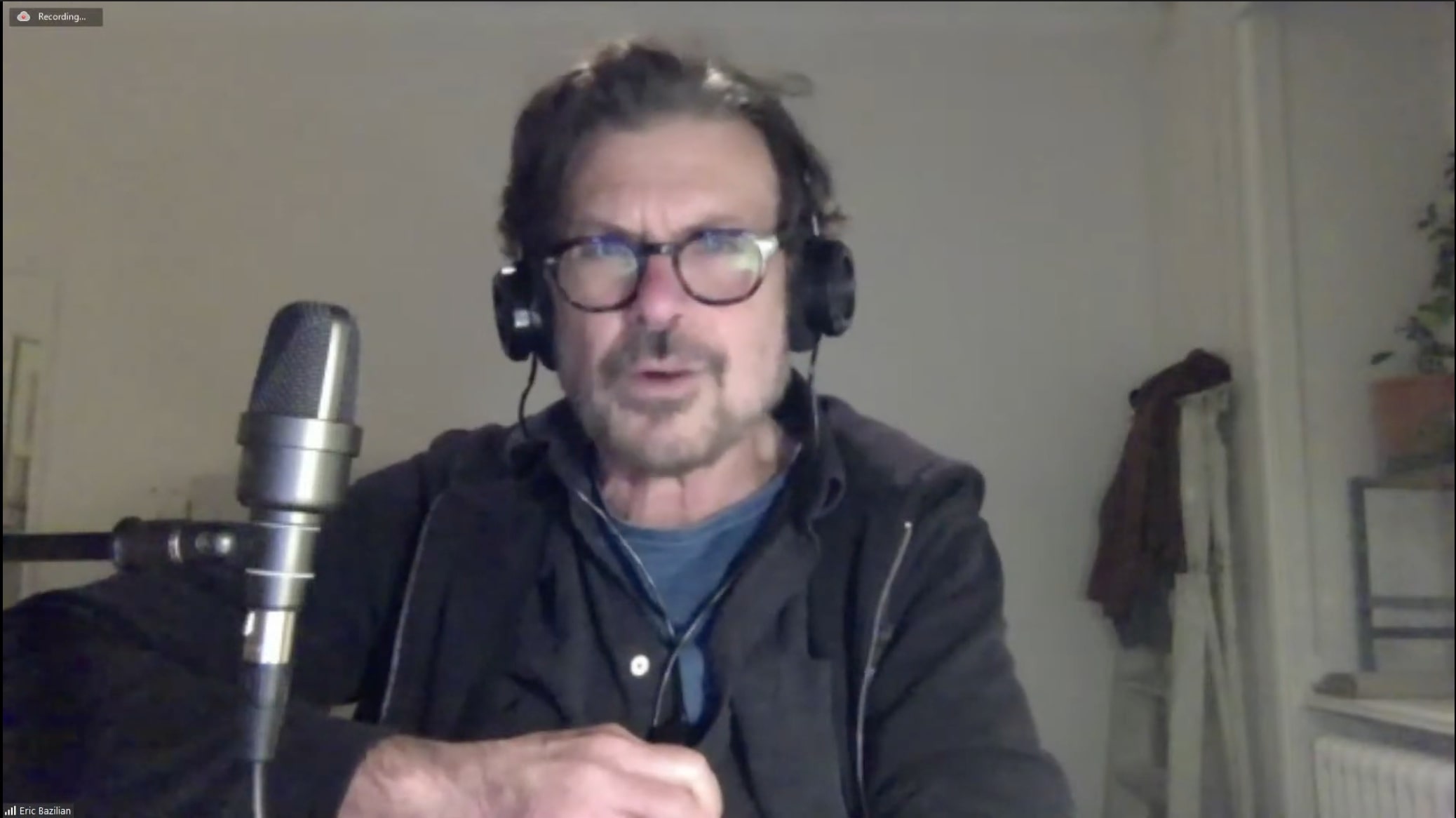
Best known as a founding member of the Hooters and the writer of "One of Us," a Top 5 hit for Joan Osborne, Eric Bazilian discusses the art of songwriting and perform some of his work.
October 29, 2020: MESS+PROCESS: JESSICA VAUGHN
- watch: a video recording of this program via our YouTube channel
MESS + PROCESS is a conversation and workshop series that brings together artists, poets, and performers to discuss the messiness of the creative process and the winding paths that we take in our imaginative exploration of new ideas before they manifest as specific projects. Moving away from solely focusing on the polished, completed work, we turn our attention toward the collaborative brainstorming, active research, and study-driven play that we maneuver through as creatives in pursuit of something else.
Jessica Vaughn is a visual artist and current Futures Fellow at the Clark Art Institute. She received a BHA from Carnegie Mellon University (Pittsburgh, PA) and an MFA from the University of Pennsylvania (Philadelphia, PA). Selected solo exhibitions include Our Primary Goal Is to Be Successful (ICA- Philadelphia, PA, 2021); In Polite English One Disagrees by First Agreeing (Dallas Contemporary, TX, 2019); and Receipt of a Form (Martos Gallery, New York, NY, 2017). Upcoming and current group exhibitions include Working Thought (Carnegie Museum of Art, Pittsburgh, PA, 2022); Lost in America (Neuer Berliner Kunstverein, Berlin, Germany, 2020); Kissing Through the Curtain (MASS MoCA, North Adams, MA, 2020); Who are we are Who (Braunsfelder Family Collection, Cologne, Germany, 2020); and Feelings (Pinakothek der Moderne, Munich, Germany, 2019).

October 20, 2020: CITY PLANNING POETICS 9: FEELING THE CITY
- watch: a video recording of this program via our YouTube channel
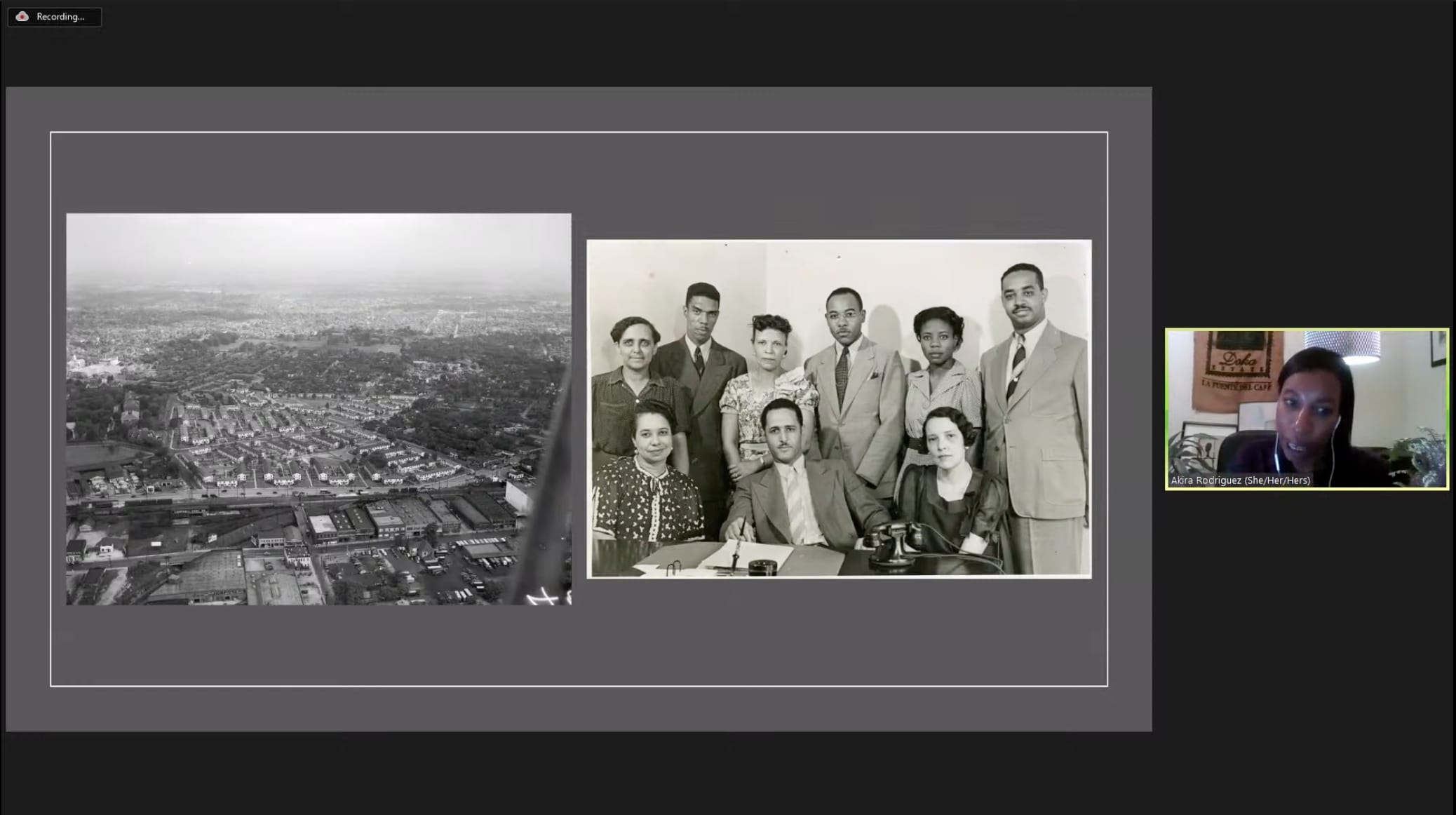
City Planning Poetics is a semesterly series that invites one or more poets or more planners, designers, planning historians, or others working in the field of city planning to discuss a particular topic central to their work, to ask each other questions, and to read from their current projects.
Based in the UAE and Vermont, USA, Jill Magi works in text, image, and textile. The author of six books of poetry and numerous handmade books housed in the University at Buffalo Poetry Collection, Jill ran Sona Books for ten years, publishing chapbooks of experimental works that she described as "risky, quiet, and community-based." Her most recent book, SPEECH (Nightboat 2019), is set in a city of middles: something like the Middle East and something like the Midwest and the fictional wanderer who navigates these places resides in a female body of middle age. Jill has had residencies with the Lower Manhattan Cultural Council and the Brooklyn Textile Arts Center, and has taught for more than twenty years at research universities, liberal arts colleges, in MFA and BFA programs, and in community-based adult literacy programs. Jill has had solo exhibitions of visual work at the NYU Abu Dhabi Project Space Gallery, Tashkeel, and Grey Noise, and is a co-founder of JARA Collective. Visit her web-site here.
Akira Drake Rodriguez is an Assistant Professor at the University of Pennsylvania's Weitzman School in the Department of City & Regional Planning. Her research examines the politics of urban planning, or the ways that disenfranchised groups re-appropriate their marginalized spaces in the city to gain access to and sustain urban political power. Dr. Rodriguez's forthcoming manuscript, Diverging Space for Deviants: The Politics of Atlanta's Public Housing (University of Georgia Press 2021), explores how the politics of public housing planning and race in Atlanta created a politics of resistance within its public housing developments. This research offers the alternative benefits of public housing, outside of shelter provision, to challenge the overwhelming narrative of public housing as a dysfunctional relic of the welfare state. Dr. Rodriguez was recently awarded a Spencer Foundation grant to study how parent and educational advocates mobilize around school facility planning processes in Philadelphia.
October 1, 2020: AN INTRODUCTION TO ZINES
Participants were invited to learn all about zines, independent DIY publications, at this virtual workshop with The Soapbox, a West Philadelphia-based community print shop and zine library. Soapbox artist Candy González will lead participants through zines as a medium, including hands-on activities and strategies for making digital zines.
Candy Alexandra González is a Little Havana-born and raised, Philadelphia-based, multidisciplinary visual artist, poet, activist and trauma-informed educator. Currently, Candy's artwork explores themes of body politics, fat phobia and self-healing through photography, poetry, printmaking and papermaking. Candy received their MFA in Book Arts + Printmaking from the University of the Arts in 2017. Since graduating, they have been a 40th Street Artist-in-Residence in West Philadelphia, a West Bay View Fellow at Dieu Donné in Brooklyn, NY, a Picasso Project Resident Artist at Kensington Health Sciences Academy in North Philadelphia, and a Stockton Rush Bartol Foundation Micro-Grant Recipient. www.candyalexandragonzalez.com
The Soapbox is a nonprofit community print shop, book and zine making center, and library of 3,500 rare handmade publications. Since 2011, we have been offering affordable workshops, equipment access, art exhibits, readings, a reading room, and edible printing events.
The KWH Zine Library is located on the second floor of the Writers House. Started in 2017, the collection has grown to include zines from all over and from all kinds of creators, with a special focus on Philly zines. Apart from curating, we also host workshops approximately once a semester and fund student zine proposals. Reach out at KWHZineLibrary@gmail.com!
September 24, 2020: POEMS FROM A SINKING CITY: A CONVERSATION WITH INDONESIAN POET AHMAD KHAIRUDIN (ADIN)
- watch: a video recording of this program via our YouTube channel
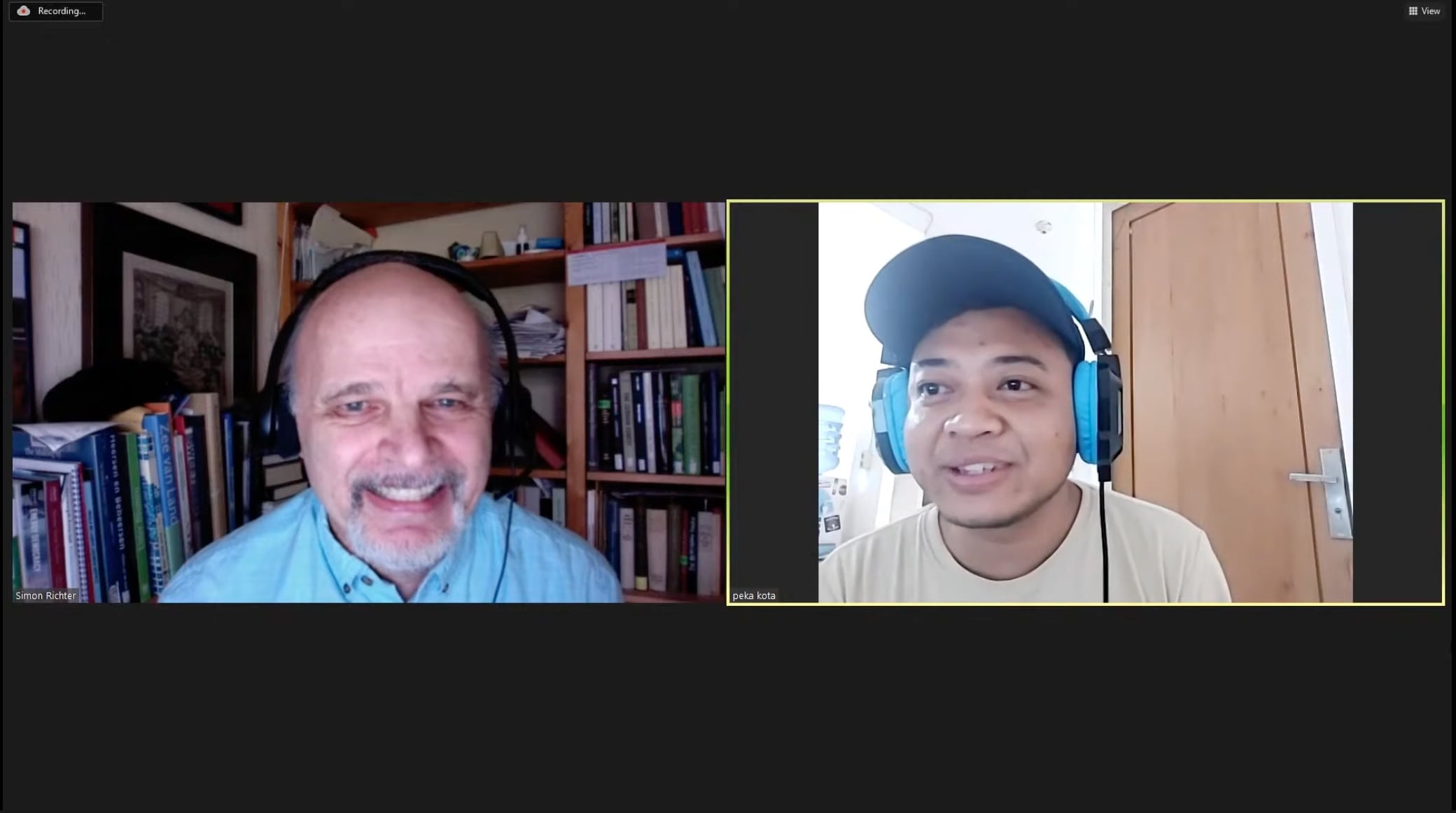
Ahmad Khairudin (Adin), Director, Kolektif Hysteria; Lecturer, Faculty of Anthropology, Universitas Diponegoro; and poet. Adin has an MA in Anthropology from the Universitas Indonesia. He has been the director of Hysteria since 2007. Hysteria is the primary platform and network for socially engaged art in the city of Semarang. Their multi-year collaborative interventions with vulnerable low-income kampungs throughout the city are legendary. Hysteria uses art and culture to help kampungs express and represent their distinct identity. This often results in greater visibility and leverage for the kampung, bringing political and economic benefits, in addition to greater social cohesion. Despite Hysteria's urban edginess, they gain the trust of even pious kampungs. Increasingly their work in the kampungs is linked to resilience and adaptation, for example in the subsiding Kampung Kemijen, which deals with tidal flooding and flash floods, and Kampung Nongkosawit, in the uplands, where drought and landslides alternate as threats. Hysteria deploys mural painting, music, cultural history, theater, crafts, story-telling and poetry, local experts, public discussions, video, mapping, design and other elements, always location-dependent and in collaboration with the community. The real art work is the process itself, which is also duly curated and archived. Hysteria played an important role in mediating between city government and communities during the development of the Semarang Resilience Strategy in the 100RC Program. Adin has received training and global recognition as a curator in Germany and Japan, and was invited to Berlin in 2019 as part of the Global Solutions Initiative. In June 2019, he and two other members of Hysteria were artists in residence in Heidelberg, Germany. Adin is in demand as an inspiring keynote speaker throughout Indonesia and Southeast Asia. In 2019, he published Lobang Pertama, a selection of his poetry.
Adin writes urgent, personal poems about urban life in a coastal city inundated by sea level rise and subsidence, contending with alternating floods and droughts, and about the resilience of people living in kampungs (informally organized low-income neighborhoods in vulnerable areas). For Adin, poetry, culture and the arts are participatory projects that build social cohesion and increase political leverage. Adin will read his poems in Indonesian accompanied by English translations in the context of a conversation with Simon Richter about poetry, community, and the climate emergency as seen from a kampung in Semarang on the Northern coast of Java. This event is Kelly Writers House's contribution to Penn Climate Week.
February 4, 2020:
WAIST BEADS WORKSHOP: SELF-LOVE THROUGH THE DIASPORA
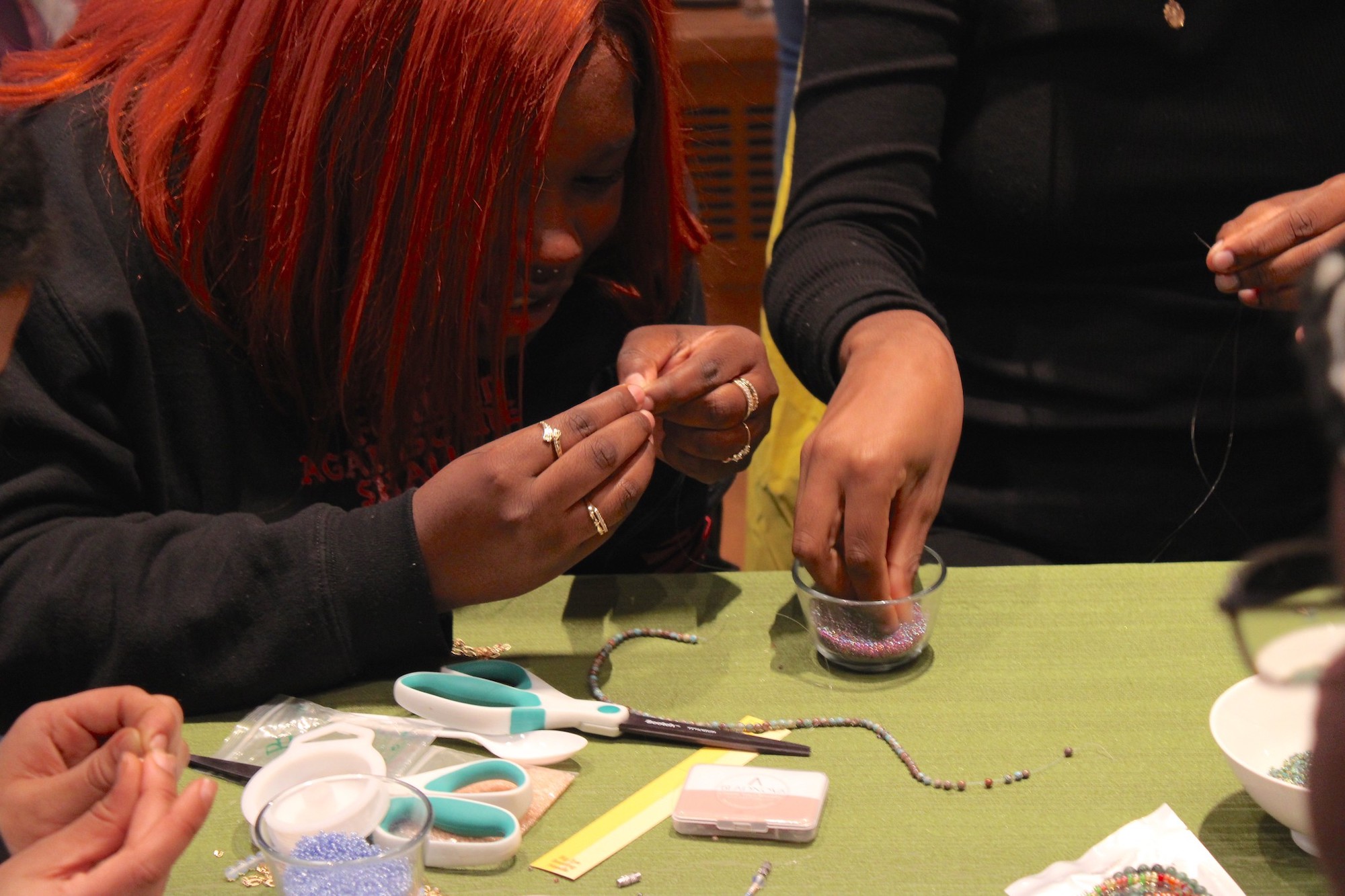
Waist Beads, n., single or multiple strands of beads made from various kinds of glass, metal, crystal, bone, and wood, worn around the waist and stomach. Waist beads have been worn for centuries by women in many West African cultures. They are a popular way for Black women in the diaspora to connect to their ancestors and celebrate their heritage and cultural practices. Join us for an evening of beading and conversation on self-love in the diaspora. Hosted by Mary Osunlana and Kwynasia Young.

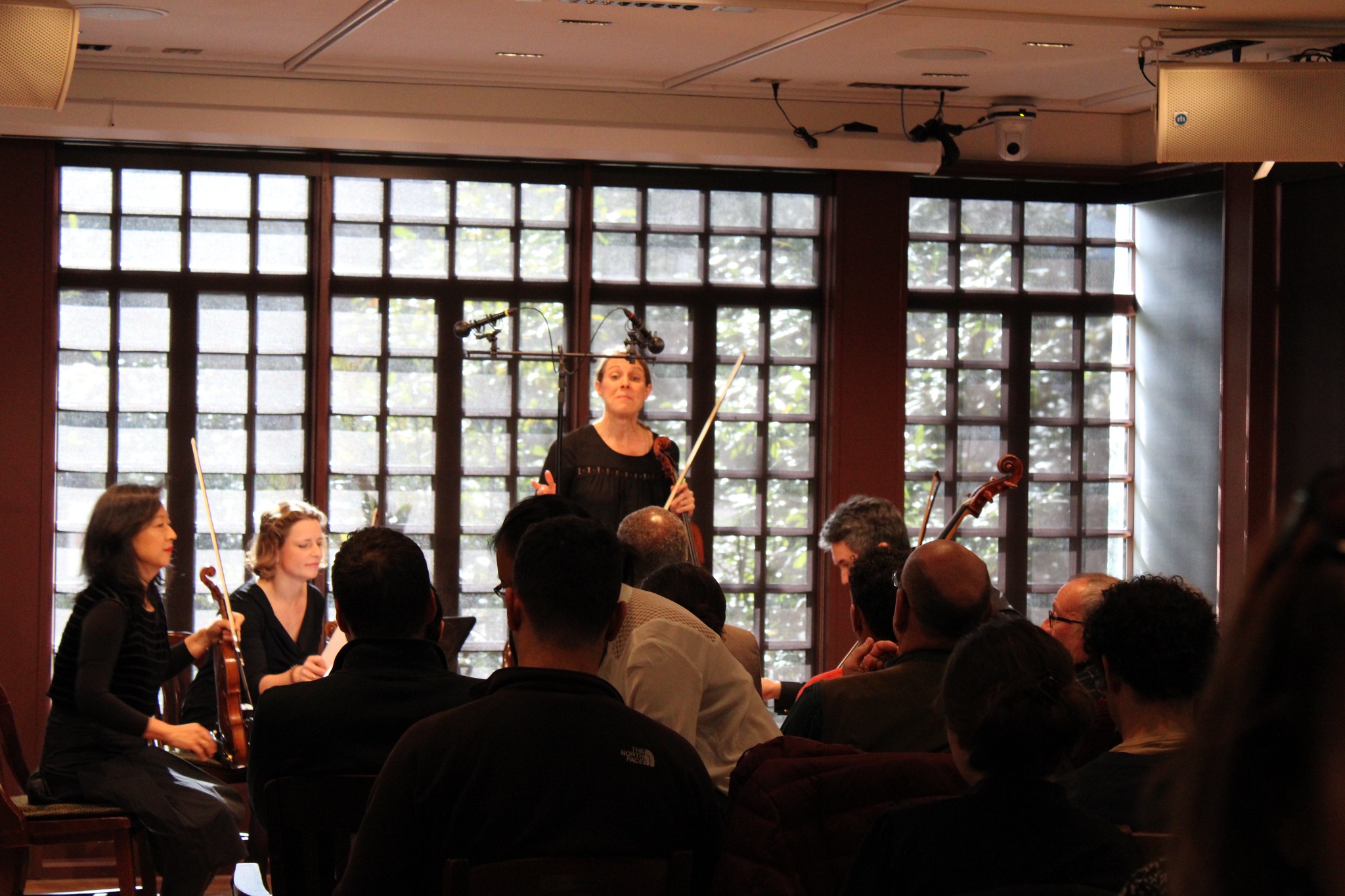
November 15, 2019: DAEDALUS QUARTET: MIGRATION THROUGH MUSIC
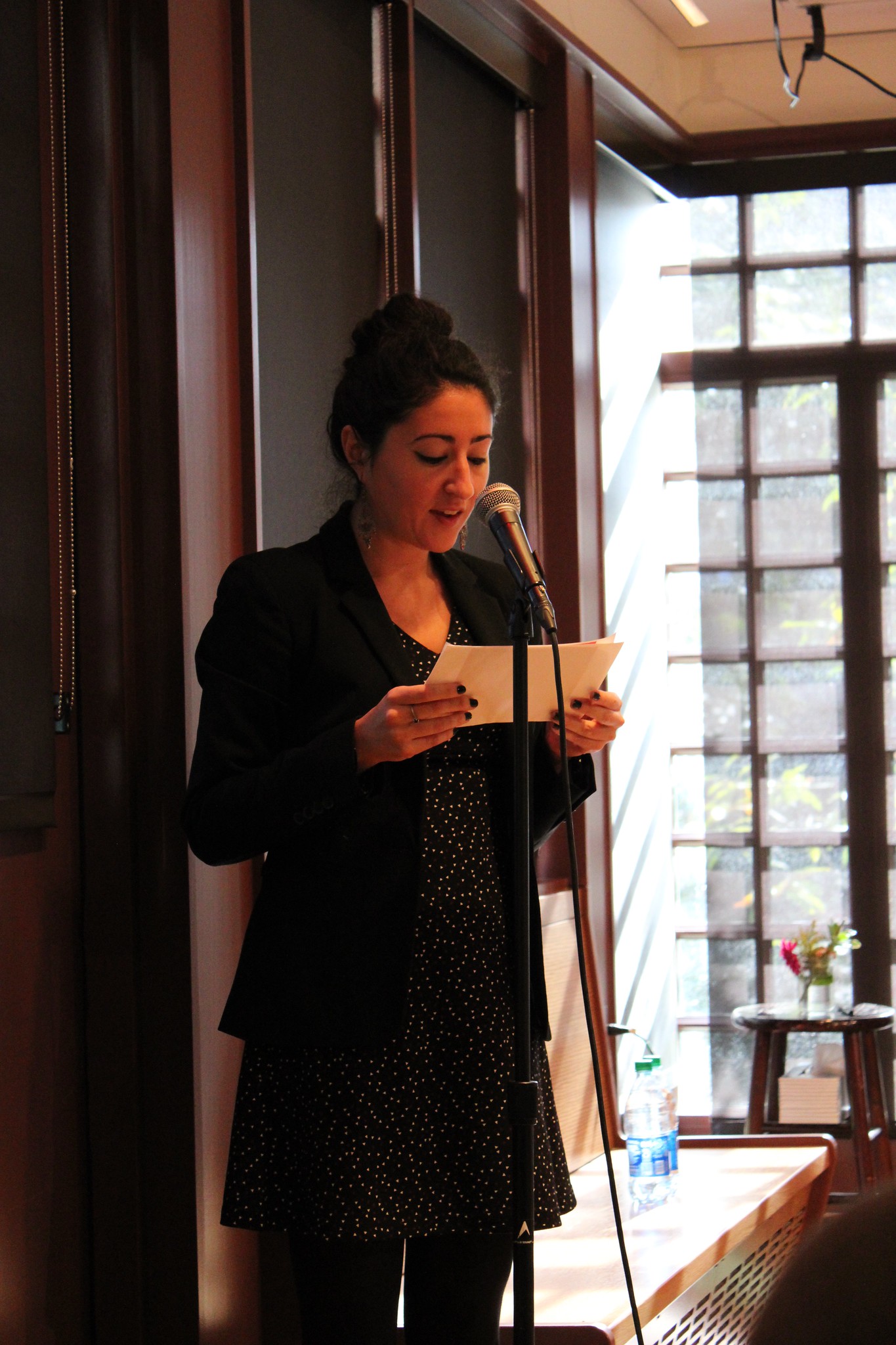
The Daedalus Quartet, Penn’s quartet-in-residence, explores migration through music, illustrating how centuries of cultural cross-pollination has enriched our artistic and spiritual life. Music truly has no borders, unifying through the universality of the human experience. In this performance, which will include selected literary readings voiced by KWH community members, the quartet will perform works that exhibit the richness and complexity of this cultural convergence, including the Philadelphia premiere of a new work by Gabriel Bolanos Chamorro and a world premiere by Penn graduate student composer Ania Vu.
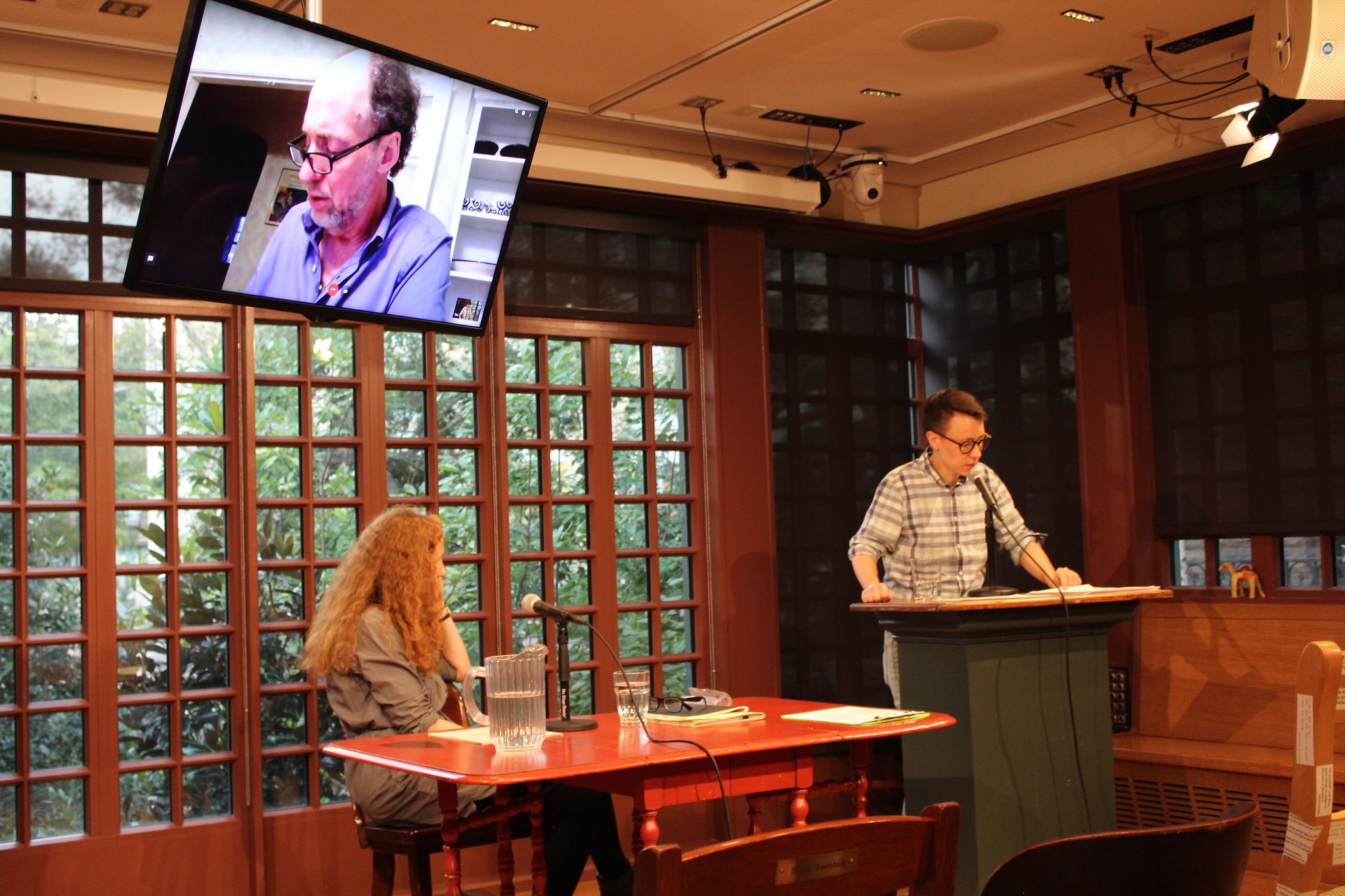
October 7, 2019: CITY PLANNING POETICS 8: URBAN RUINS
- watch: a video recording of this program via our YouTube channel
City Planning Poetics is a semesterly series that invites one or more poets or more planners, designers, planning historians, or others working in the field of city planning to discuss a particular topic central to their work, to ask each other questions, and to read from their current projects.
Donna Stonecipher is the author of five books of poetry, most recently Transaction Histories (2018), which was cited by The New York Times as one of the 10 best poetry books of 2018. She has published one book of criticism, Prose Poetry and the City (2018). Her poems have been published in many journals, including The Paris Review, and have been translated into eight languages. In 2018 she won a Working Grant from the Berlin Senat. She translates from German, and her translation of Austrian poet Friederike Mayröcker's études, for which she received an NEA fellowship, is forthcoming in 2019. She lives in Berlin.
Daniel R. Biddle, the Philadelphia Inquirer's former politics editor, has worked as a journalist for four decades. His Inquirer stories on the courts won a Pulitzer Prize for investigative reporting. As an editor he helped direct Inquirer investigative projects, regional news coverage, and reporting on elections. He and Murray Dubin co-authored Tasting Freedom: Octavius Catto and the Battle for Equality in Civil War America (Temple University Press, 2010; paperback ed. 2017). Biddle previously worked as a reporter for the Plain Dealer of Cleveland, O. He has a BA in history from the University of Michigan and has been a Nieman Fellow at Harvard University. He teaches journalism at the University of Delaware and at Penn, and lives in West Philadelphia.

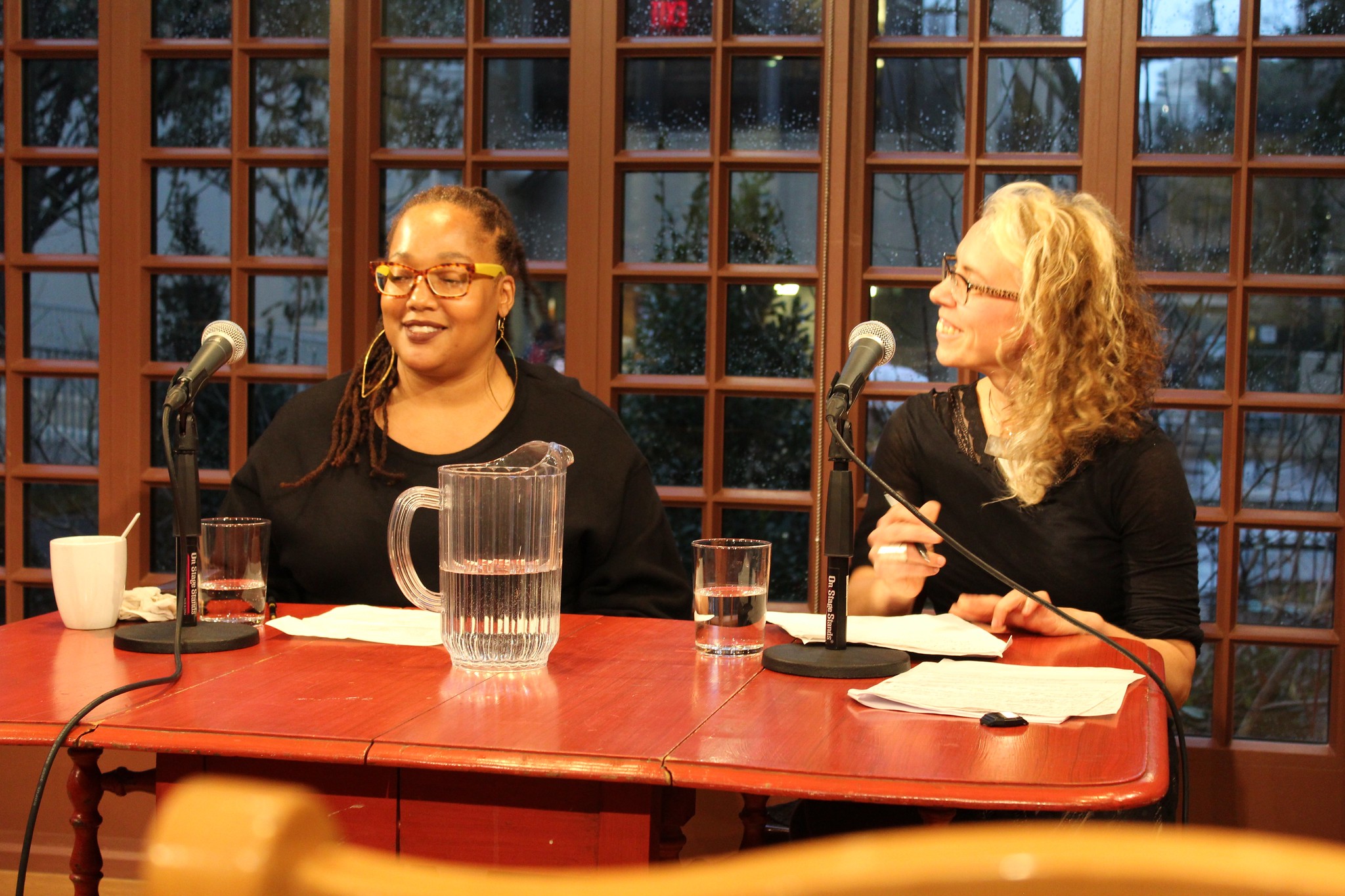
March 21, 2019: CITY PLANNING POETICS 7: CARCERAL JUSTICE
- watch: a video recording of this program via PennSound
- listen: to an audio recording of this program
Emily Abendroth is a poet, teacher, and anti-prison activist. Much of her creative work investigates state regimes of surveillance, force, and power, as well as individual and collective resistance strategies. Her books include ]Exclosures[ from Ahsahta Press and The Instead, a collaboration with fiction writer Miranda Mellis, from Carville Annex. Her works are often published in limited edition, handcrafted chapbooks by small and micropresses such as Belladonna, Horse Less Press, Little Red Leaves, Albion Press, and Zumbar.She has been awarded residencies at the MacDowell Colony, the Millay Colony and the Headlands Center for the Arts, and was named a 2013 Pew Fellow in Poetry. She is an active organizer with the Coalition to Abolish Death By Incarceration (a grassroots campaign working to end life without parole sentencing in Pennsylvania) and is co-founder of Address This! (an education and empowerment project that provides innovative, social justice correspondence courses to individuals incarcerated in Pennsylvania) and the media project LifeLines: Voices Against the Other Death Penalty.
Nina Johnson is an Assistant Professor in the Department of Sociology and Anthropology and the Coordinator of the Program in Black Studies at Swarthmore College. Consistent with her previous study in Urban Studies (BA, Penn), African-American Studies(BA, Penn) and Culture, Communication and Criticism (MA, New York University), her research interests lie in the areas of inequality, politics, race, space, class, culture, stratification and mobility. She has recently published papers on issues of community and residential choice relative to the experience of upward mobility (A Long Way From Home: Race, Community, and Educational Opportunity) and a sociology of Black Liberation and contributed to a documentary (Turning A Corner, Beyondmedia Productions) on the legal, economic, and social barriers to exiting prostitution. She has done work on a project that looks at representations of race, class and place in mid century black novels, including the work of James Baldwin, Richard Wright, and Zora Neale Hurston and a community video project on the impact of Islam on black religious, social and political life in Philadelphia and the Delaware Valley. Based on her dissertation research (PhD Sociology, Northwestern University), her book project revisits Du Bois’ and Frazier's classic works and considers issues of identity and meaning making processes among the black elite, its relationship to the larger black population, and its role in any projects of collective racial advancement. Her current research is a multi-method study of the impacts of mass incarceration at the neighborhood level, which is complimented by her teaching courses in Urban Sociology, Race and Public Policy in State Correctional Institutions in Pennsylvania. She wholeheartedly endorses every word of James Baldwin, but finds the following particularly prescient in shaping and informing her work, “The time has come, God knows, for us to examine ourselves, but we can only do this if we are willing to free ourselves of the myth of America and try to find out what is really happening here.”
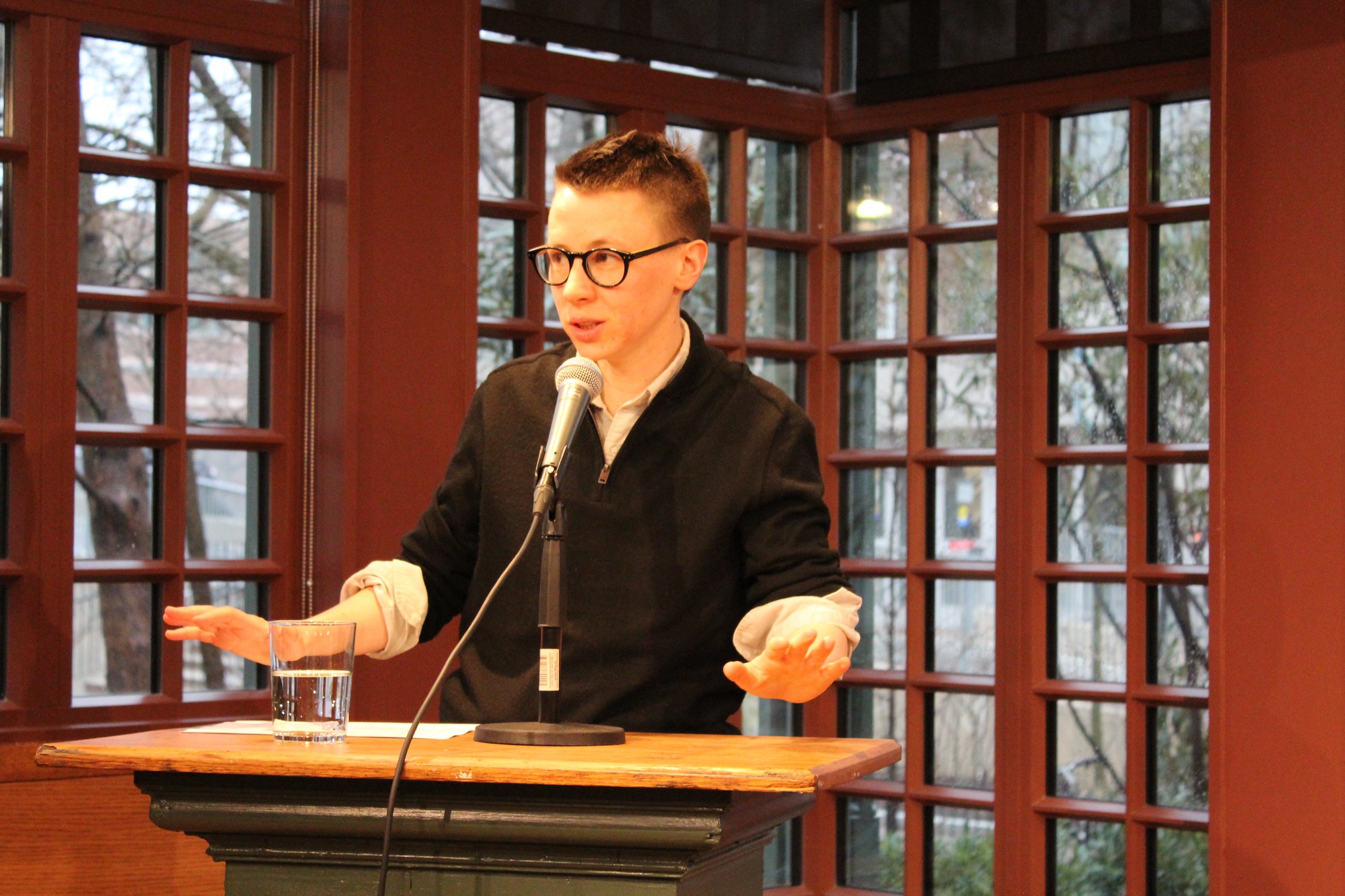
November 12, 2018: WRITING ABOUT TV: MAGIC
- watch: a video recording of this event via KWH-TV
- listen to an audio recording of this event
This annual program features personal essays, critical analysis, and smart talk about TV. For this year's event, six people will present about six different television shows, using the concept of "magic" as a shared theme to guide their discussion.
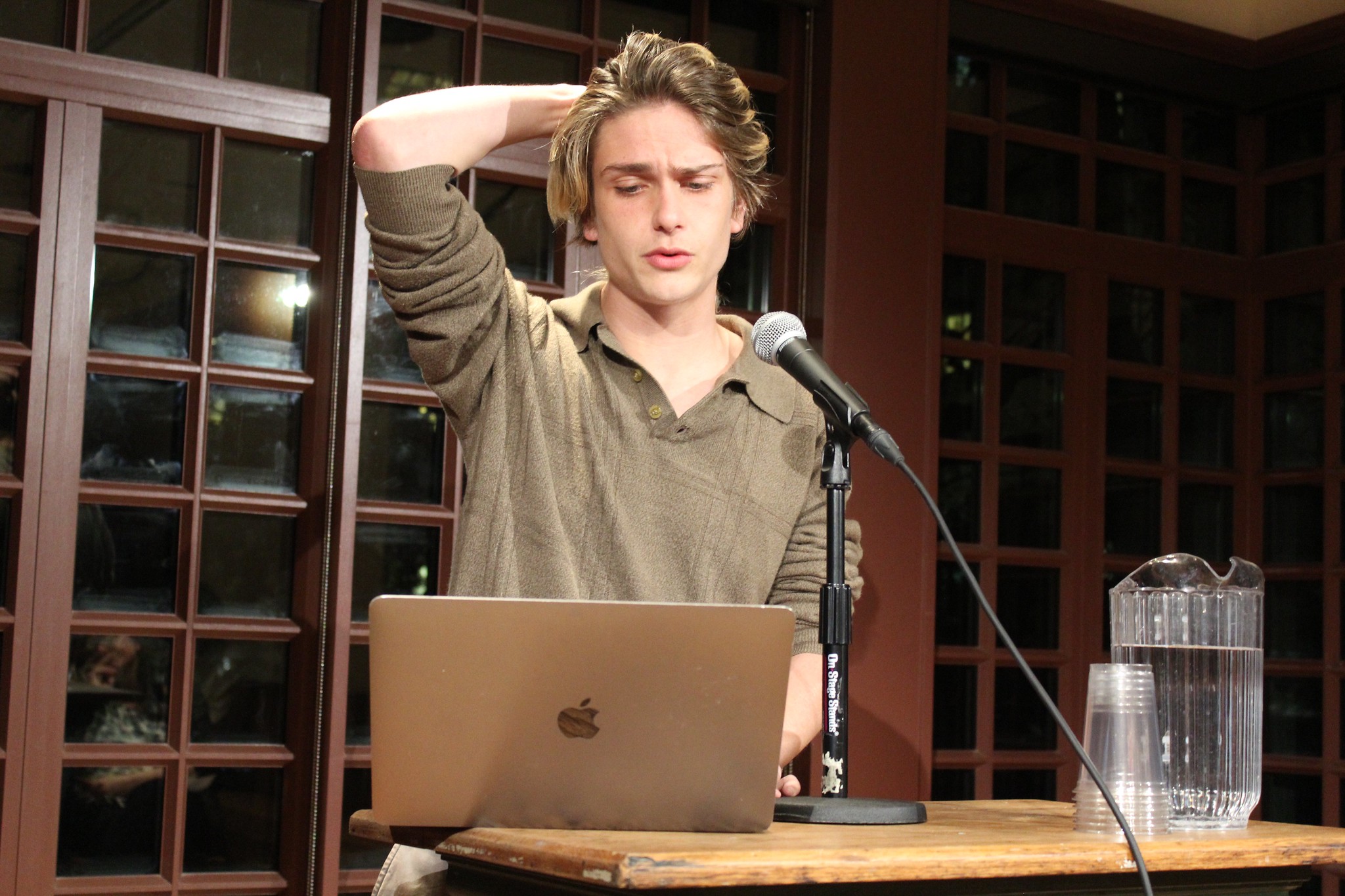
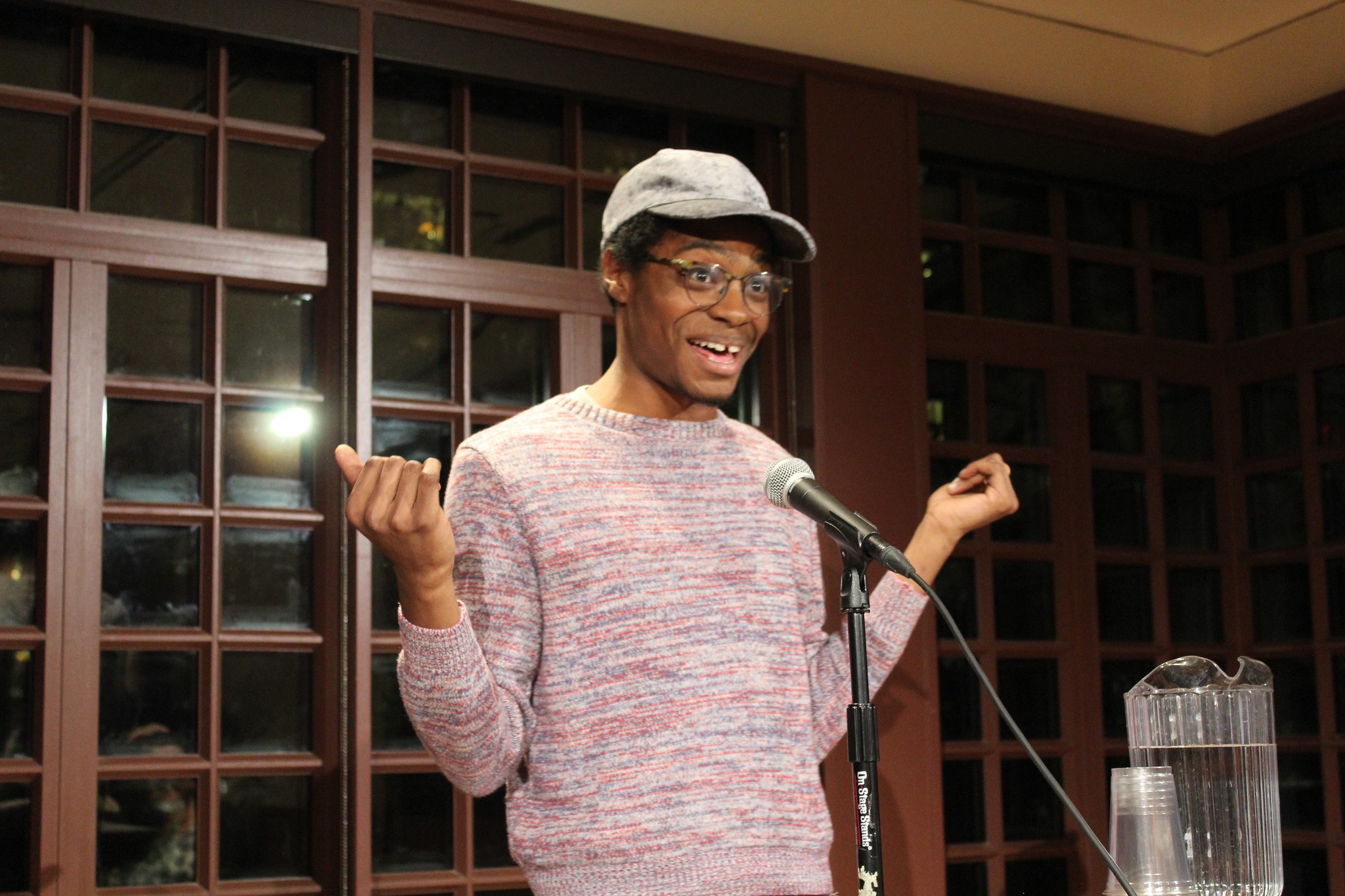
November 8, 2018: DESEGREGATION REMIX: 3 WOMEN SING THE BORDERS
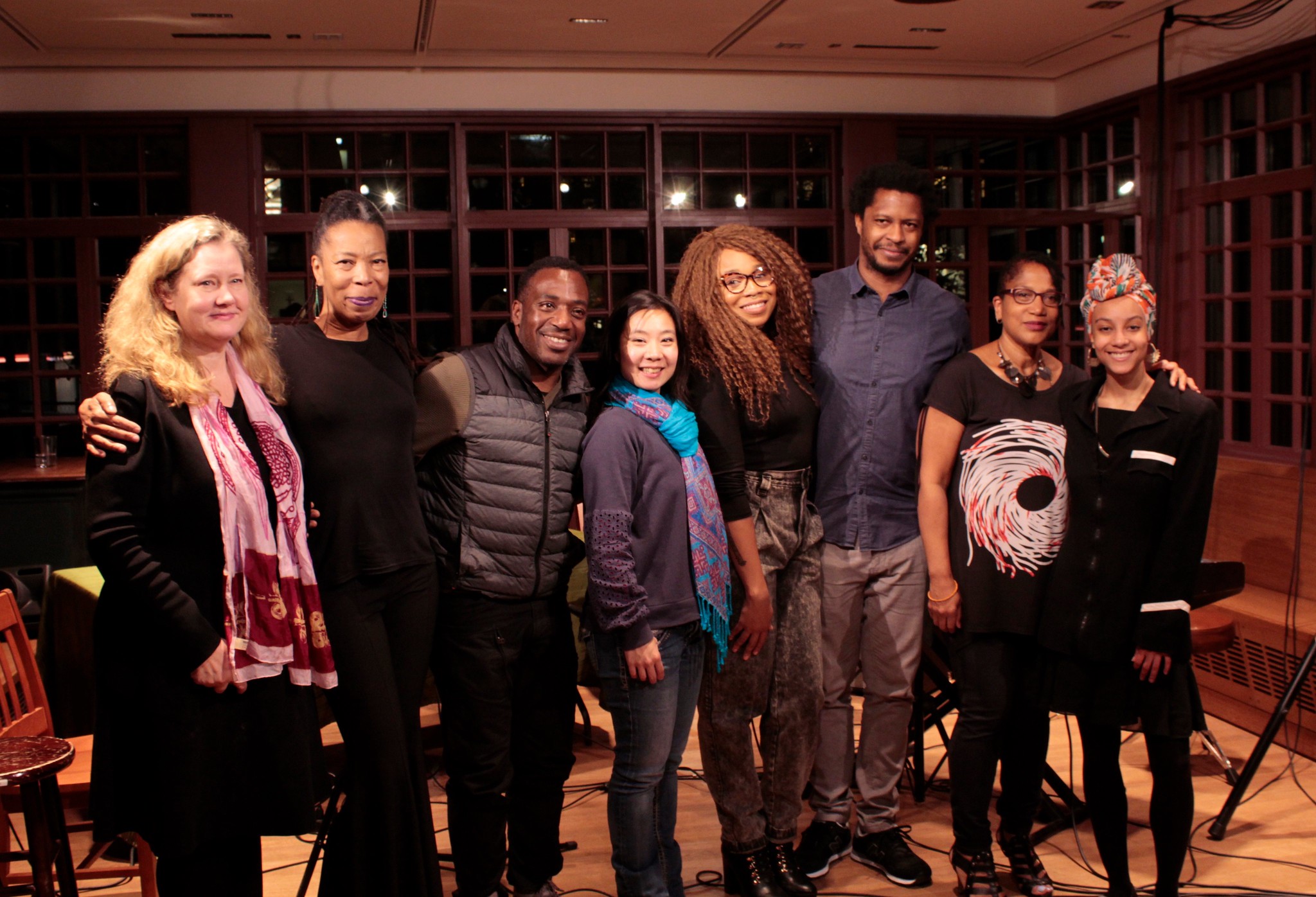
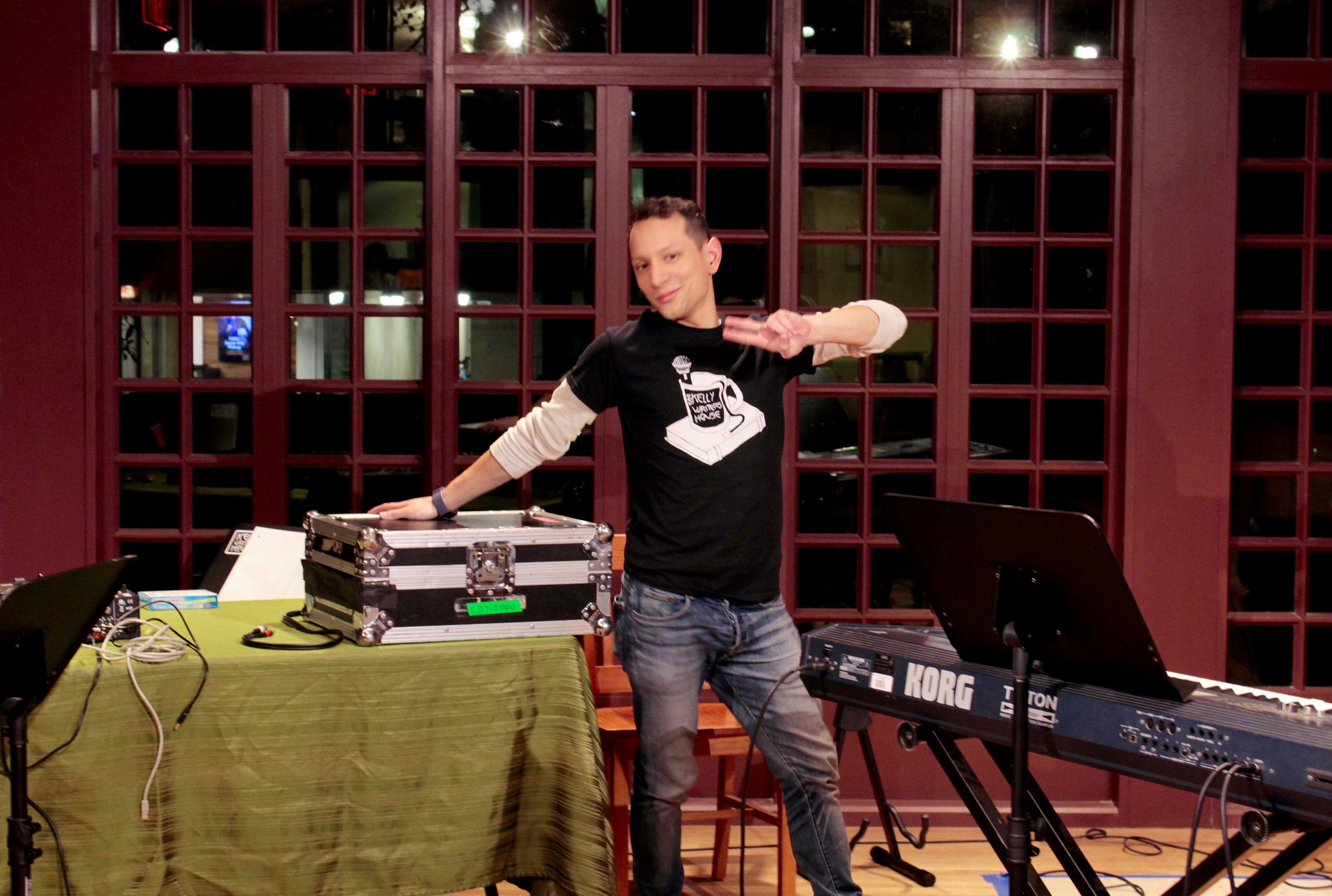
An open rehearsal of DESEGREGATION REMIX: 3 Women Sing the Borders, with text by JANICE A. LOWE and LEE ANN BROWN and Music by Janice A. Lowe is a multimedia play with music that explores the well-meaning altruism of 3 friends who link up to renovate an apartment for a family of recent immigrants to Brooklyn. Emotional brambles surface and intersect when the women, all transplants to New York City, morph into their child selves, meet on a surreal plane and negotiate their shared backgrounds of having lived in the southern U.S. as court ordered busing to achieve integration of public schools was taking effect in the 1970s. The piece evolves into an audience participatory and in-the-moment sound installation interacting with the questions: Do you remember when you were one of a few? How did it feel to be the only one? Performers include Janice Lowe & Namaroon, DJ Manny Ward, Olithea Anglin, Lee Ann Brown, Melanie Dyer, Aliria Johnson, Bi Jean Ngo and Yohann Potico.
Janice A. Lowe is the current Fellow in Poetics and Poetic Practice at the Center for Programs in Contemporary Writing at University of Pennsylvania. Lowe is a composer, poet and vocalizing pianist who creates music-text hybrids. In 2017, she opened the Cleveland INKubator fest with a performance by her band, Namaroon. She is the author of Leaving CLE: Poems of Nomadic Dispersal (Miami University Press) and the chapbook SWAM, a short play (Belladonna Series). Her poems have been published in Callaloo, Best American Experimental Writing, The Poetry Project Online, (Pre) Conceivable Bridges, American Poetry Review, Resist Much/Obey Little, Radiant Re-Sisters, The Hat, and In the Tradition: An Anthology of Young Black Writers, and on a digital album with Drew Gardner's Poetics Orchestra. She participated in the Renga for Obama project, the Broadside Series at Center for Book Arts, Words and Music at Word Up Bookshop, and as a writer-in-residence with Melted Away's American Dream installation at Transformer Station. Lowe composed the opera Dusky Alice as well as the musical Lil Budda (text by Stephanie L. Jones), which was presented at the Eugene O'Neill Musical Theater Conference and in the National Alliance for Musical Theater Festival of New Works. She is also composer of the musicals Sit-In at the Five & Dime (words by Marjorie Duffield), Somewhere in Texas, and Langston & Zora (book & lyrics by Charles E. Drew, Jr.). She was commissioned to compose musical settings of the Millie-Christine poems from the Pulitzer Prize-awarded collection Olio by Tyehimba Jess, and has composed music for plays including Liza Jessie Peterson's Chiron's Homegurl Healer Howls, Jenni Lamb's 12th and Clairmount, and Nehassiau DeGannes's Door of No Return. Lowe performs internationally and is currently recording the album Leaving CLE: Song Cycle-Songs of Nomadic Dispersal. A cofounder of both the Dark Room Collective and absolute theater co., she has taught multimedia composition at Rutgers University, sound art and writing in the Jack Kerouac School of Disembodied Poetics Summer Writing Program at Naropa University, and poetry and performance at Purchase College. Lowe is a longtime mentor of youth creative writing and music programs in New York City. She earned an MFA in musical theater writing from New York University and has received residencies from the Dramatists Guild, New Harmony Project, Voice and Vision, the Millay Colony, and the Rockefeller Fund at Pocantico.
Lee Ann Brown is a poet, curator, editor, teacher and singer of neo-hymns and ballads. She has published over six books of poetry including Polyverse (Sun & Moon, 1999) which won the New American Series Award, The Sleep That Changed Everything (Wesleyan University Press, 2003), and In the Laurels, Caught (Fence, 2013) which won the Fence Modern Poets Series Award. Brown was born in Japan in 1963. After growing up in the North Carolina, she attended Brown University for both graduate and undergraduate degrees in Creative Writing. She in active in the New York City and North Carolina poetry worlds and has taught and performed her work internationally. She was the 2017-2018 Judith E. Wilson Poetry Fellow at the University of Cambridge. Brown teaches poetry at St. John's University and since 1989, runs Tender Buttons Press to publish innovative women's poetry: https://www.TenderButtonsPress.com/. Updates can be found at https://LeeAnnBrownPoet.com/.
October 23, 2018 CITY PLANNING POETICS 6: URBAN REVITALIZATION
- watch a video recording of this event via PennSound
- listen to an audio recording of this event
Curated by Davy Knittle, City Planning Poetics is a semesterly series that invites one or more poets or more planners, designers, planning historians, or others working in the field of city planning to discuss a particular topic central to their work, to ask each other questions, and to read from their current projects.
Brian D. Goldstein is an architectural and urban historian and an assistant professor of architectural history at Swarthmore College. His research focuses on the intersection of the built environment, race and class, and social movements, especially in the United States. His writing includes the 2017 book The Roots of Urban Renaissance: Gentrification and the Struggle Over Harlem and articles appearing in the Journal of American History, Journal of Urban History, and the edited volumes Reassessing Rudolph; Affordable Housing in New York; and Summer in the City: John Lindsay, New York, and the American Dream. He is the recipient of fellowships and awards from the Graham Foundation for Advanced Studies in the Fine Arts, Society of Architectural Historians, Society for American City and Regional Planning History, Center for the Humanities at the University of Wisconsin-Madison, and Charles Warren Center for Studies in American History. Goldstein received his PhD from Harvard University and has taught previously at the University of New Mexico and the University of Wisconsin-Madison.
Douglas Kearney has published six books, most recently, Buck Studies (Fence Books, 2016), winner of the Theodore Roethke Memorial Poetry Prize, the CLMP Firecracker Award for Poetry, and silver medalist for the California Book Award (Poetry). BOMB says: "[ Buck Studies] remaps the 20th century in a project that is both lyrical and epic, personal and historical." Kearney's collection of writing on poetics and performativity, Mess and Mess and (Noemi Press, 2015), was a Small Press Distribution Handpicked Selection that Publisher's Weekly called "an extraordinary book." His work has been exhibited at the American Jazz Museum, Temple Contemporary, Los Angeles Contemporary Exhibitions, and The Visitor's Welcome Center (Los Angeles). Raised in Altadena, CA, he lives with his family west of Minneapolis and teaches at the University of Minnesota–Twin Cities.
October 15, 2018: EDIBLE BOOKS CONTEST
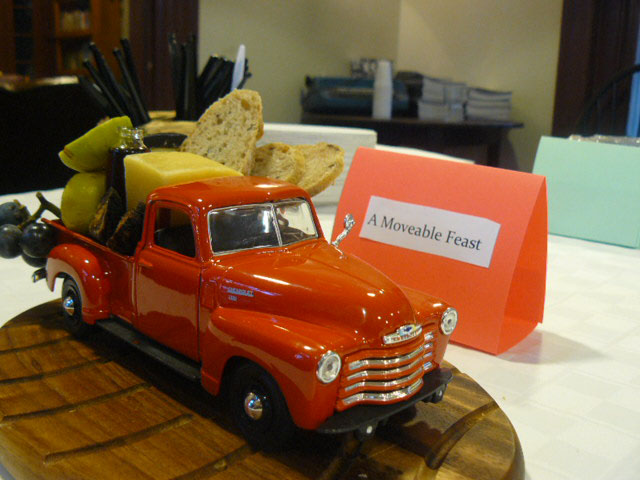
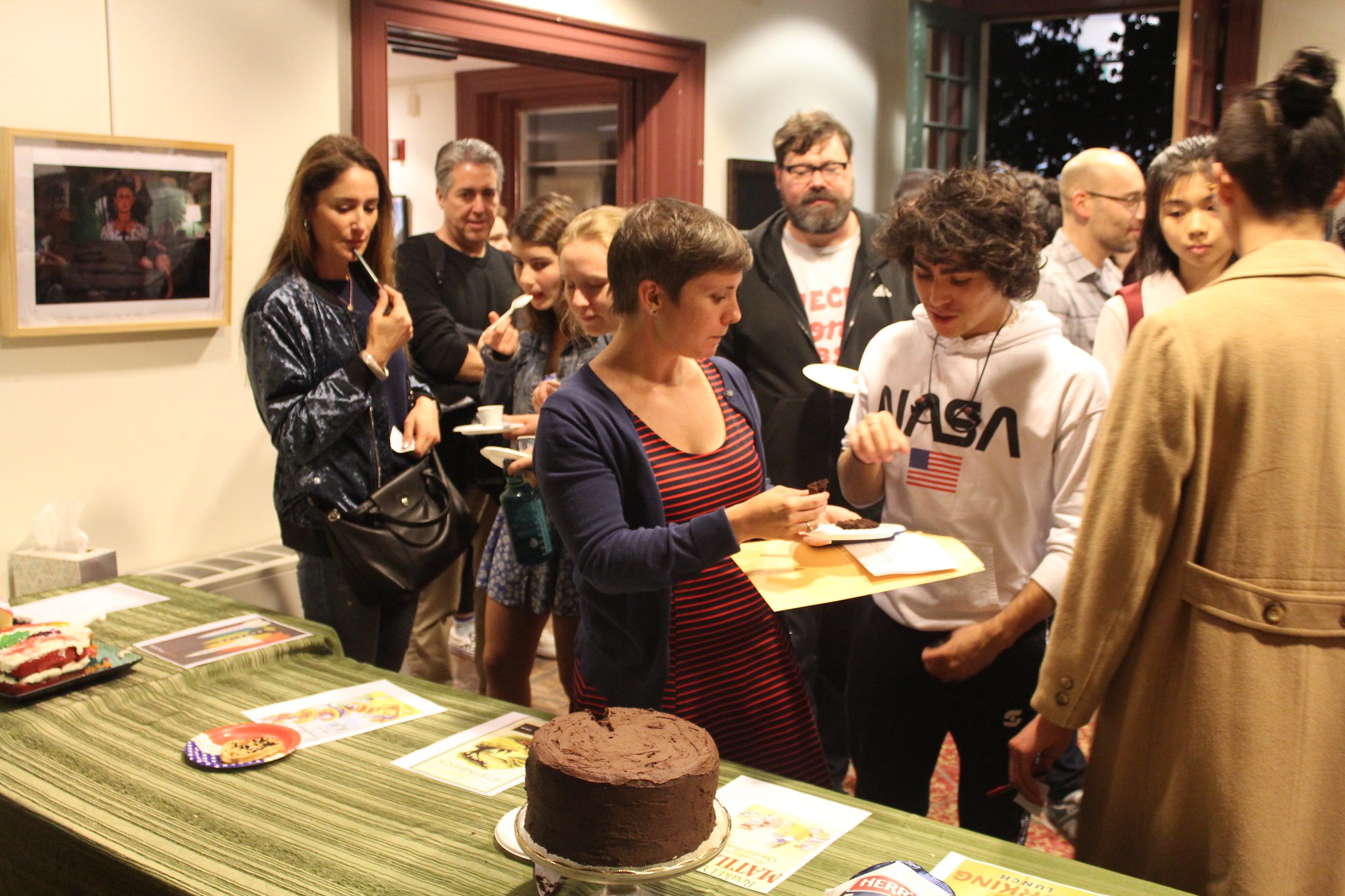
Held in honor of Blaze Bernstein, our annual Edible Book Contest celebrates edible works of art inspired by books and created in kitchens. Do you like to bake? Are you a master of literary puns? This event is for you.
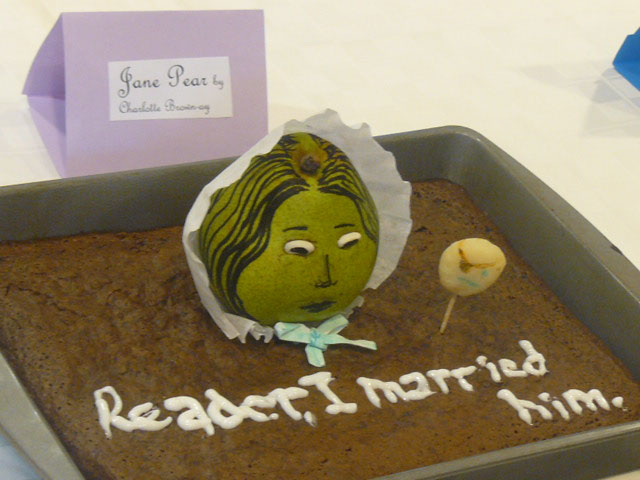
Anyone is welcome to create and submit an entry for the Edible Books Contest. All entries should be edible (or made of food) and should, in one way or another, represent a book or book title. For example, past entries have included simple sheet cakes iced to look like a favorite book jacket — and also more punny (yet edible) interpretations, like: "Jane Pear" (a pear in a bonnet), "A Raisin in the Bun" (which was exactly as it sounds), "The Life of Pie" (depicting several pies in various states of being made), and "Fifty Shades of Earl Grey" (50 cups of tea, brewed to different shades). Puns of all kinds are welcome.
Prizes will be awarded in a variety of categories, including most book-like, most punny, and most creative.

April 3, 2018: A CONVERSATION WITH TRAVEL WRITER ROLF POTTS
- watch: a video recording of this event via KWH-TV
- listen: to an audio recording of this event
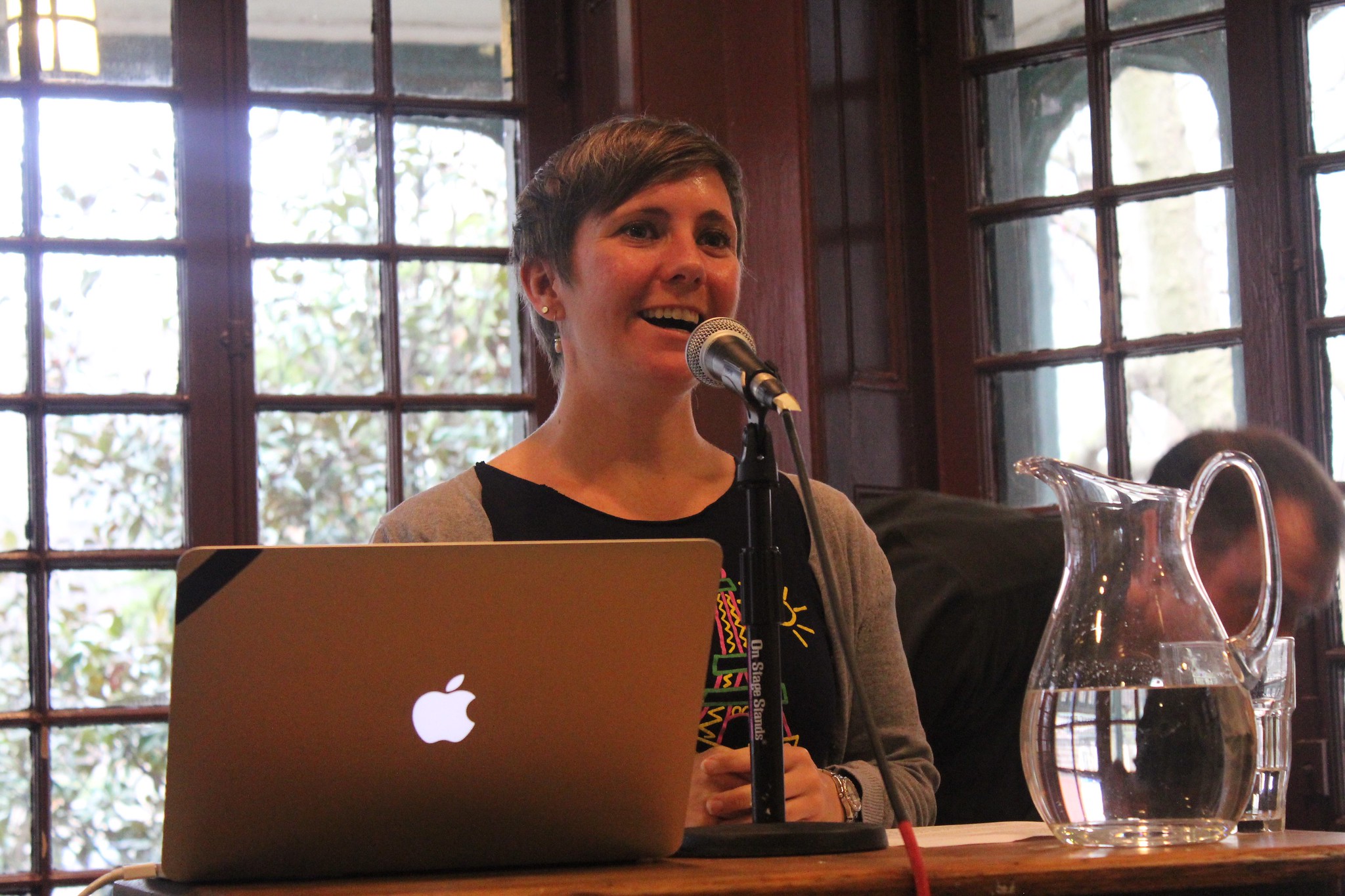
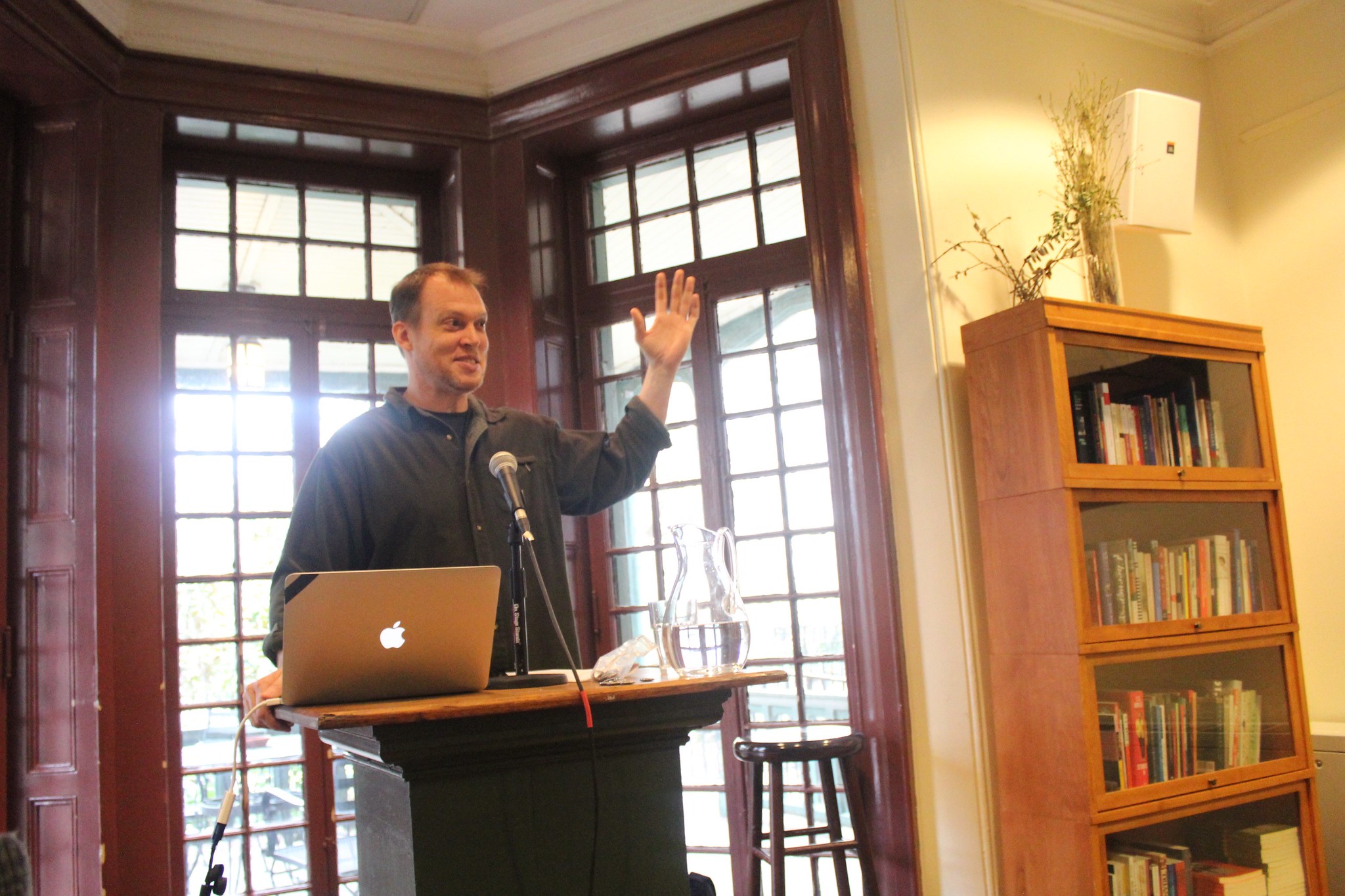
Rolf Potts has reported from more than sixty countries for the likes of National Geographic Traveler, The New Yorker, Outside, and the Travel Channel. More than twenty of his essays have been selected as “Notable Mention” in The Best American Essays, The Best American Non-Required Reading, and The Best American Travel Writing. He has lectured at venues around the world, including the Paris American Academy, Yale, and here at Penn, where he was our 2011 ArtsEdge Resident. He is perhaps best known for promoting the ethic of independent travel, and his book on the subject, Vagabonding: An Uncommon Guide to the Art of Long-Term World Travel, has been through twenty-eight printings and translated into several foreign languages. His newest book, Souvenir, will be published by Bloomsbury in March of 2018.
February 22, 2018: CITY PLANNING POETICS 5: THE QUEER ORDINARY
- watch: a video recording of this event
- listen: to an audio recording of this event
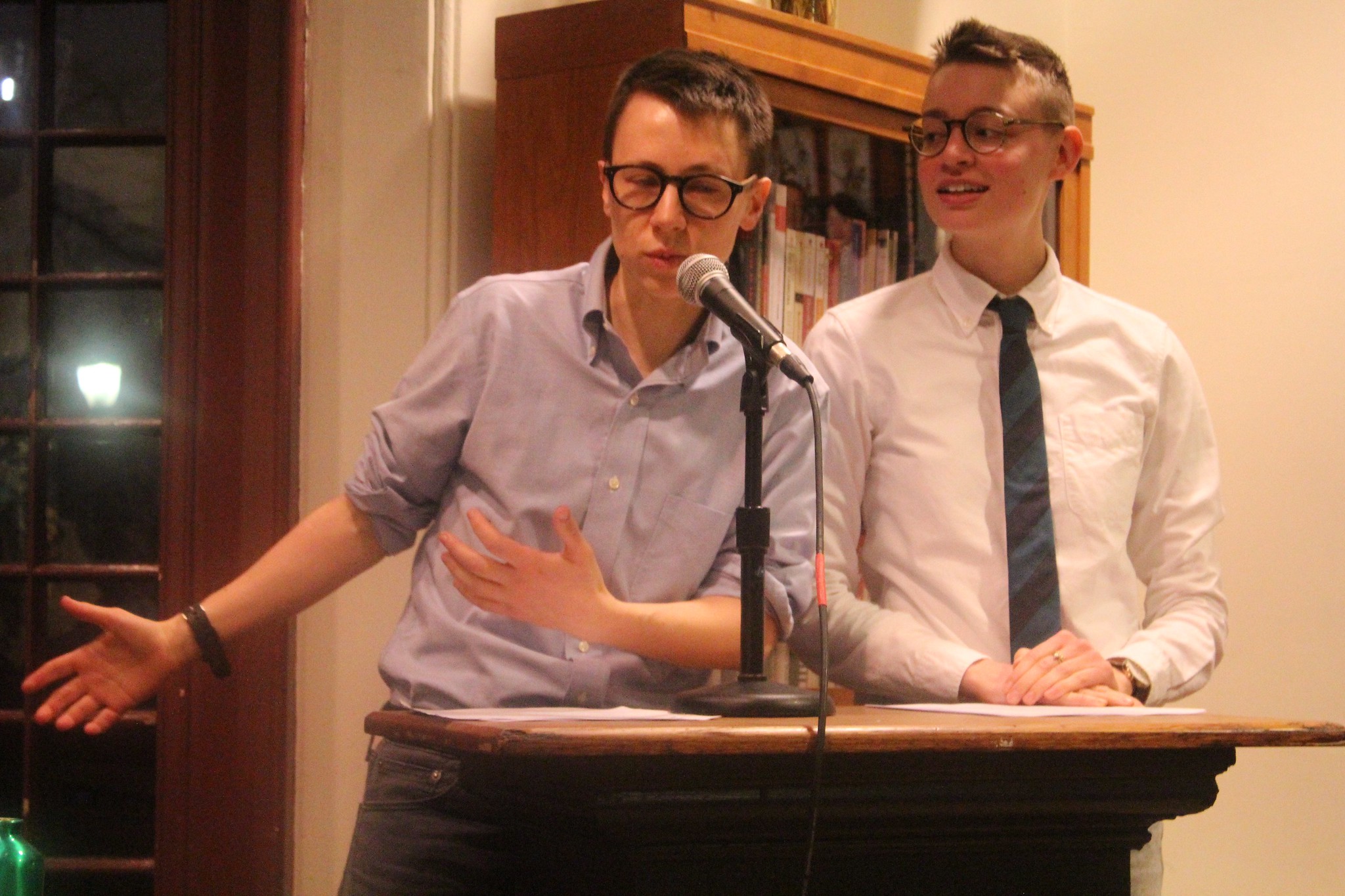
Organized and hosted by Davy Knittle, "City Planning Poetics" holds events that invite one or more poets and one or more planners, designers, planning historians or others working in the field of city planning to discuss a particular topic central to their work, to ask each other questions, and to read from their current projects.
erica kaufman is the author of POST CLASSIC (forthcoming from Roof Books), INSTANT CLASSIC (Roof Books, 2013) and censory impulse (Factory School, 2009). she is also the co-editor of NO GENDER: Reflections on the Life and Work of kari edwards (Venn Diagram, 2009), and of Adrienne Rich: Teaching at CUNY, 1968-1974 (Lost & Found: The CUNY Poetics Document Initiative, 2014). Prose and critical work can be found in: Rain Taxi, The Poetry Project Newsletter, Jacket2, Open Space/SFMOMA Blog, Women's Studies Quarterly, and in The Color of Vowels: New York School Collaborations (ed. Mark Silverberg, Palgrave MacMillan, 2013). Additional critical work is forthcoming in the MLA Guide to Teaching Gertrude Stein (eds. L. Esdale and D. Mix) and Reading Experimental Writing (ed. Georgina Colby). kaufman is the Director of the Institute for Writing & Thinking at Bard College, and teaches in the Master of Arts in Teaching Program and in the undergraduate college.
Jen Jack Gieseking is an urban cultural geographer, feminist and queer theorist, environmental psychologist, and American Studies scholar. He is engaged in research on co-productions of space and identity in digital and material environments. Jack's work pays special attention to how such productions support or inhibit social, spatial, and economic justice in regards to gender and sexuality. He is working on his second book project, A Queer New York: Geographies of Lesbians, Dykes, and Queer Women, 1983-2008, which is under contract with NYU Press and expected to be released in print and online open access in 2019. Jack is also conducting research on trans people's use of Tumblr as a site of cultural production. He is Assistant Professor of Public Humanities in American Studies at Trinity.
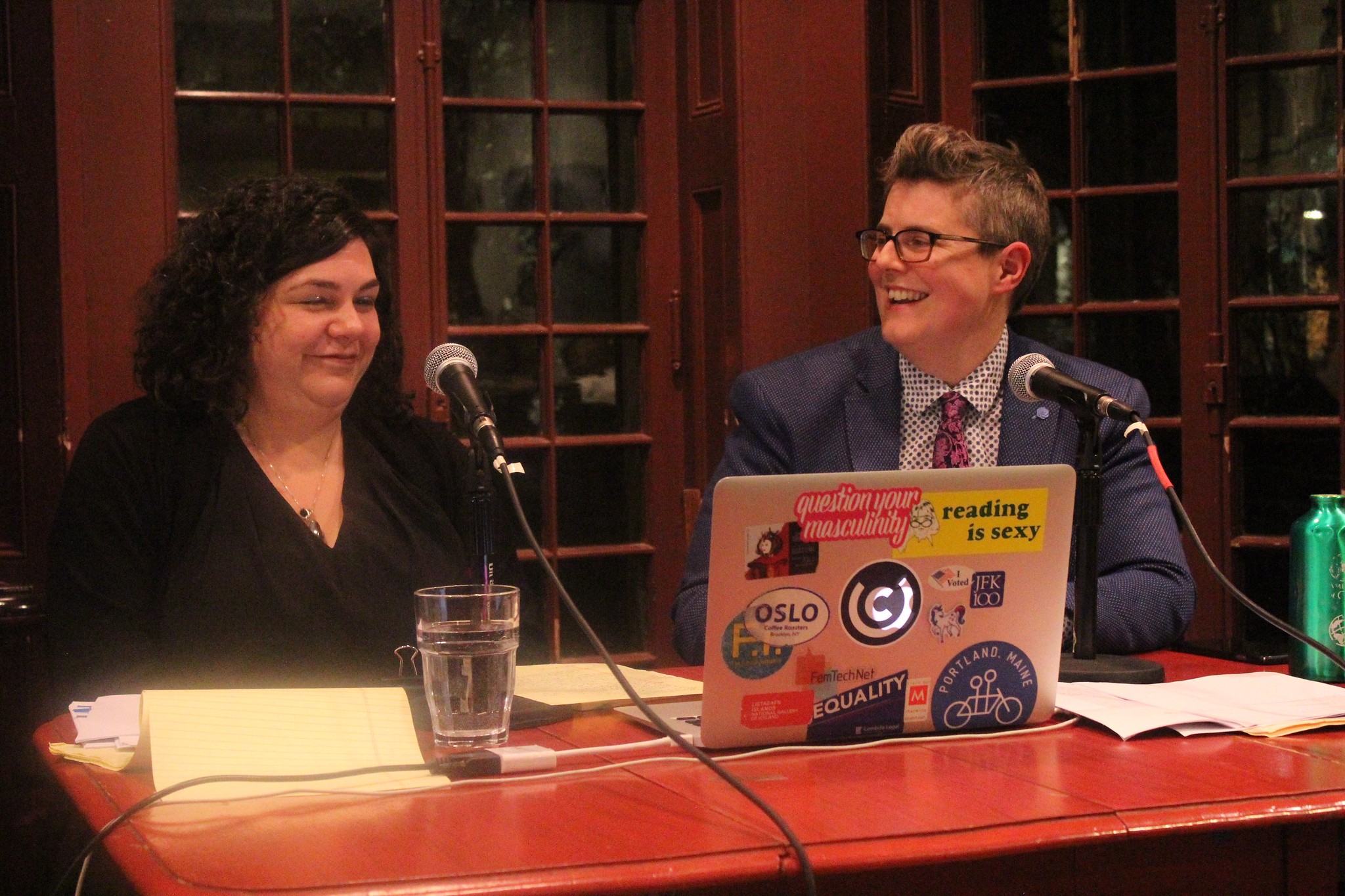
November 13, 2017: CITY PLANNING POETICS 4: URBAN MEMORY
- watch: a video recording of this event via KWH-TV
- listen to an audio recording of this event
Simone White is the author of Dear Angel of Death (coming later this year from Ugly Duckling Presse), Of Being Dispersed, and House of Envy of All the World, the poetry chapbook, Unrest, and the collaborative poem/painting chapbook, Dolly, with Kim Thomas. Her poetry and prose have been featured in NYTimes Book Review, Harper's Magazine, BOMB Magazine, Chicago Review, and Harriet: The Blog. She has been the recipient of the 2017 Whiting Award, Cave Canem Foundation fellowships, and recognition as a New American Poet for the Poetry Society of America, in 2013. She works as Program Director at The Poetry Project and teaches writing and American literature at The New School, Eugene Lang College.
Randall Mason plays several roles at Penn's School of Design: Executive Director of PennPraxis; Associate Professor of City & Regional Planning; and Chair of the Graduate Program in Historic Preservation. His published work includes: The Once and Future New York, on the origins of historic preservation in New York City (University of Minnesota Press, 2009, winner of the Society of Architectural Historians' Antoinette Forester Downing Award), and North Brother Island: The Last Unknown Place in New York City (with photographer Christopher Payne, Fordham University Press, 2014). Mason's professional practice includes projects at many scales, addressing planning, preservation and public space issues, commissioned by organizations including the Brookings Institution, Getty Conservation Institute, William Penn Foundation, the City of Philadelphia, and the National Park Service. His education includes a PhD from Columbia University (urban planning/urban history), MS from Pennsylvania State University (geography), and BA from Bucknell (geography). He worked previously at the Getty Conservation Institute, University of Maryland and Rhode Island School of Design, and was the recipient of the 2012-13 National Endowment for the Arts Rome Prize.
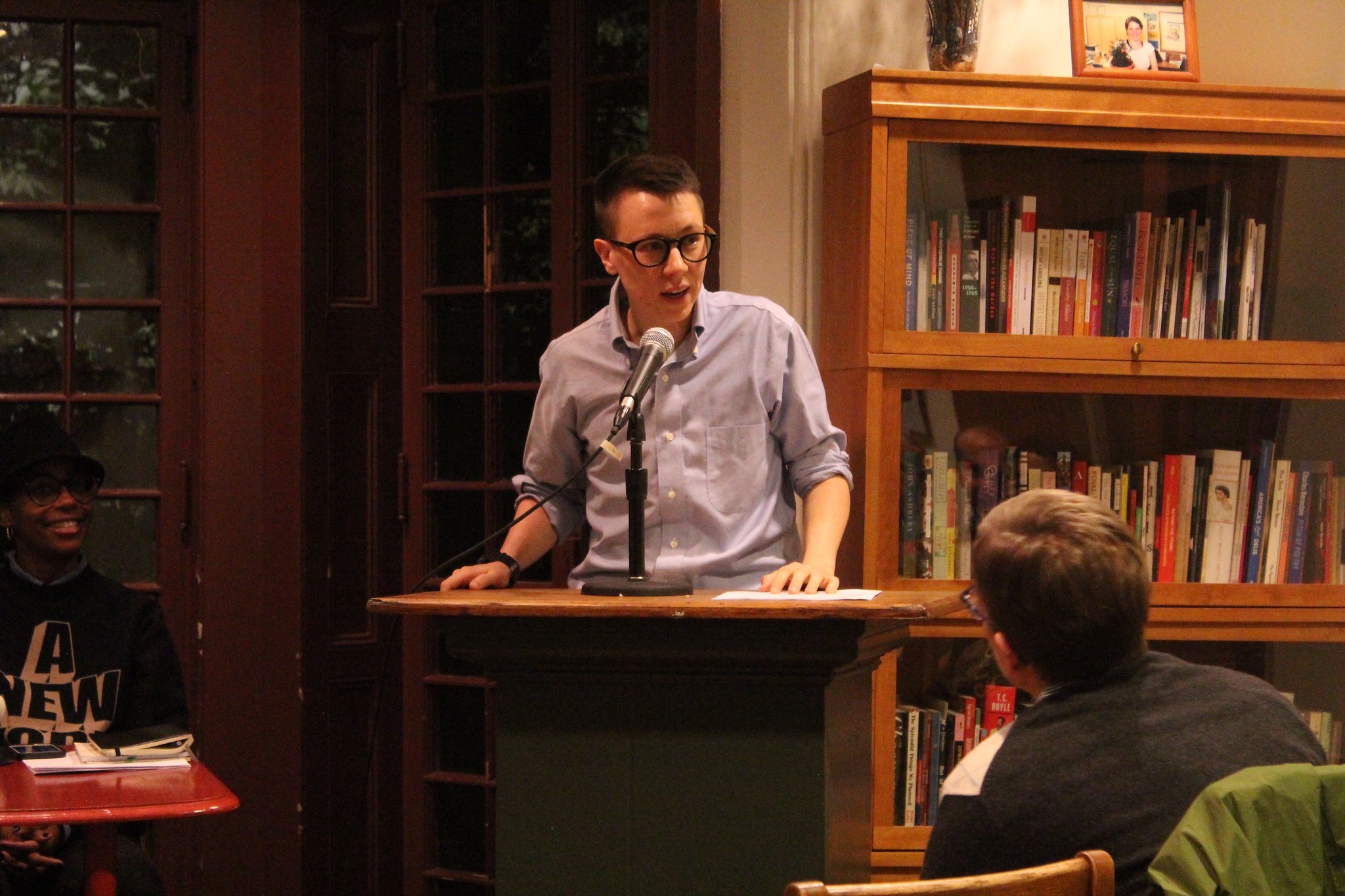
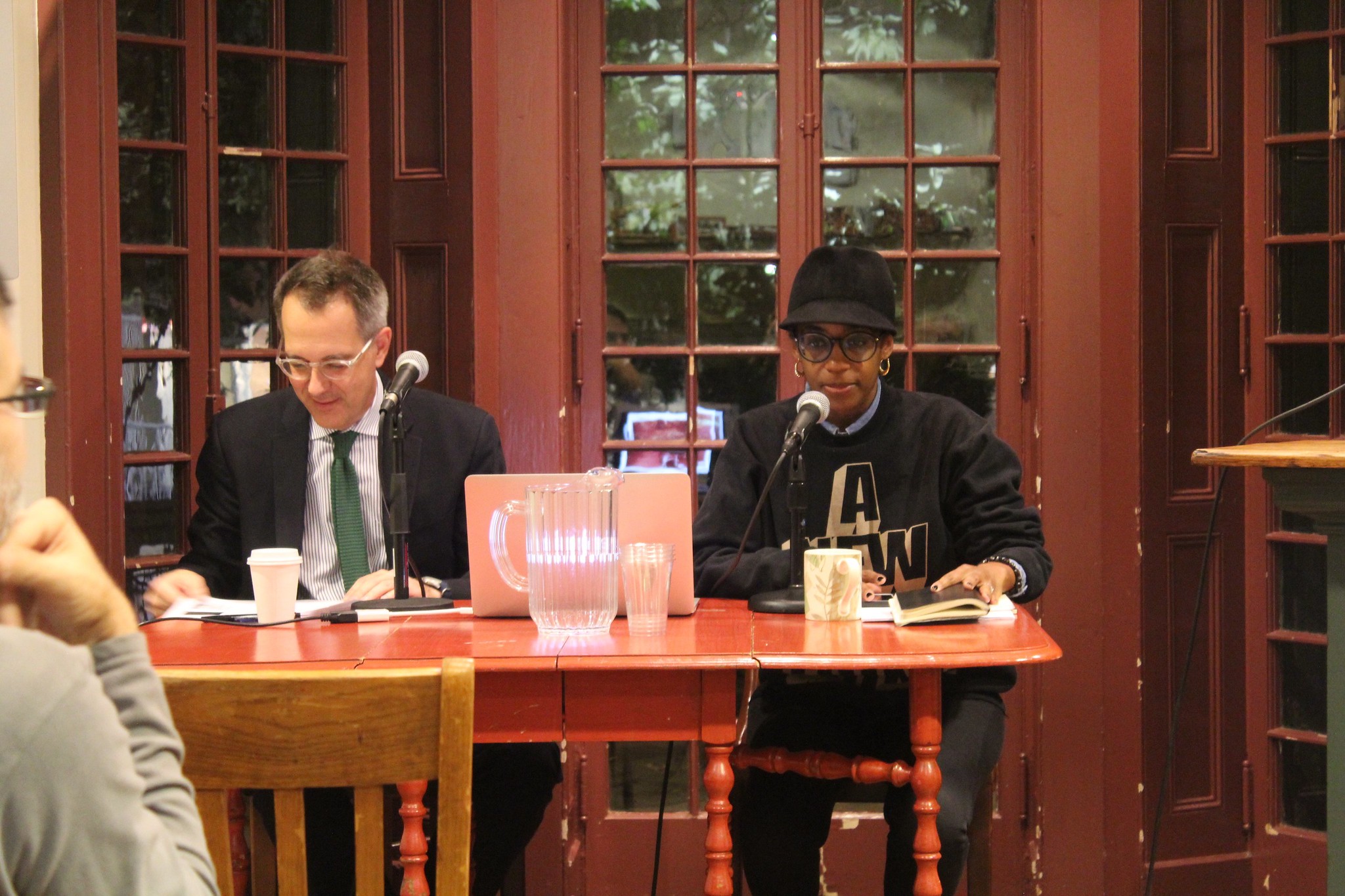
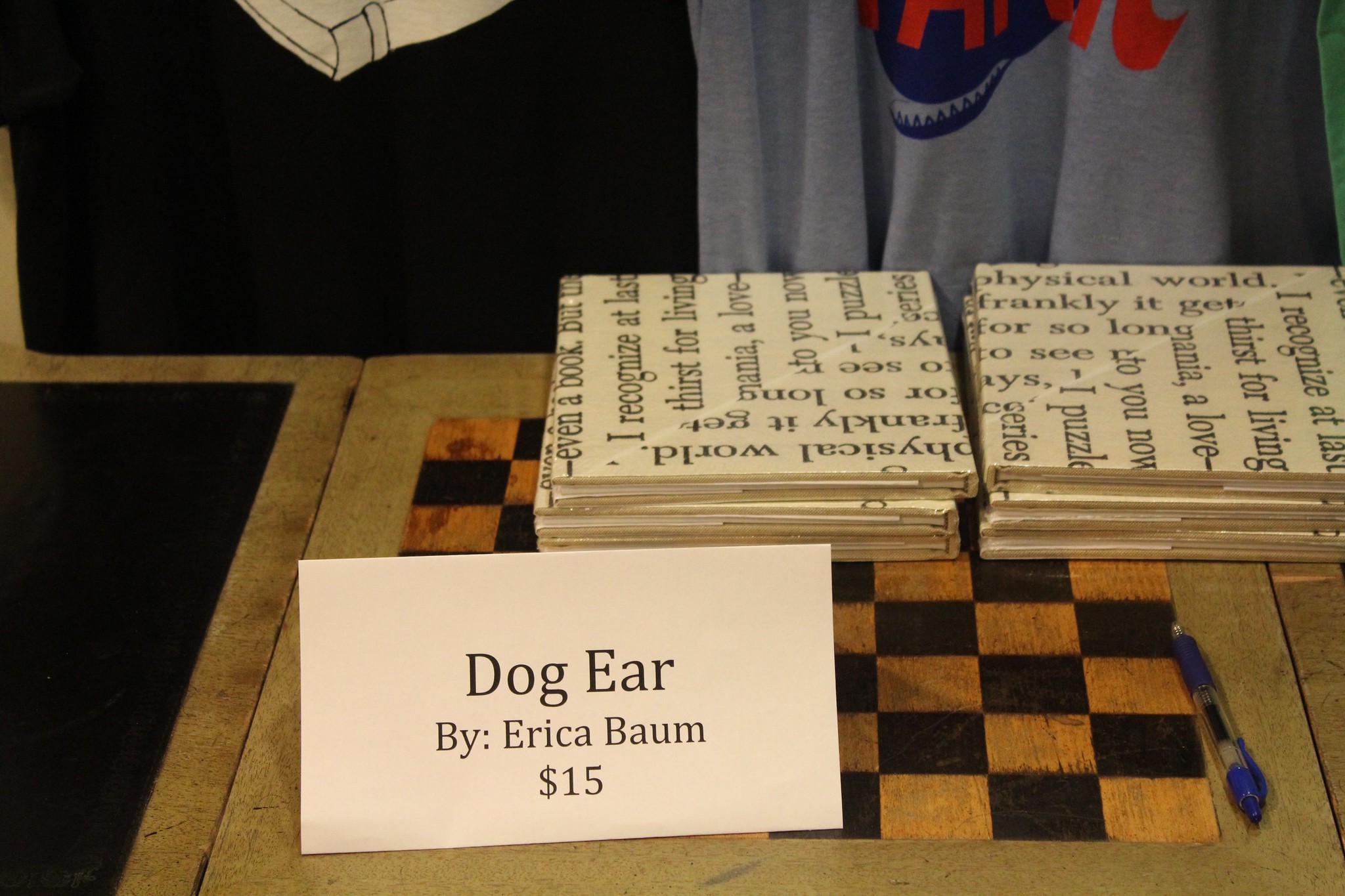
November 8, 2017: ARTIST ERICA BAUM IN CONVERSATION WITH AL FILREIS
- watch: a video recording of this event via KWH-TV: part 1, part 2
- listen to an audio recording of this event
Erica Baum (b. 1961, New York; lives and works in New York) received her BA from Barnard College and her MFA from Yale University. Current and recent museum exhibitions include Arcades: Contemporary Art and Walter Benjamin, The Jewish Museum, New York; For the Love of Things: Still Life, Albright-Knox Art Gallery, Buffalo, NY, 2016; Photo-Poetics: An Anthology, Kunsthalle Berlin and Solomon R. Guggenheim Museum, 2015; Reconstructions: Recent Photographs and Video from the Met Collection, The Metropolitan Museum of Art, New York, 2015; After Dark, Mamco, Geneva, 2015; and the 30th Bienal de São Paulo: The Imminence of Poetics, São Paulo, Brazil, 2012. Recent solo exhibitions include The Following Information, Bureau, New York, 2016; Stanzas, Galerie Crevecoeur, Paris, 2015; The Paper Nautilus, Bureau, New York, 2014; Erica Baum, Kunstverein Langenhagen, Langenhagen, Germany, 2013; and Naked Eye Anthology, Bureau, New York, 2012. Her work is held in the public collections of the Whitney Museum of American Art, New York; Solomon R. Guggenheim Museum, New York; The Metropolitan Museum of Art, New York; Albright-Knox Art Gallery, Buffalo, New York; Centre National des Arts Plastiques, Paris; FRAC Ile de France, Paris; and the Yale Art Gallery, New Haven, Connecticut. 2017 two-person exhibitions include Until it Makes Sense with Ajit Chauhan at SVIT, Prague AAa:Quien Erica Baum and Libby Rothfeld Bureau, New York ; Strange Days, Le Plateau, Frac Île-de-France, Paris, Tuer La Marionette at CACBM, Paris France.
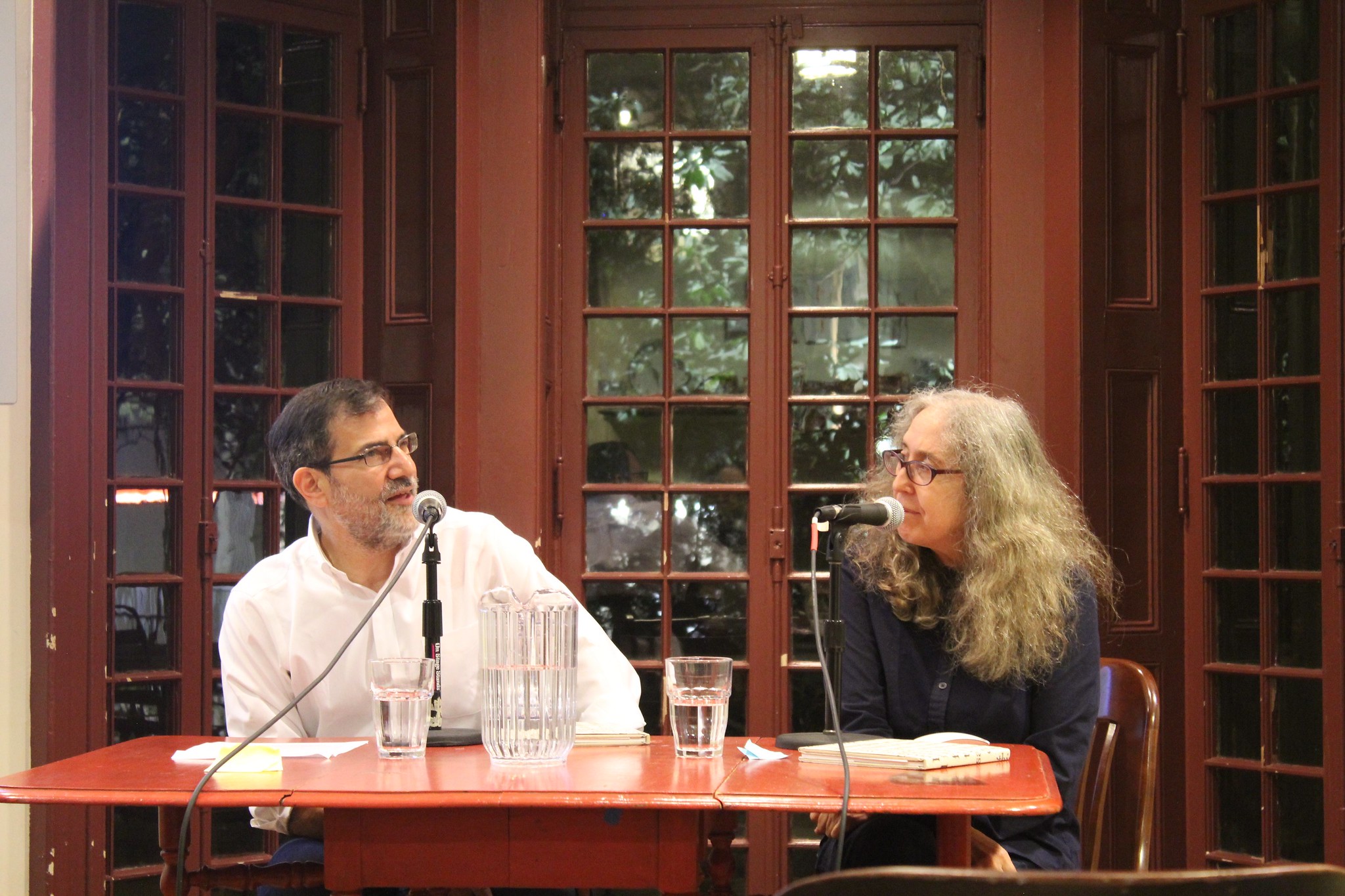
October 19, 2017: THE LIFE AND MUSIC OF LOU REED
- watch: a video recording of this event via KWH-TV: part 1, part 2
- listen to an audio recording of this event
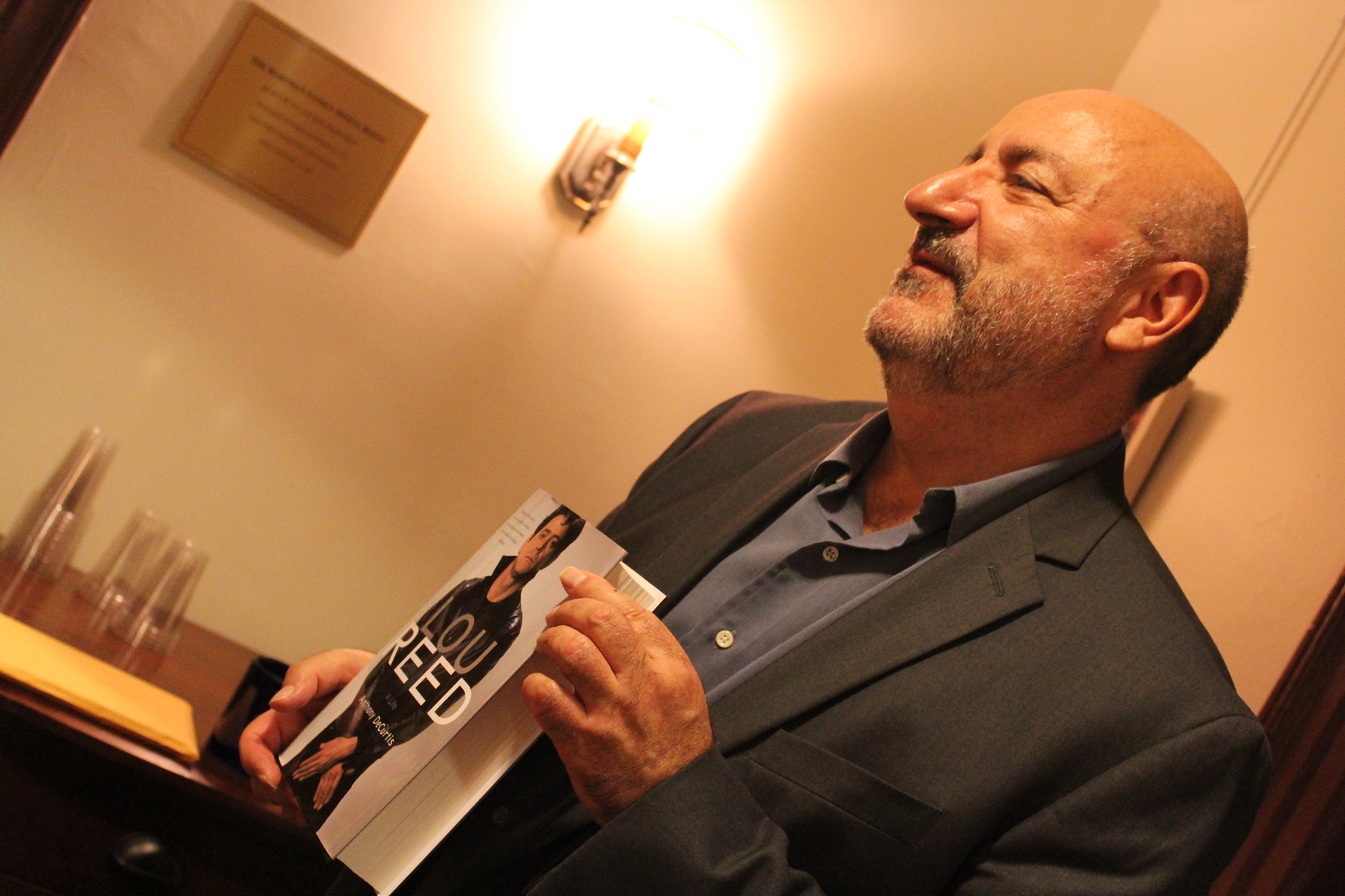
Join us for a discussion with Rolling Stone editor and Penn faculty member Anthony DeCurtis about the life and music of Lou Reed. In his new book Lou Reed: A Life, DeCurtis, who knew Reed and interviewed him extensively, tells the provocative story of Reed's complex and chameleonic life. With unparalleled access to dozens of Reed's friends, family, and collaborators, DeCurtis tracks Reed's five-decade career through the accounts of those who knew him and through Reed's most revealing testimony, his music. We travel deep into his defiantly subterranean world, enter the studio as the Velvet Underground record their groundbreaking work, and revel in Reed's relationships with such legendary figures as Andy Warhol, David Bowie, and Laurie Anderson. Gritty, intimate, and unflinching, Lou Reed is an illuminating tribute to one of the most incendiary artists of our time.
Anthony Curtis is a distinguished lecturer in the creative writing program at Penn, as well as a contributing editor for Rolling Stone. He is the author of In Other Words and Rocking My Life Away and the cowriter of Clive Davis's autobiography, The Soundtrack of My Life, a New York Times bestseller. DeCurtis is a Grammy Award winner, and holds a PhD in American literature.
"Anthony DeCurtis was one of the few music critics Lou Reed read and whose company he enjoyed. After reading this sublime and subtle book, the mystery of Lou's respect for Anthony is revealed. Anthony is a great story teller, a writer's writer, turning pain into beauty the way Lou did in his songs."—Bono
"I am personally familiar with the depth, seriousness and sensitivity of Anthony DeCurtis's writing, and, of course, knew Lou Reed and felt the impact of his coruscating work. A brilliant artist has found a biographer with the insight to, as Lou said, "pass through fire" and be a definitive interpreter of both his music and his life.”—Sting
"When most people think of Lou Reed, they picture the black, rotting heart of rock and roll, full of dissonance, decadence and decay. But as Anthony DeCurtis makes clear in his new book, behind the image and the rumors, Lou was one thing: a writer, a man who spent his life telling the absolute, painful truth in his songs - the truth about himself, the scenes he observed, and the world at large. His words were so powerful that the Velvet Underground had to invent a new musical language to match them. I'm not the first musician to pledge allegiance to Lou and the Velvets, and I won't be the last. Read this book, and explore the f*cking genius that was Lou Reed."—Peter Buck, co-founder and lead guitarist of R.E.M.

September 26, 2017: EDIBLE BOOKS CONTEST
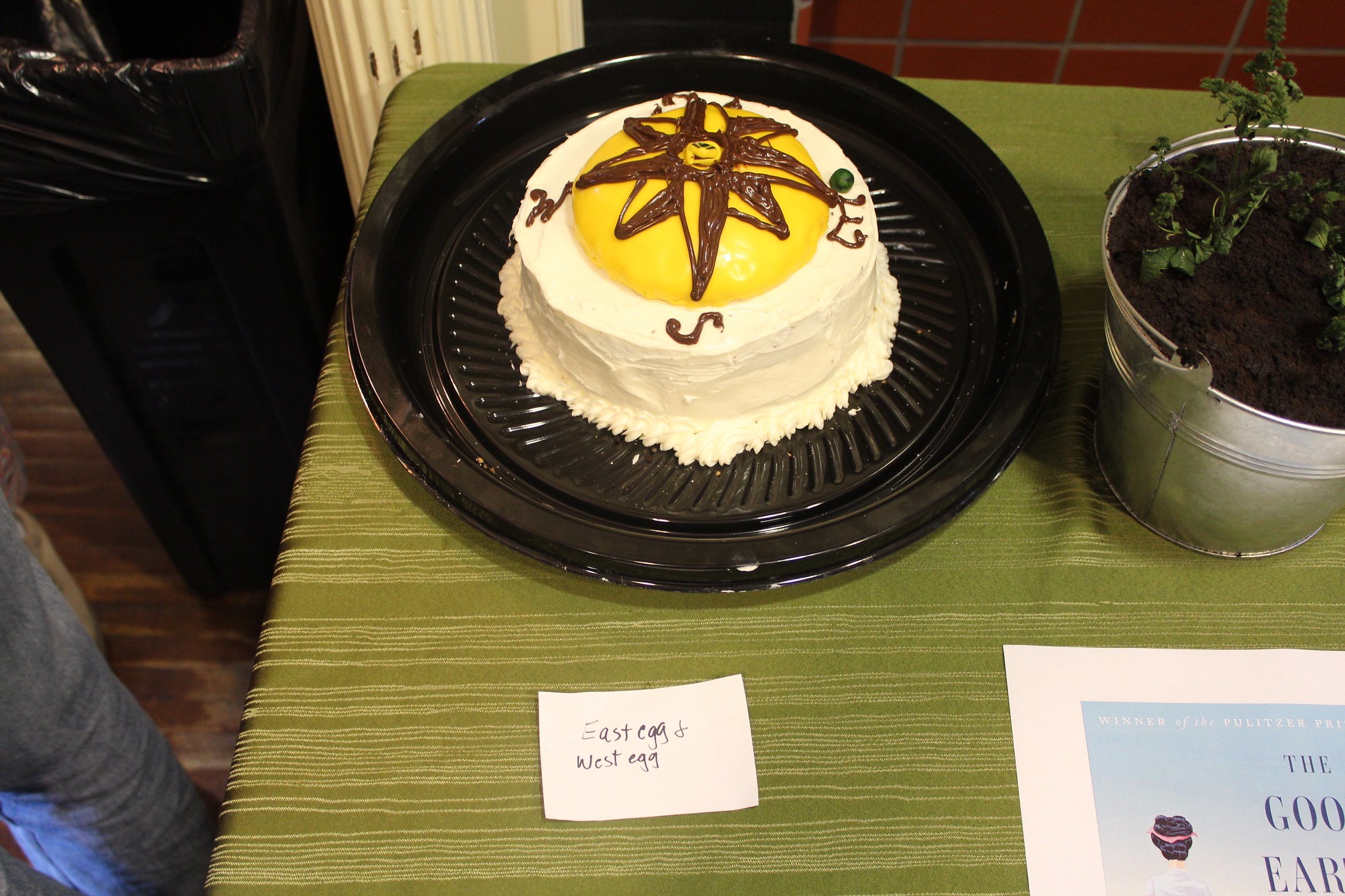
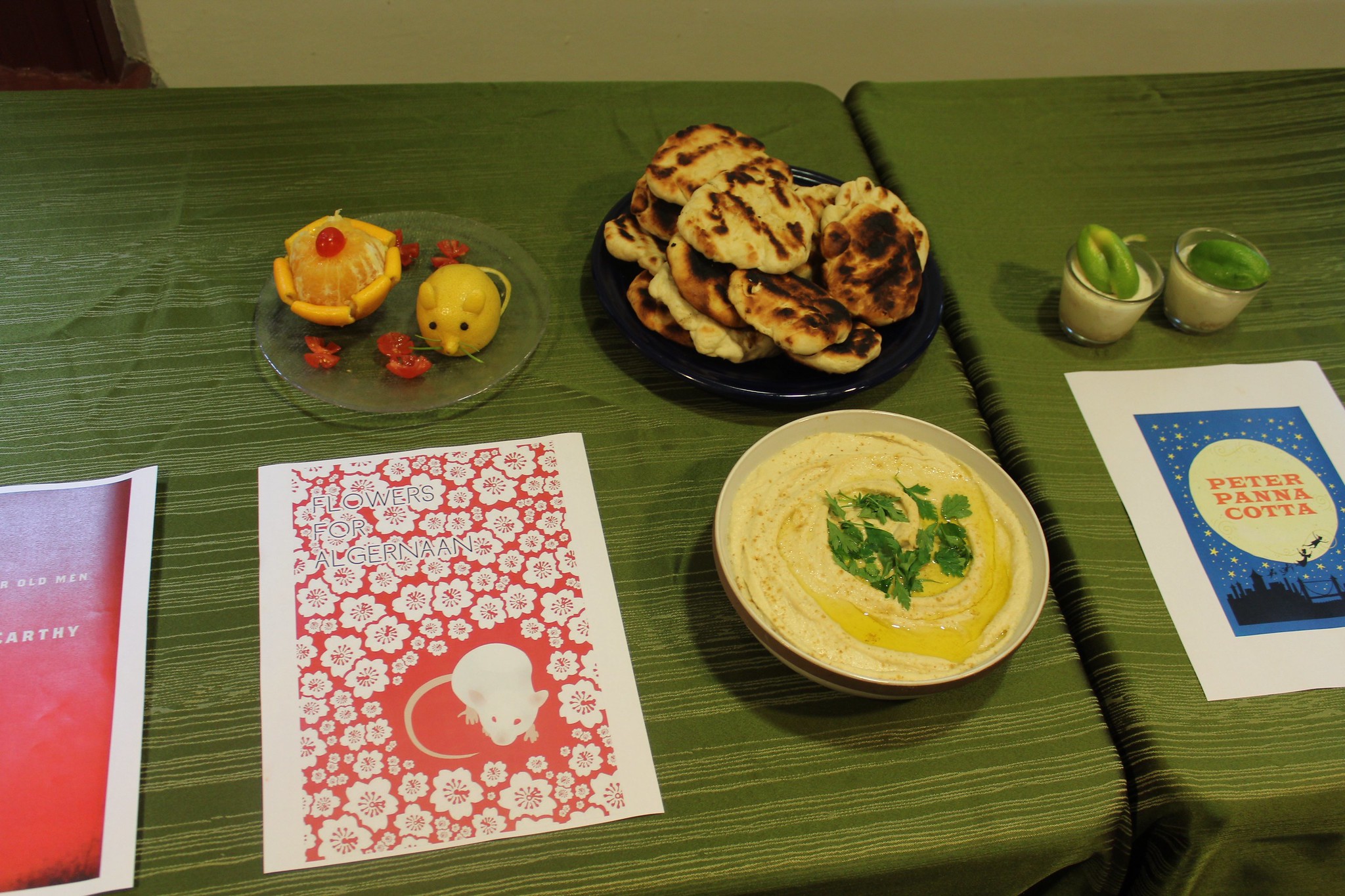
Our Edible Book Contest will celebrate works of art inspired by books and created in kitchens. Past entries have included (somewhat) literal depictions of literary characters or scenes, punny interpretations of book titles, or cake-sculptures of actual books. Prizes will be awarded in a variety of categories (including best pun, most literary, most literal, yummiest, and most architectural). Everyone is welcome to browse the library of edible titles or to contribute their own.
April 20, 2017: CITY PLANNING POETICS 3: QUEER PLACEMAKING
- watch: a video recording of this event via KWH-TV
- listen to an audio recording of this event
Organized and hosted by Davy Knittle, "City Planning Poetics" holds events that invite one or more poets and one or more planners, designers, planning historians or others working in the field of city planning to discuss a particular topic central to their work, to ask each other questions, and to read from their current projects.
Max J. Andrucki is an assistant professor in the Department of Geography & Urban Studies at Temple University. He holds degrees from Leeds University, the University of Vermont, and Columbia University and has published on sexuality and space, geographies of the body, mobilities, and critical whiteness studies. Also a songwriter, he's a member of long-running indiepop band The Smittens. He lives in New York City.
Rachel Levitsky came out as a Lesbian in 1984 and as a poet in 1994. In between those two events she wrote fact sheets and polemic for street actions demonstrating for LGBT and Women's Liberation, Women's Health, and against the state negligence of the AIDS epidemic. As a poet and a prose writer and teacher, she's been interested in the strange ways of USAmerican subjectification. She's specifically informed by being born of Jewish refugees and immigrants with an absented story of what came before settling in New York City. She is the author of three book length collections, Under the Sun (Futurepoem, 2003), NEIGHBOR (UDP, 2009) and the poetic novella, The Story of My Accident is Ours (Futurepoem, 2013). She calls her current writing project The Mother of Separation, which she describes as a 'memoir without memory.' Adjunct and intersecting with her writing practice, Levitsky builds and participates in a variety of publishing, collaboration and pedagogical/performative activities. In 1999 she founded Belladonna* which is now Belladonna* Collaborative, a matrix of literary action promoting the writers and writing of the contemporary feminist avant-garde. In 2010, she co-founded the Office of Recuperative Strategies, which has staged urban walks and instant performances and publications in a variety of cities, about which more can be learned at OORS.net. She is currently a fellow of LMCC Process Spaces, an open studio project on Governors Island. She teaches writing Pratt Institute, Naropa Summer Writing Program and lay institutions in NYC. In 2009 she was Fellow in Poetics and Poetic Practice at University of Pennsylvania's Center for Programs in Contemporary Writing.
March 30, 2017: MARATHON READING: THE HITCHHIKER’S GUIDE TO THE GALAXY
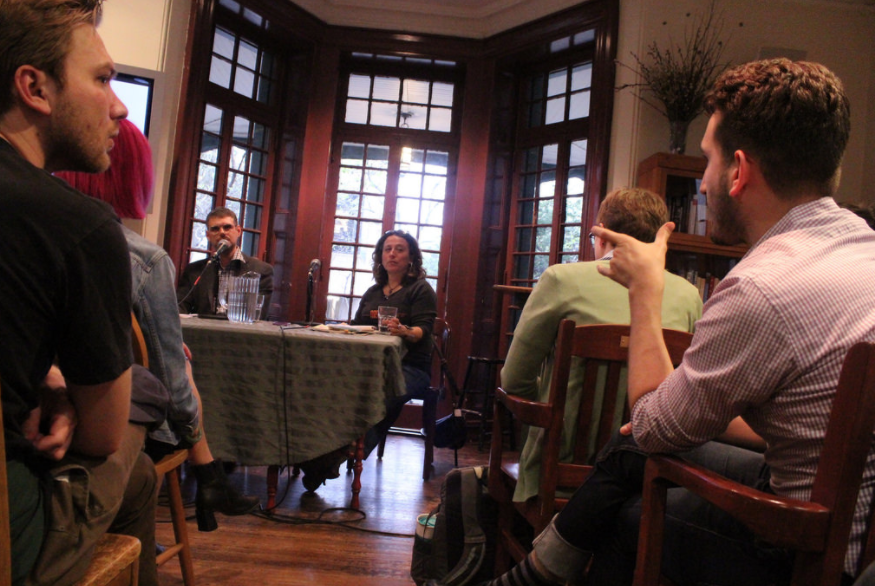
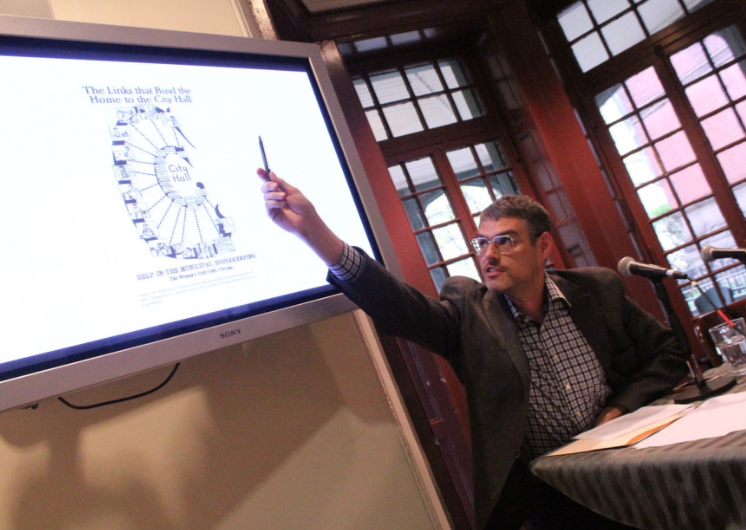
Each year, the Hub selects a book to read aloud, straight through from beginning to end, and we celebrate the book with extravagant decorations, food, and props all derived from the text. To contribute ideas or sign up as a reader for this year’s book, The Hitchhiker’s Guide to the Galaxy, please email wh@writing.upenn.edu

February 14, 2017: VALENTINES DAY CHILI COOK-OFF + CHOPPED
Anyone can participate in this KWH-style cooking competition: a chili cook-off, followed by a head-to-head dessert throw-down. To participate in the cook-off, please make a big batch of your best chili — all kinds of chili welcome — and bring it to the KWH (ready to eat!) by 5:00 PM for a community tasting. (Chilis can be made by teams or individuals). The two best chili-makers or chili-making teams will face-off in a dessert throw down in the KWH Kane-Wallace Kitchen. If you plan to make a chili: email wh@writing.upenn.edu to let us know. To help in your efforts, we’ll have a wide selection of chili and new spices available in the KWH kitchen by February 10th. We’ll also happily reimburse chili makers up to $25 per batch (with receipt).
January 20, 2017: PENN PLAYS FELLOWSHIP READING
Join us for a workshop reading and post-reading discussion of Birds of a Feather, by Olivia Matlin (C’18), winner of the fourth annual Penn Plays Fellowship, sponsored by Kelly Writers House and Penn's Theatre Arts Program. This event kicks off an intensive workshop process led by playwriting advisor Michele Volansky and project director David O’Connor, which will culminate in a final, public reading on Friday, February 3rd at 7pm in the Montgomery Theatre, Annenberg Center for the Performing Arts.
October 26, 2016: WRITING ABOUT TV: HOME
- watch: a video recording of this event
- listen: to an audio recording of this event
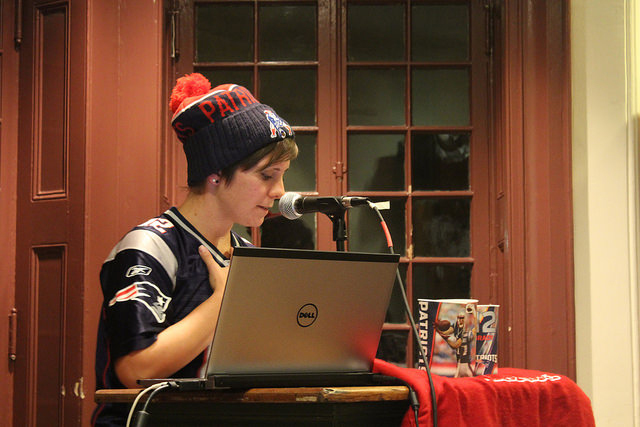
This year’s Writing about TV program will feature seven different TV fans/critics/watchers who will each select a show to discuss, using “home” as the driving theme or thread to guide their remarks. “Writing about TV: Home” will allow us to explore themes of origin, family, dwelling, space, comfort, and more, while promoting smart talk about TV. How do representations of home on television relate to real-world homes? How do ideas about home — metaphoric and literal — manifest in various eras or genres of TV? What can cultural representations of home tell us about ourselves?
September 16, 2016: EDIBLE BOOKS PARTY
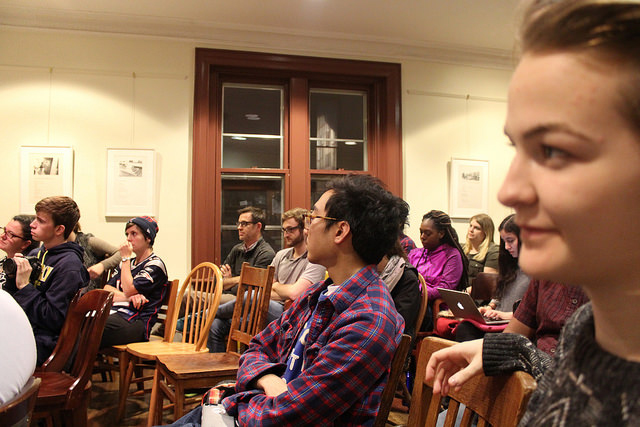
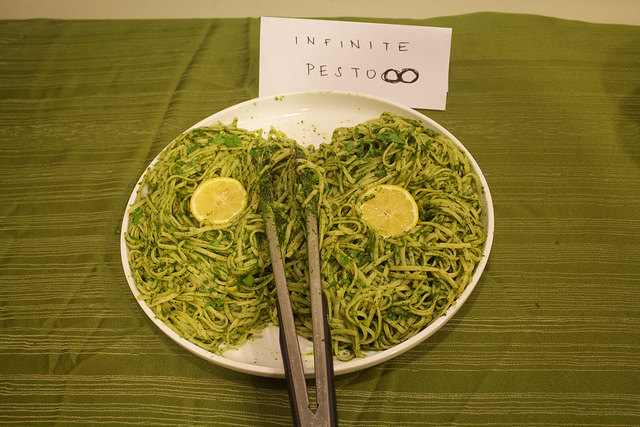
Our Edible Book Contest will celebrate works of art inspired by books and created in kitchens. Past entries have included (somewhat) literal depictions of literary characters or scenes, punny interpretations of book titles, or cake-sculptures of actual books. Prizes will be awarded in a variety of categories (such as best pun, most literary, most literal, yummiest, most architectural, least appetizing). All are welcome to join the festival, to browse the library of edible titles, or to contribute their own.
September 7, 2016: A CONVERSATION WITH SHARON HAYES AND BROOKE O'HARRA
- watch: a video recording of this event
- listen: to an audio recording of this event
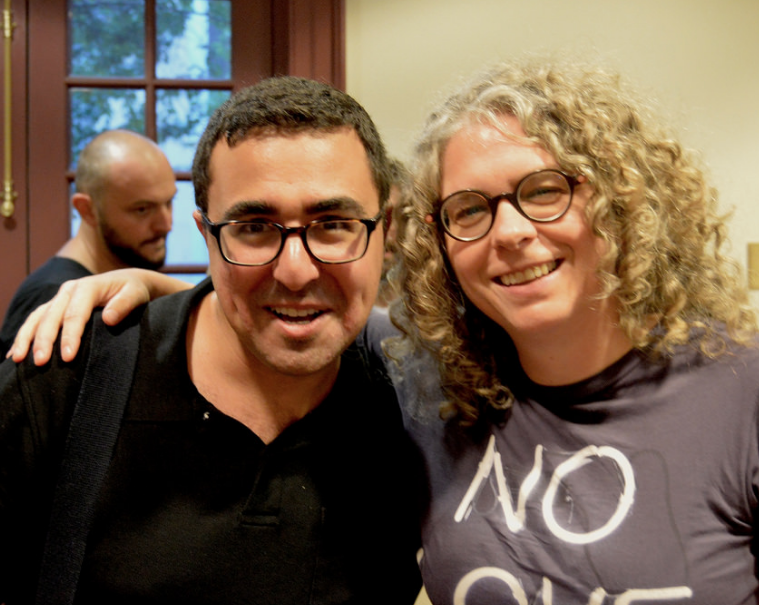
In 1999, BROOKE O'HARRA co-founded, with composer Brendan Connelly, the NYC-based The Theatre of a Two-headed Calf. The ensemble-driven company layers various theatrical styles, texts and musical forms for unexpected experiences such as the 1970s punk rock-inspired adaptation of the 18th-century, Chikamatsu play Drum of the Waves of Horikawa (OBIE Award, 2007), or the re-imagined take on chamber opera and motherhood, You, My Mother (2012). As part of the Dyke Division of Two-headed Calf, she conceived, directed, wrote, and performed the popular lesbian soap opera Room For Cream, (La Mama, 2008-2011). In addition to developing and directing all 14 of the Two-headed Calf productions, she is also a freelance director with multiple honors including a Doris Duke Performing Artists Impact Award in 2015. She recently developed a new musical with Lisa D'Amour and composer Brendan Connelly titled Jack Spicer's Billy the Kid. Brooke is currently working on a nine-part performance project titled I'm Bleeding All Over the Place: Studies in Directing or Nine Encounters Between Me and You; the first three performances were developed at The New Museum, NYC in 2014. The fourth part I'm Bleeding All Over the Place: A Living History Tour will run as a performance tour for 12 days (fifty tours) in June 2016 at La Mama ETC. She also has an ongoing collaborative performance, Time Passes, with visual artist Sharon Hayes.
SHARON HAYES engages multiple mediums–video, performance, and installation–in ongoing investigation into specific intersections between history, politics and speech. These relationships are central to all of her work from the 2003 performance and video installation: Symbionese Liberation Army (SLA) Screeds #13, 16, 20 & 29, a re-speaking of each of the four audio tapes made by Patty Hearst and the SLA during the period of Hearst's kidnapping to her recent work Ricerche, a large-scale video investigation that steps off of Pier Paolo Pasolini's brilliant film, Comizi d'Amore. Hayes' work is concerned with developing new representational strategies that examine and interrogate the present political moment as a moment that reaches simultaneously backward and forward; a present moment that is never wholly its own but rather one that is full of multiple past moments and the speculations of multiple futures. From this ground, Hayes often addresses political events or movements from the 1960s through the 1990s. Her focus on the particular sphere of the near-past is influenced by the potent imbrication of private and public urgencies that she experienced in her own foundational encounters with feminism and AIDS activism. Hayes has had recent solo exhibitions at Andrea Rosen Gallery (New York), Tanya Leighton Gallery (Berlin), the Whitney Museum of American Art (New York) and the Museo Nacional Centro de Arte Reina Sofia (Madrid). Her work been shown at the Venice Biennale (2013), the Museum of Modern Art (New York), the Guggenheim Museum (New York) and numerous museums and venues in Europe and the Americas. Hayes is also a recipient of the Alpert Award in Visual Arts (2013), an Anonymous Was a Woman Award (2013), Louis Comfort Tiffany Foundation Fellowship (2007) among other awards.
She is an Associate Professor in the Department of Fine Arts, PennDesign, University of Pennsylvania.
September 6, 2016: CITY PLANNING POETICS 2: WHAT ARE THE TOOLS THAT SHAPE THE BUILT ENVIRONMENT? WHERE DID THEY COME FROM? HOW HAVE THEY BEEN USED?
- watch: a video recording of this event
- listen: to an audio recording of this event
City Planning Poetics is a semesterly series that invites one or more poets or more planners, designers, planning historians, or others working in the field of city planning to discuss a particular topic central to their work, to ask each other questions, and to read from their current projects.
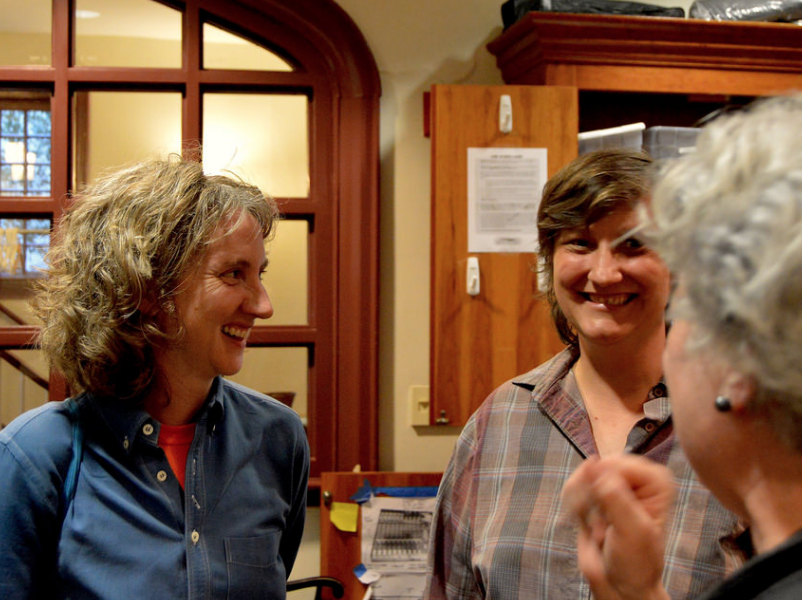
FRANCESCA RUSSELLO AMMON is an assistant professor of City & Regional Planning and Historic Preservation in the School of Design. A cultural historian of the urban built environment, she has published articles on topics including urban renewal, gentrification, and children's books about destruction. Her recent book, Bulldozer: Demolition and Clearance of the Postwar Landscape (Yale, 2016), traces the transformation of this iconic machine from wartime weapon to instrument of postwar planning. As a Mellon Researcher at the Canadian Centre for Architecture, she is now beginning a new project on the role of photographs in shaping postwar historic preservation and urban renewal.
JASON MITCHELL is most recently the author of FIELD for Peter Culley (self-published 2015) and is the host and coordinator of the Philadelphia reading series Frank O'Hara's Last Lover. His writing can be found in Hi Zero, Court Green, Jacket 2, and Stolen Island among others.
March 31, 2016: MARATHON READING: IF ON A WINTER'S NIGHT A TRAVELER
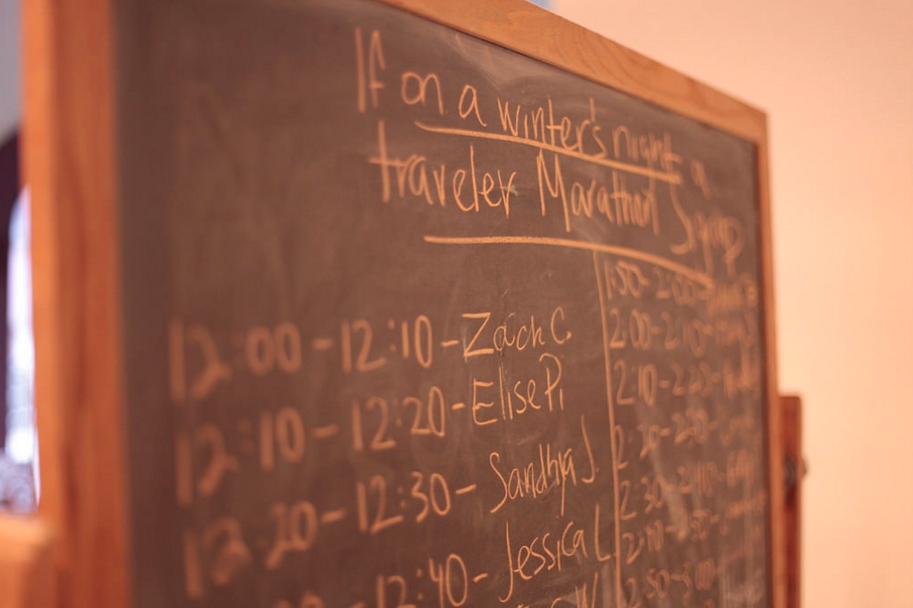
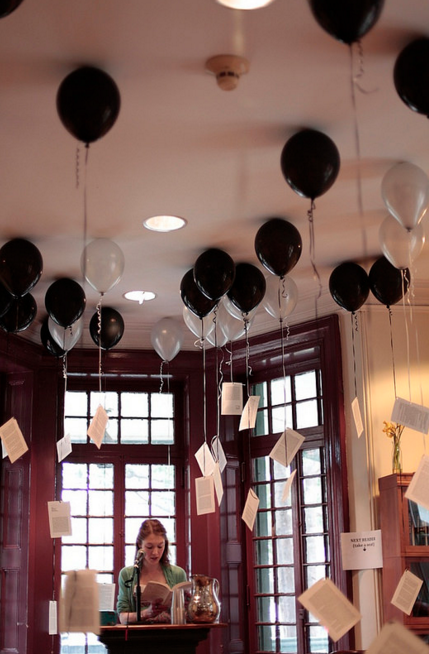
For our first annual Bernheimer Symposium, Program Coordinator Erin Gautsche invented for us what has become an annual tradition. Each year, the Hub selects a book to read aloud, straight through from beginning to end, and we celebrate the book with extravagant decorations, food, and props all derived from the text. This year’s book, If on a winter’s night a traveler, was a wonderful pick as we defrosted in the March air together.
March 16, 2016: Writing About TV: Real
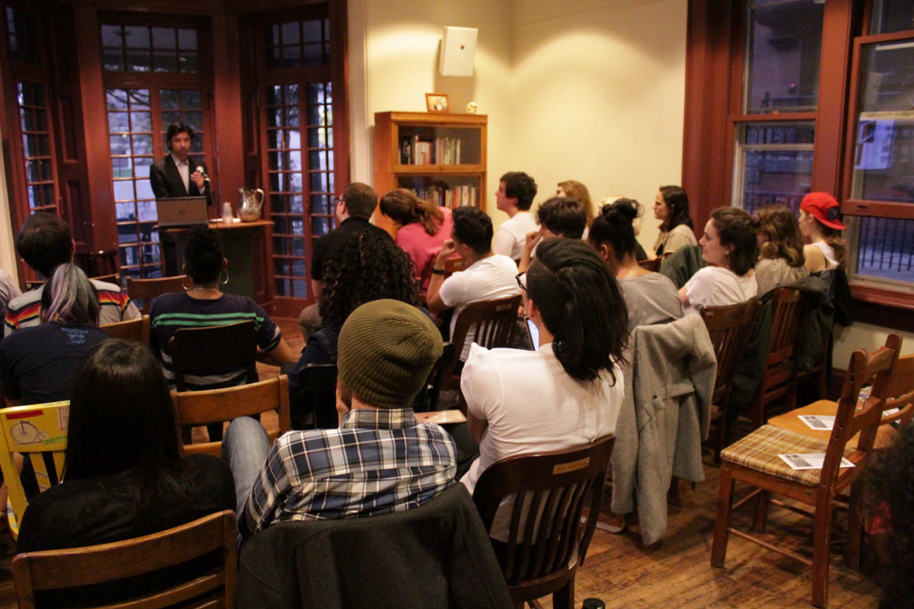
For this newest event in our Writing about TV series, seven different people will each select a TV show to discuss, using “real" as a theme or subject to guide their talk. “Real" could be used as a literal sort of prompt (a reality TV show), as an audience viewpoint (what is it like to watch a particular kind show as an expert, such as a lawyer watching a legal drama), or even more generally as a way to consider TV as a “real” representation of culture.
February 18, 2016: Sonic Poetry
- watch: a video recording of this event
- listen: to an audio recording of this event
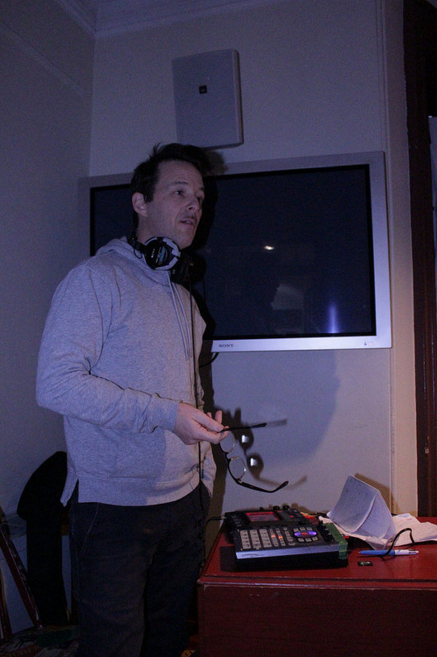
Sonic Poetry is a mash up of images, beats, and samples of poets who work outside mainstream verse culture. Tonight's program is "poetry as social investigation." Joing us as musician Andrew Whiteman (Broken Social Scene, Apostle of Hustle, AroarA) and collaborator Adrienne Amato do some poetry / visual improv using the SP404 and some cracked software.
February 17, 2016: Sensible Nonsense
- watch: a video recording of this event via KWH-TV
- listen to an audio recording of this event
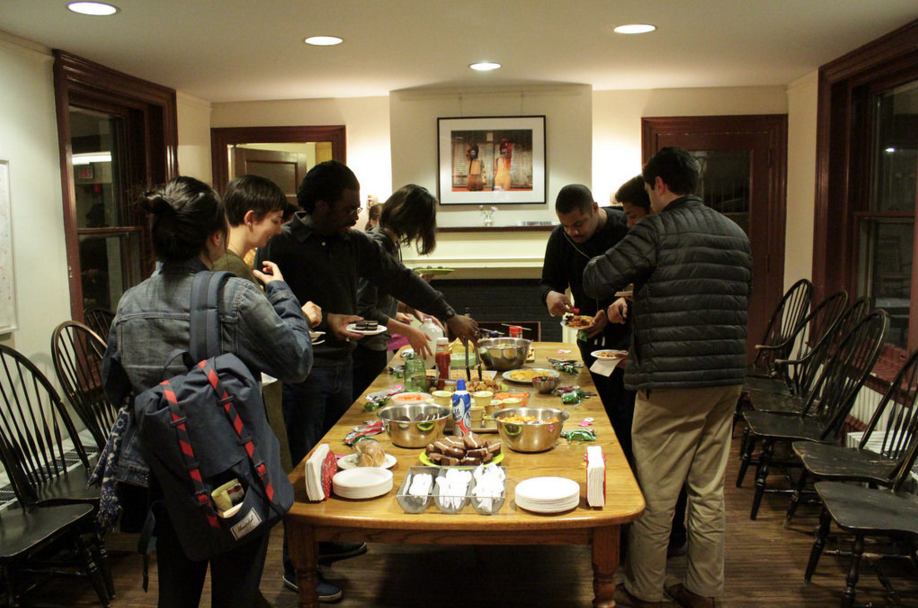
Join us for a celebration of The Sensible Nonsense Project, edited byF Arielle Brousse, and help us honor the humor, pathos, and enduring wisdom of children's books! Six speakers will share stories about their own favorite childhood books, what those books taught them, and how those lessons continue to influence their adult lives. Stay on after the readings for a delicious reception inspired by after-school snacks, and to get more information about how you, too, can participate in the project. In the meantime, visit The Sensible Nonsense Project at sensiblenonsense.us.

February 11, 2016: Boundaries, Therapy, and the Writing Cure: The Case of Anne Sexton
Dawn Skorczewski is Professor of English and Director of University Writing at Brandeis University. An affiliate scholar at the Boston Psychoanalytic Institute and on the faculty of the Massachusetts Institute for Psychoanalysis, she has conducted workshops for psychoanalytic educators across the US and in Europe and South America. Her articles on psychoanalytic education have been published in the Journal of the American Psychoanalytic Association, Psychoanalytic Quarterly, and The American Psychoanalyst. She is the Chair of the Silberger Committee at the Boston Psychoanalytic Institute and the American Psychoanalytic Association's Artist/Scholar in Residence Committee. Her work on Anne Sexton's therapy tapes was published by Routledge in 2012.
Max Cavitch is Associate Professor of English, Comparative Literature, and Psychoanalytic Studies at the University of Pennsylvania. He is the author of the book American Elegy: The Poetry of Mourning from the Puritans to Whitman and of numerous articles on American literature, psychoanalysis, cinema, and animal studies.
Kathleen Ross is a faculty member of the Psychoanalytic Center of Philadelphia, where she teaches candidates and serves as chair of the Curriculum Committee of the Adult Psychoanalytic program. She is in private practice in Center City and is also a clinician on the staff of the Therapy Center of Philadelphia, formerly the Women's Therapy Center. Prior to becoming a clinical social worker and psychoanalyst, Kathleen had a long career in academia, most recently as Professor of Spanish at New York University, a position she left in 2009. In her academic life she specialized in the fields of Colonial Latin America and Translation, and as a Visiting Scholar has taught Translation Theory and Practice at Penn to graduate students in Romance Languages. She has published numerous translations of narrative and poetry from Spanish, including Domingo Faustino Sarmiento's Facundo: Civilization and Barbarism (Univ of California Press, 2004), and Jesus Diaz' The Initials of the Earth (Duke UP, 2006).
Elaine Zickler is a psychoanalyst in a private practice in Moorestown, NJ and is on the faculty at PCOP.
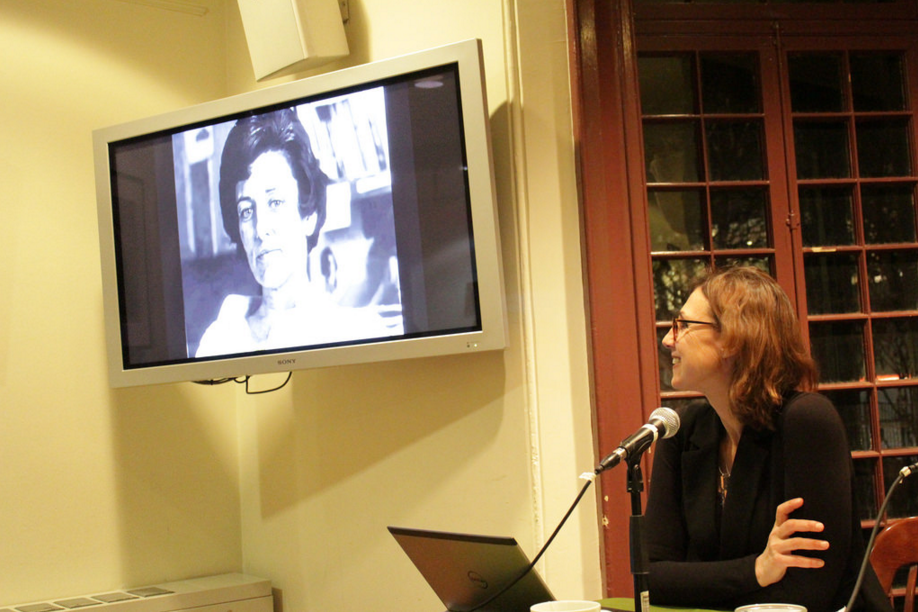

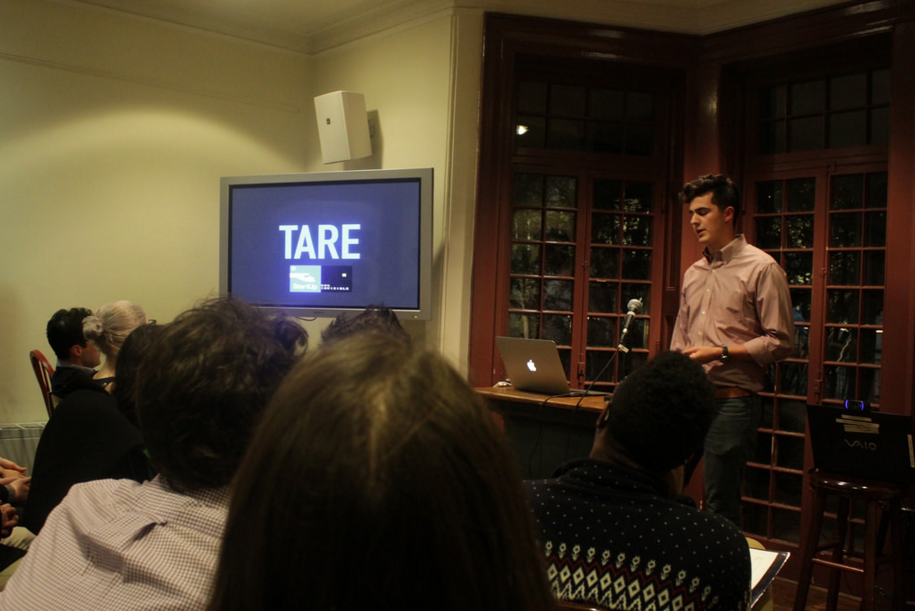
December 8, 2015: Entrepreneurial Journalism Pitch Night
Penn's Entrepreneurial Journalism students have spent the semester dreaming up new journalism platforms. Tonight they'll present their ideas to a panel of distinguished journalists, venture capitalists, and Internet pioneers. With $7,500 in seed money on the line, it's going to be an exciting evening for anyone interested in the future of journalism.

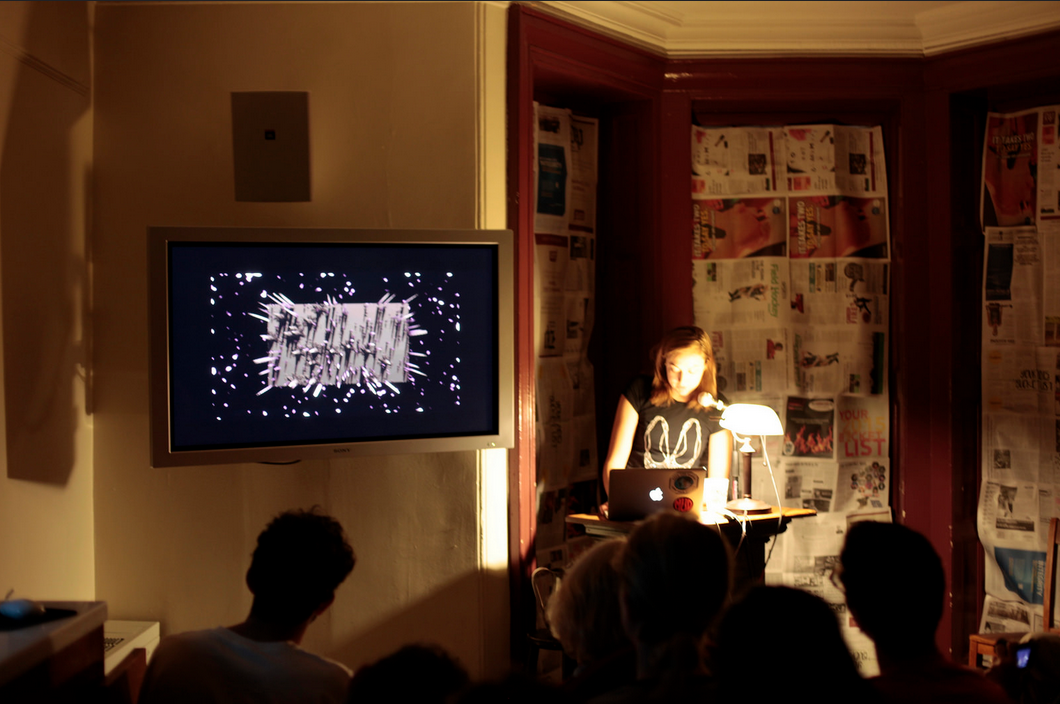
September 3, 2015: Mapping With Light
Thanks to a Creative Ventures Capital grant, Therese Paoletta drew an audience into a darkened, intimate Arts Cafe — its windows covered with issues of the Daily Pennsylvanian — to show us how to think expansively about the intersection of art and astrophysics. Paoletta worked with Penn’s Dr. Gary Bernstein, a member of the Dark Energy Survey, to learn about creating and modifying astronomical images to show what cannot be seen by the human eye. Paoletta described her childhood fascination with physical laws that could explain phenomena the natural world. She went on to explain the role of physics in causing red shift in astronomical images and the role of art tools in adjusting such images, using her own animations of light and space movement to illustrate her talk. The star of the show was Paoletta’s image of Omega Centauri, a globular cluster of stars 17,000 light years away from us, a project she worked on for two weeks with over sixty images focused on varied RGB channels.

April 23, 2015: Marathon Reading: 100 Years of Solitude
For our first annual Bernheimer Symposium, former Program Coordinator Erin Gautsche invented for us what has become an annual tradition. Each year, the Hub selects a book to read aloud, straight through, and we celebrate the book with extravagant decorations, food, and props all derived from the text.
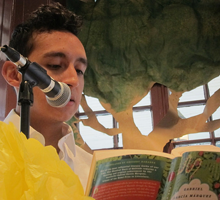
April 15, 2015: Brodsky Gallery Opening: Symbiosis
- watch: a video recording of this event via KWH-TV
- listen: to an audio recording of this event
Help us celebrate the latest issue of SYMBIOSIS, the annual Penn publication featuring artist/writer collaborations, at this month’s BRODSKY GALLERY OPENING. Enjoy select readings by the latest issue’s contributing writers, browse the new art exhibition, and hear contributors’ collaboration stories, with the chance to mingle with Symbiosis staff and collaborators. Be sure to check out the Facebook event page here.
March 25, 2015: Daedalus Quartet Performance
The Daedalus Quartet has been Quartet–in–Residence at the University of Pennsylvania since 2006. Praised by The New Yorker as "a fresh and vital young participant in what is a golden age of American string quartets," the Quartet has established itself as a leader among the new generation of string ensembles. In the thirteen years of its existence the Daedalus Quartet has received plaudits from critics and listeners alike for the security, technical finish, interpretive unity, and sheer gusto of its performances. Since its founding the Daedalus Quartet has performed in many of the world’s leading musical venues and has won plaudits for its adventurous exploration of contemporary music, most notably the compositions of Elliott Carter, George Perle, György Kurtág and György Ligeti. The Quartet's most recent recording, for Bridge Records, features the string quartets of George Perle, and has been described as "disc with some unforgettable contemporary chamber music" (Classical Lost and Found), and the Strad Magazine praised the quartet's "exemplary intonation and balance." The award-winning members of the Daedalus Quartet hold degrees from the Juilliard School, Curtis Institute, Cleveland Institute, and Harvard University. Find out more: here.

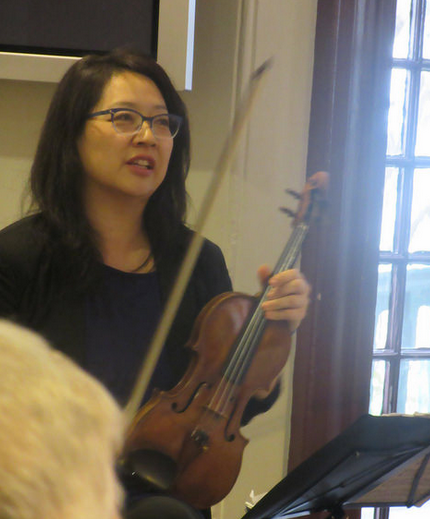
March 19, 2015: Leonard Cohen Song Symposium
- watch: a video recording of this event via KWH-TV
- listen: to an audio recording of this event
Al Filreis, Greg Djanikian, and Anthony DeCurtis join forces once again to bring us our fourth annual Song Symposium, this time on the works of Leonard Cohen. One by one, nine speakers will lead us through analyses of songs by Cohen, one of the most important and influential musical artists of the past fifty years.

February 12, 2015: 7-Up on Rush
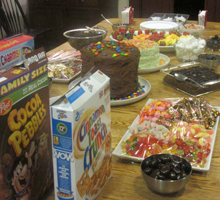
The 7-Up series is an annual program for which we invite seven guests to speak for seven minutes each about a topic. Each speaker gives their insight on some aspect of the chosen theme; interesting interpretations and musings always result!
February 5, 2015: Sensible Nonsense
- watch: a video recording of this event via KWH-TV
- listen: to an audio recording of this event
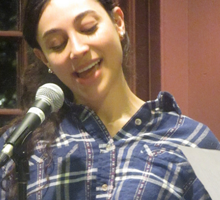
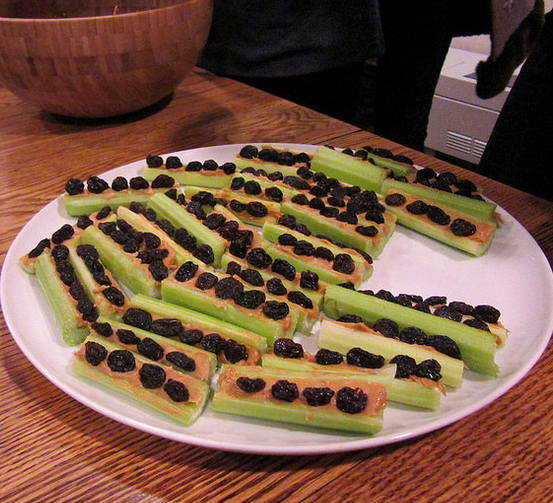
Join us for a celebration of The Sensible Nonsense Project, and help us honor the humor, pathos, and enduring wisdom of children's books! Six speakers will share stories about their own favorite childhood books, what those books taught them, and how those lessons continue to influence their adult lives. And stay on afterward for a delicious reception inspired by after-school snacks, and to get more information about how you, too, can participate in the project. In the meantime, visit The Sensible Nonsense Project at sensiblenonsense.us.
- Jay Kirk, author of Kingdom Under Glass on Rumpelstiltskin
- Vikram Paralkar, MD, author of The Afflictions on The Count of Monte Cristo
- Adam Teterus, Prodigious Point Man of Indy Hall on Harold and the Purple Crayon
- Jennifer Kobrin, GSE’08, of the Mayor's Commission on Literacy on The Princess Bride
- Kristie Gadson, C’15 on The Skin I’m In
- Madeleine Wattenbarger, C’16 on Ramona Quimby
- Dan Spinelli, C’18 on Where the Wild Things Are
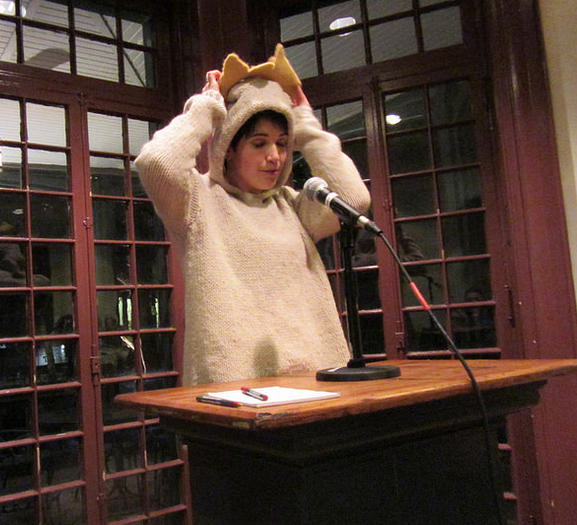
January 20, 2015: JAKE MARMER'S HERMENEUTIC STOMP
- watch: a video recording of this event via KWH-TV
- listen: to an audio recording of this event
Joining poet and performer Jake Marmer for an unforgettable performance are jazz-klez luminaries Frank London on trumpet, Greg Wall on sax, Uri Sharlin on keys, and Eyal Maoz on guitar.

December 9, 2014: ENTREPRENEURIAL JOURNALISM PITCH NIGHT
Penn's Entrepreneurial Journalism students have spent the semester dreaming up new journalism platforms. Tonight they'll present their ideas to a panel of distinguished journalists, venture capitalists, and Internet pioneers. With $7,500 in seed money on the line, it's going to be an exciting evening for anyone interested in the future of journalism.
November 18, 2014: Writing About Art
- watch: a video recording of this event via KWH-TV
- listen: to an audio recording of this event
Join us for our third annual Writing about Art program, an event that will feature five speakers, each presenting/writing/talking about a different piece of art. This year, rather than focus on the work of a single artist, the talks will explore works of art that have no known artist. such as Ancient Greek architecture or American folk art. Each speaker will consider ways in which the concept of an artist or author can be bent, expanded, or subverted. Who counts as an artists? What qualifies as art?
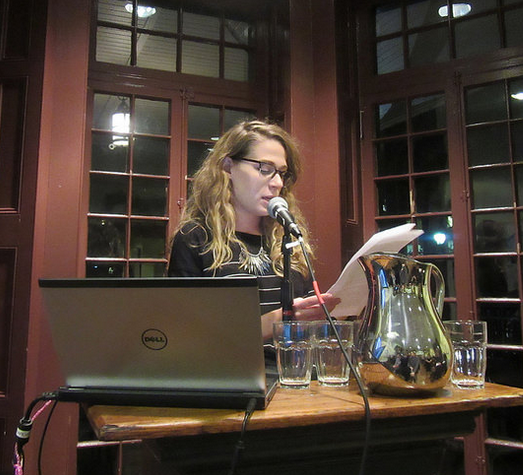

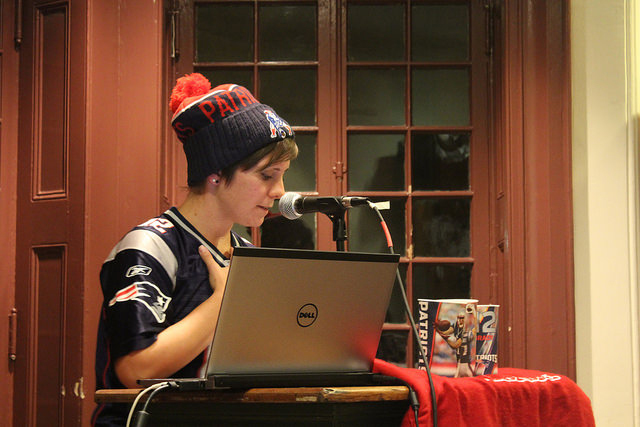
November 13, 2014: Writing About TV: Girls
- watch: a video recording of this event via KWH-TV
- listen: to an audio recording of this event
For this newest event in our Writing about TV series, seven different people will each select a TV show to discuss, using "girls" as a theme or subject to guide their talk. "Girls" could be used as a literal sort of prompt (a show with prominent girl characters), as an audience viewpoint (what is it like to watch a particular show as a girl), or even more generally as a way to consider youth culture or identity.
|
|
October 27, 2014: Postcolonial Digital Humanities
- watch: a video recording of this event via KWH-TV
- listen: to an audio recording of this event
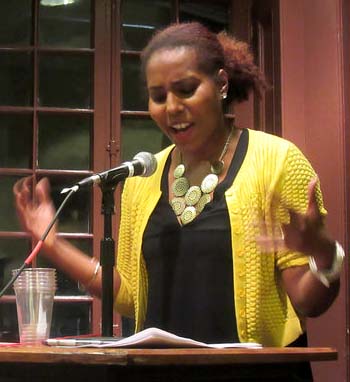
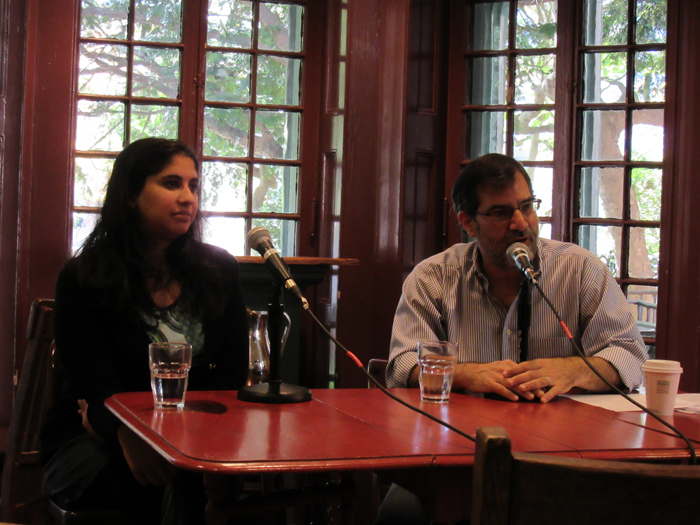
Roopika Risam (C'03) is Assistant Professor of World Literature and English Education at Salem State University. Her research examines intersections between postcolonial, African American, and US ethnic studies, and the role of digital humanities in mediating between the two. Her co-written book Postcolonial Digital Humanities is under contract with Northwestern UP and she is also working on a manuscript that positions W.E.B. Du Bois as a progenitor for postcolonial studies through renewed attention to his literary work. Her digital scholarship includes The Harlem Shadows Project, on producing critical editions of public domain texts; Postcolonial Digital Humanities, an online community dedicated to global explorations of race, class, gender, sexuality, and disability within cultures of technology; and Digitizing Chinese Englishmen, an experiment in postcolonial digital archival practices that examines the role of empire in 19th century digital scholarship in English. She is currently developing the prototype for A Cultural Atlas of Global Blackness, an interactive database and digital map that traces representations of blackness across temporality and geography. Her work has appeared in Ada: A Journal of Gender, New Media, and Technology and is forthcoming in First Monday, Left History, and the Cambridge Journal of Postcolonial Inquiry.
October 20, 2014: THE FOREIGN FORK: A FOOD TOUR WITH CHASE MATECUN
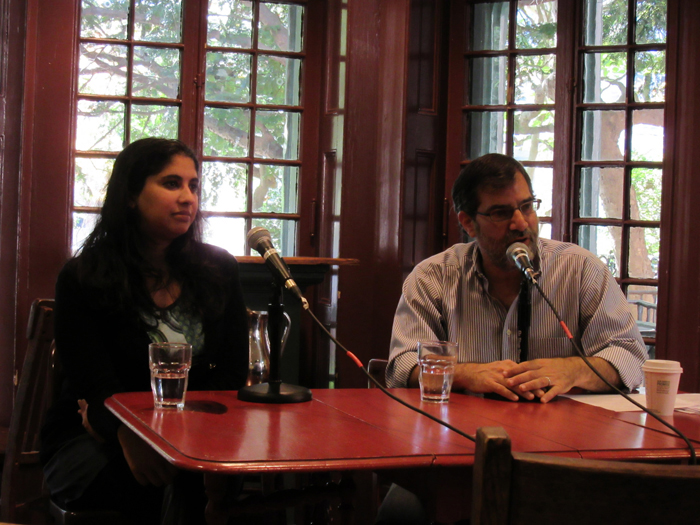
Penn student Chase Matecun (W'17) is an avid food-lover, travel enthusiast, chef, and Spanish-speaker. He was born and raised in a small midwestern town called Hudson, Ohio, but there’s nothing he loves more than a piping hot plate of grilled squid drizzled with olive oil and lemon juice. Through a Creative Ventures Capital Grant, Chase spent the summer of 2014 eating his way though Spain and the Mediterranean—sampling the full spectrum of traditional local foods and then blogging about it. Join us for culinary tour!

October 16, 2014: Edible Books Party
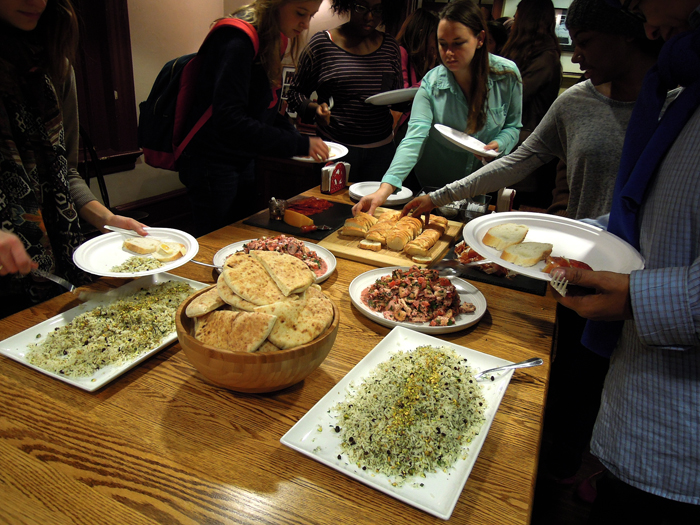
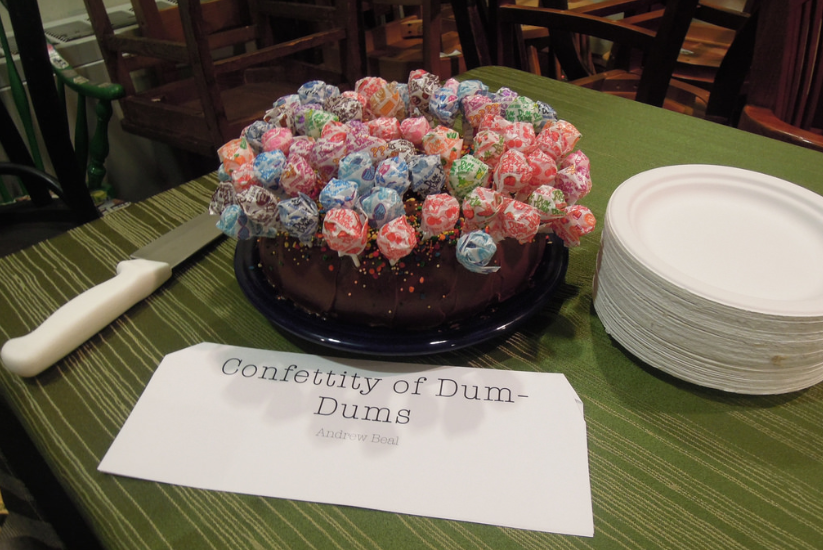
Our Edible Book Party will celebrate works of art inspired by books and created in kitchens. All are welcome to join the festival, to browse the library of edible titles, or to contribute their own. Edible books could show up as depictions of literary characters or scenes, interpretations of titles or themes, or sculptures of actual books. Prizes will be awarded in a variety of categories.

September 14, 2014: A CONCERT READING OF SHELLEY'S PROMETHEUS UNBOUND
- watch: a video recording of this event via KWH-TV
- listen: to an audio recording of this event
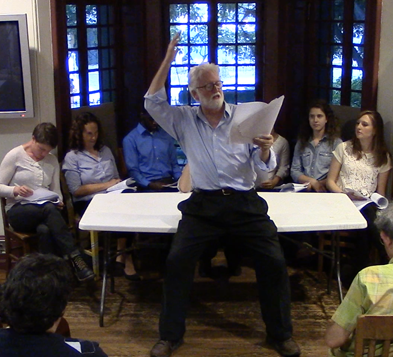
Eight actors will perform a concert reading of excerpts from British Romantic poet and political radical Percy Bysshe Shelley's lyrical drama Prometheus Unbound.
This concert reading is the kick off event for Unbinding Prometheus, a multi-strand arts and humanities project which includes a series of Shelley seminars hosted and moderated by Eric Alan Weinstein, The Great Poems Series: Unbinding Prometheus MOOC on OpenLearning, a digital humanities platform for Shelley scholarship, and a day conference at the University of Pennsylvania in Spring 2015.
April 9, 2014: Brodsky Gallery Opening: Symbiosis
- watch: a video recording of this event via KWH-TV
- listen: to an audio recording of this event
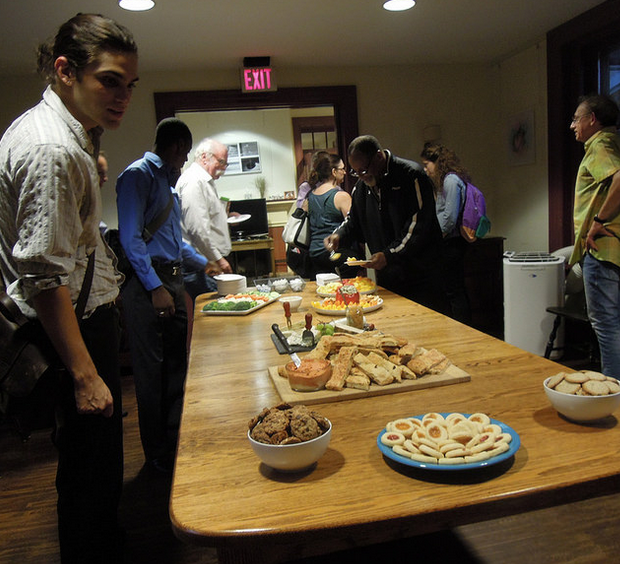
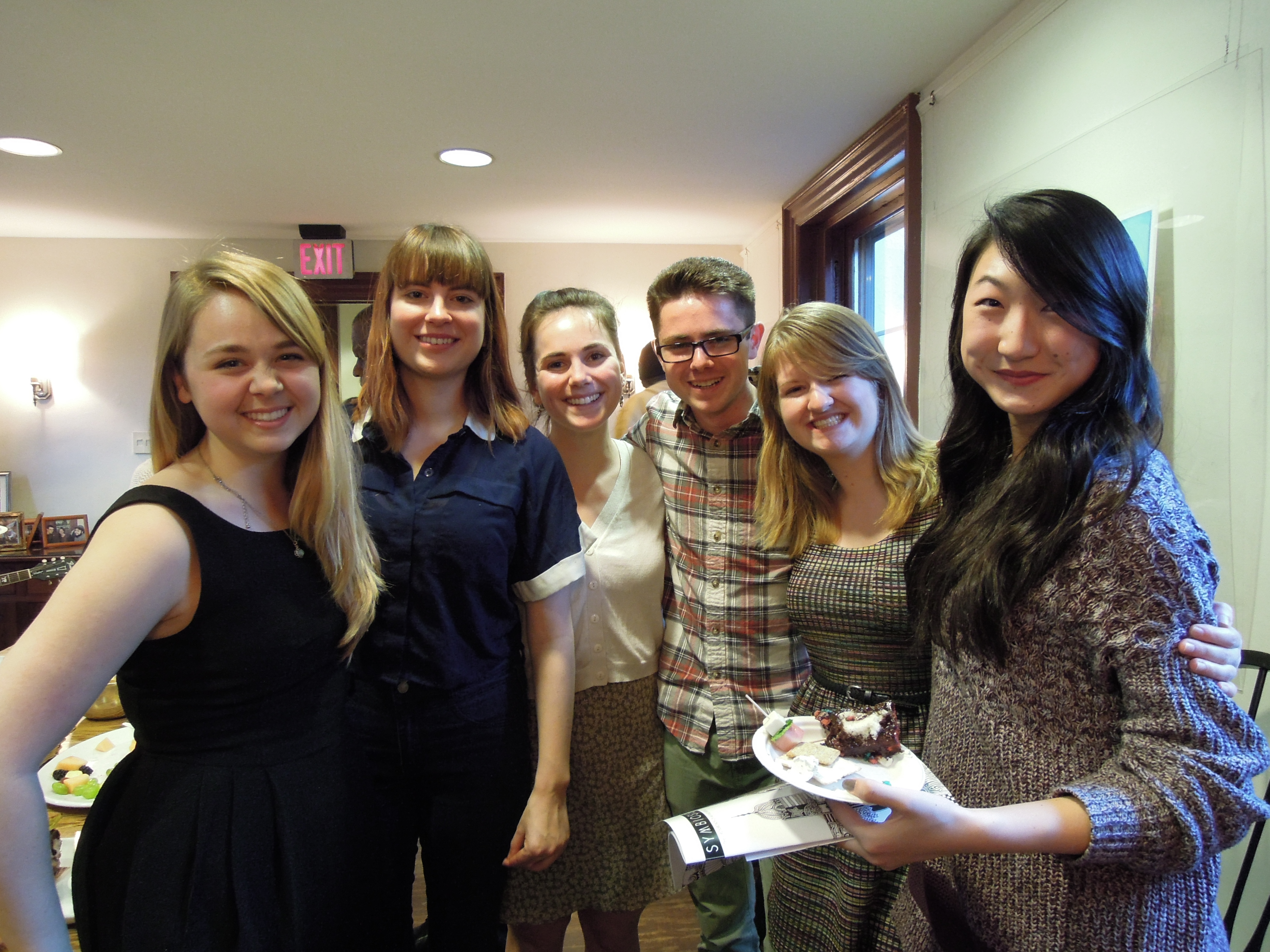
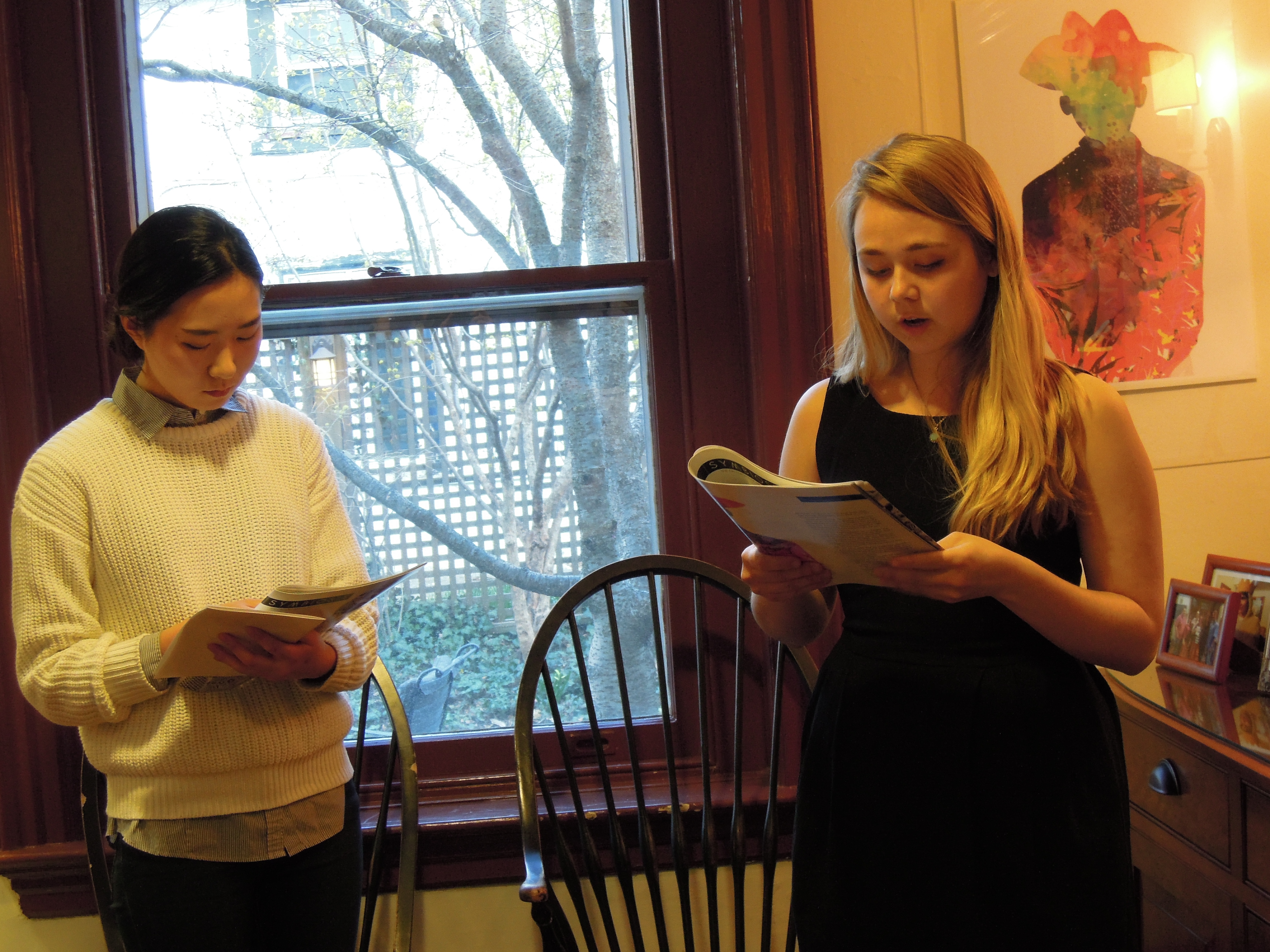
Founded in September 2012, Symbiosis is a project based in the Kelly Writers House dedicated to uniting visual and literary artists. The project pairs artists with writers and encourages them to collaborate. Central to the mission of the Symbiosis project: the free exchange of creative ideas across disciplines. Scientifically, "symbiosis" is the interaction between two different organisms living in close physical association. For people, "symbiosis" refers to a mutually beneficial relationship.
The Brodsky Gallery is an art gallery integrated with the ground floor of the Writers House. Up to six exhibitions take place during the academic year from September through May. Openings feature a reception for the artist and an accompanying program; examples include panel discussions, poetry readings, film screenings, and technique demonstrations by the artist. Through exhibiting a diverse array of art media and cross-disciplinary programming, the Brodsky Gallery at KWH seeks to engage Penn students and the broader Philadelphia community with the interrelationships between literary and visual arts. Thanks to the generosity of Michael and Heidi Brodsky, whose support makes our gallery space possible, the Brodsky Gallery is a permanent project of Kelly Writers House.
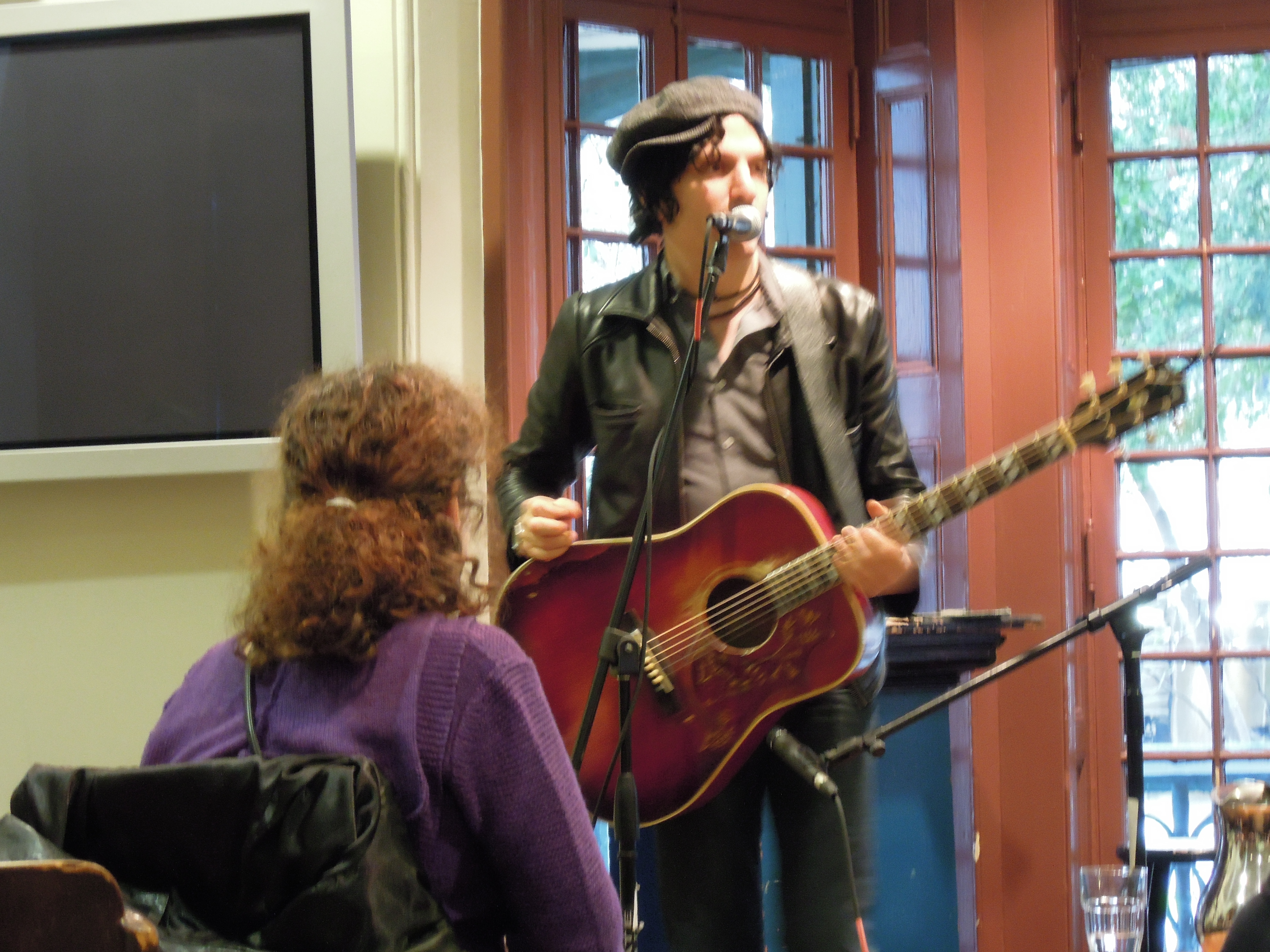
April 3, 2014: A Conversation with Jesse Malin
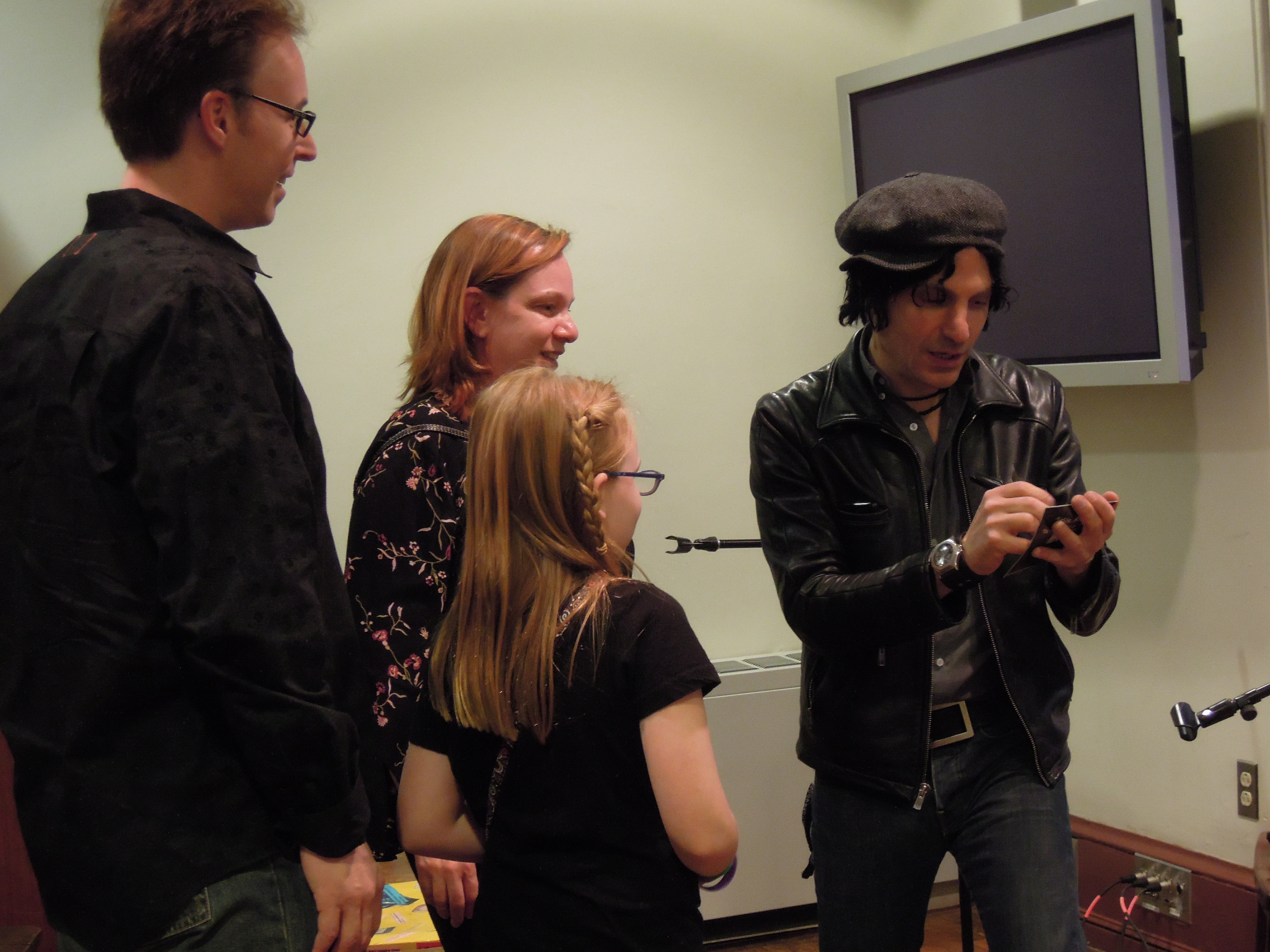
Born in Queens, New York, Jesse Malin's passion for music began at an early age. Upon receiving his first nylon stringed acoustic guitar, Jesse taped an old 1950's reel-to-reel recorder with a beat-up attached microphone to its body and the soon-to-be songwriter began his musical career.
Malin began playing live the age of twelve years old in the seminal hardcore band Heart Attack. After the group's disbandment in 1984, Jesse and his childhood pals formed the rock and roll band D Generation and released three albums, touring the globe several times over before parting ways in 1999. Following several in-between bridge bands, including PCP Highway and Bellvue, Jesse Malin embarked on a solo career and has released five acclaimed records. Over the years Malin has also worked in both film and radio, currently co-hosting a monthly radio show on Sirius XM alongside John Varvatos, and is now completing production on a new album set to be released in 2014.
March 25, 2014: Sensible Nonsense: Memoir/Kids Lit
- watch: a video recording of this event via KWH-TV
- listen: to an audio recording of this event
Join us for a celebration of The Sensible Nonsense Project, and help us honor the humor, pathos, and enduring wisdom of children's books! Six speakers will share stories about their own favorite childhood books, what those books taught them, and how those lessons continue to influence their adult lives. And stay on afterward for a delicious reception inspired by after-school snacks, and to get more information about how you, too, can participate in the project. In the meantime, visit The Sensible Nonsense Project at sensiblenonsense.us.
March 4, 2014: A Conversation with Film Producer Robert Greenhut
- watch: a video recording of this event via KWH-TV
- listen: to an audio recording of this event
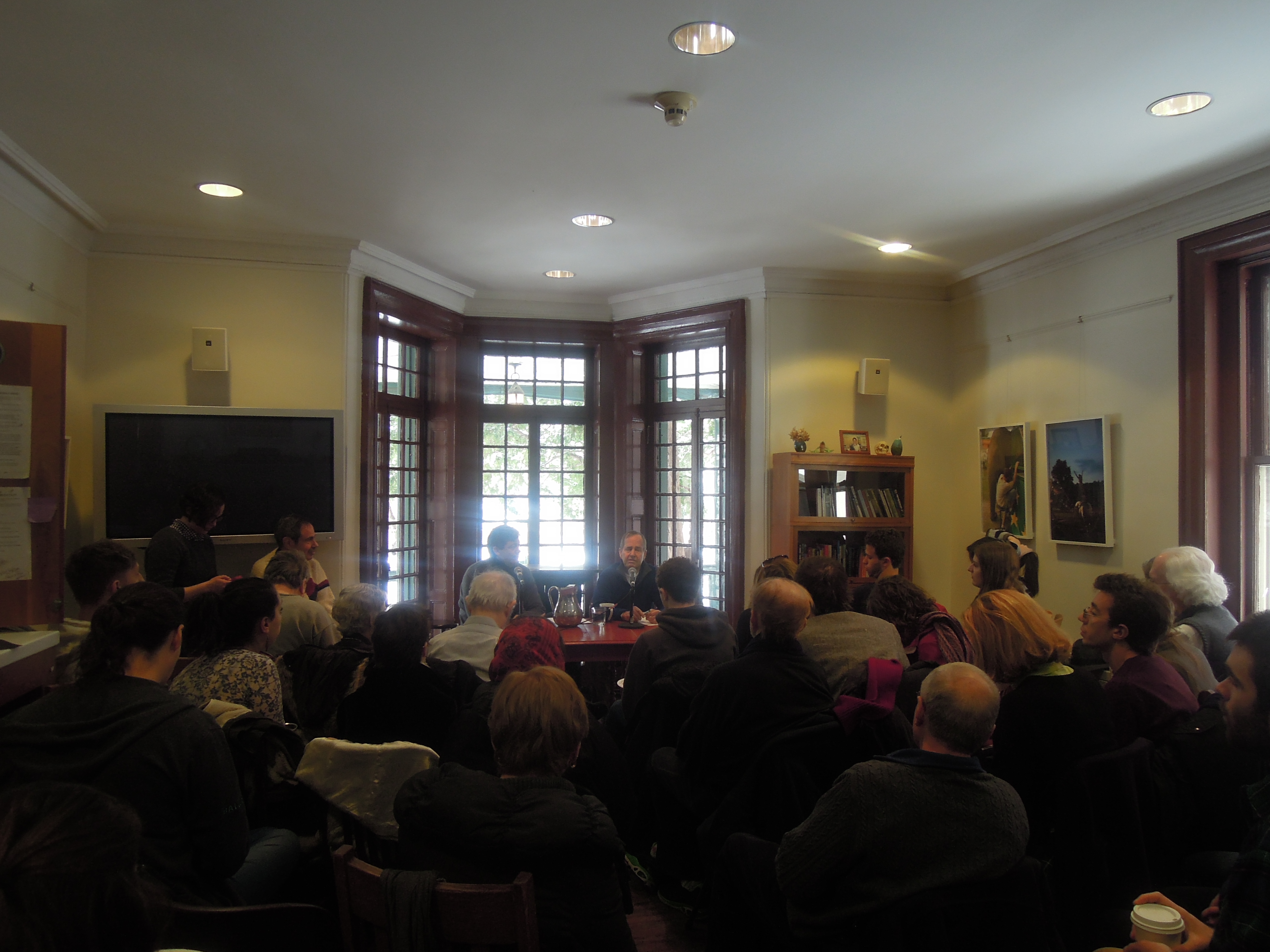
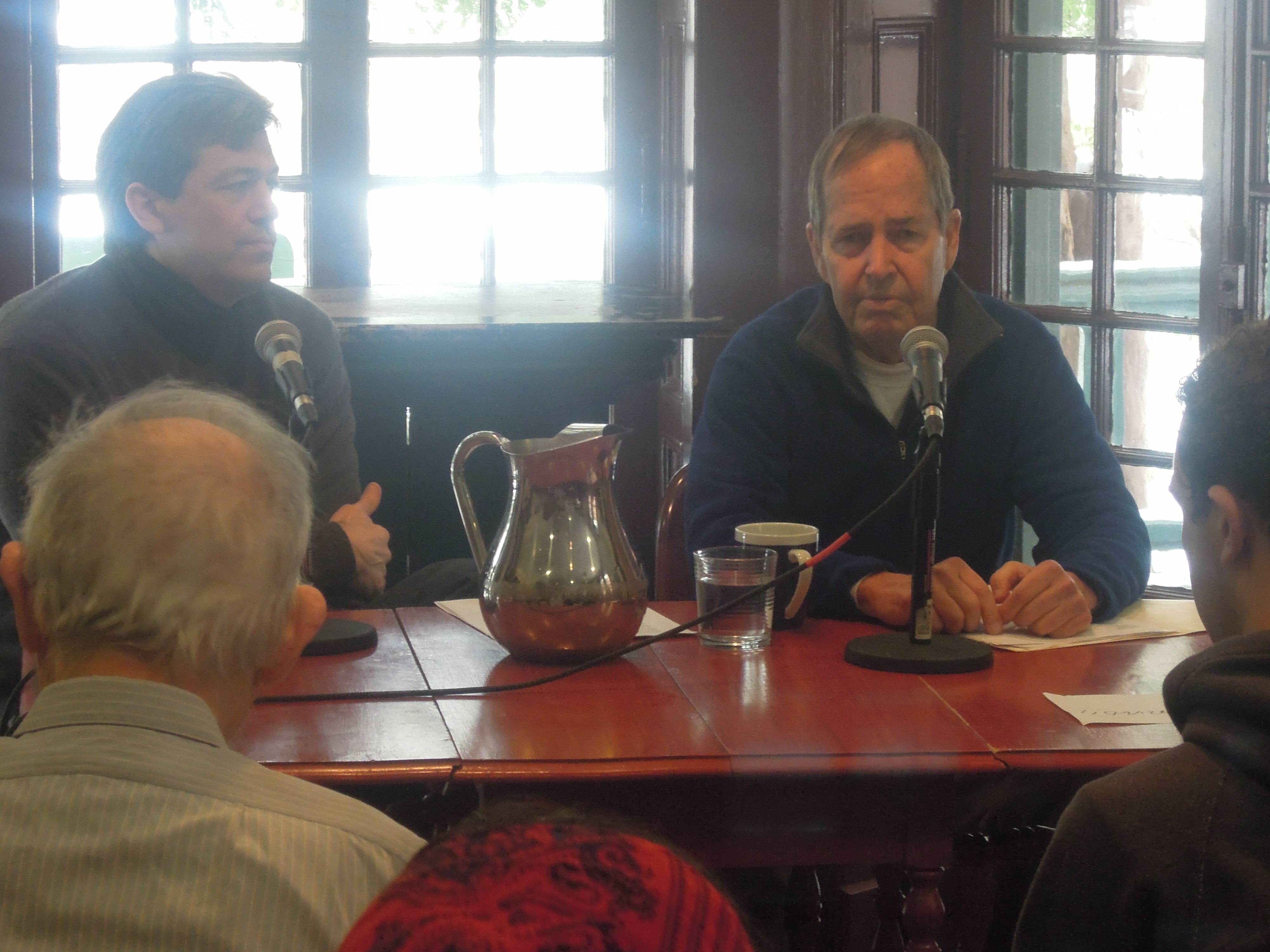
In the Arts Café, Penn cinema professor Emory Van Cleve hosted an intimate conversation with producer Robert Greenhut on the ins and outs of the film industry. After lunch provided by the Creative Ventures Project and an introduction by KWH Director Jessica Lowenthal, Greenhut discussed the evolution of the film industry throughout his career, the business model behind making a film, and what it's like to work with long time colleague Woody Allen, including his edits on the original Annie Hall script! The discussion was followed by a heated Q&A with the audience in which Greenhut shared his disappointment with the overwhelming amount of media that's available today, as well as an audience wide discussion about whether or not watching movies and television on mobile phones is degrading the film industry or becoming a necessary part of its' future.
Film producer Robert Greenhut has worked on upwards of eighty feature films, collaborating with such directors as Woody Allen, Mike Nichols, Sidney Lumet, Marty Ritt, Penny Marshall, Milos Forman, Bob Fosse, Martin Scorsese, Francis Coppola, Elaine May, Herb Ross, Billy Friedkin, Arthur Penn, and John Cassavetes. Five of his films — Lenny, Dog Day Afternoon, Hannah and Her Sisters, Working Girl and Annie Hall -- have been nominated for Best Picture of the year Academy Awards.
Greenhut began his film career as a production assistant on Arthur Hiller's 1967 comedy The Tiger Makes Out. During the next seven years, he worked in various production capacities, rising through the ranks to become a production manager, assistant director, and associate producer. In 1976, Greenhut served as associate producer on The Front, a Hollywood blacklist drama starring Woody Allen. It was the first of many collaborations with the writer/director. After that, Greenhut served as the executive producer and production manager of Annie Hall and went on to produce or executive produce every Allen-directed film through the period musical comedy Everyone Says I Love You in 1996.
Some of Greenhut's other notable producing credits include: Milos Forman's Hair, Steve Gordon's Arthur, and Martin Scorsese's The King of Comedy, Mike Nichols' Heartburn, Working Girl, Postcards from the Edge, Regarding Henry and Wolf, as well as Penny Marshall's Big, A League of Their Own, Renaissance Man, and The Preacher's Wife.
February 25, 2014: Writing About TV: The Family
- watch: a video recording of this event via KWH-TV
- listen: to an audio recording of this event
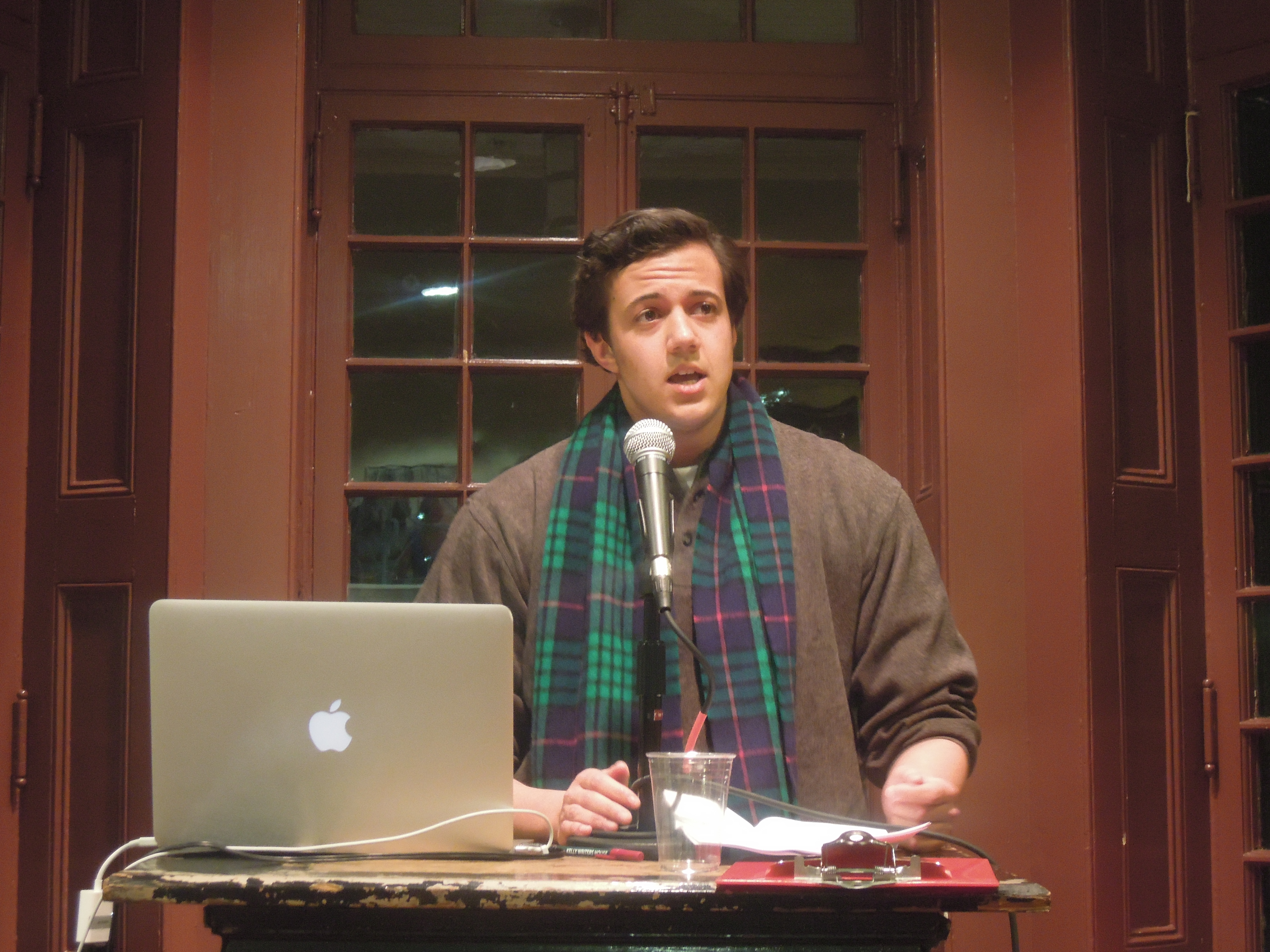
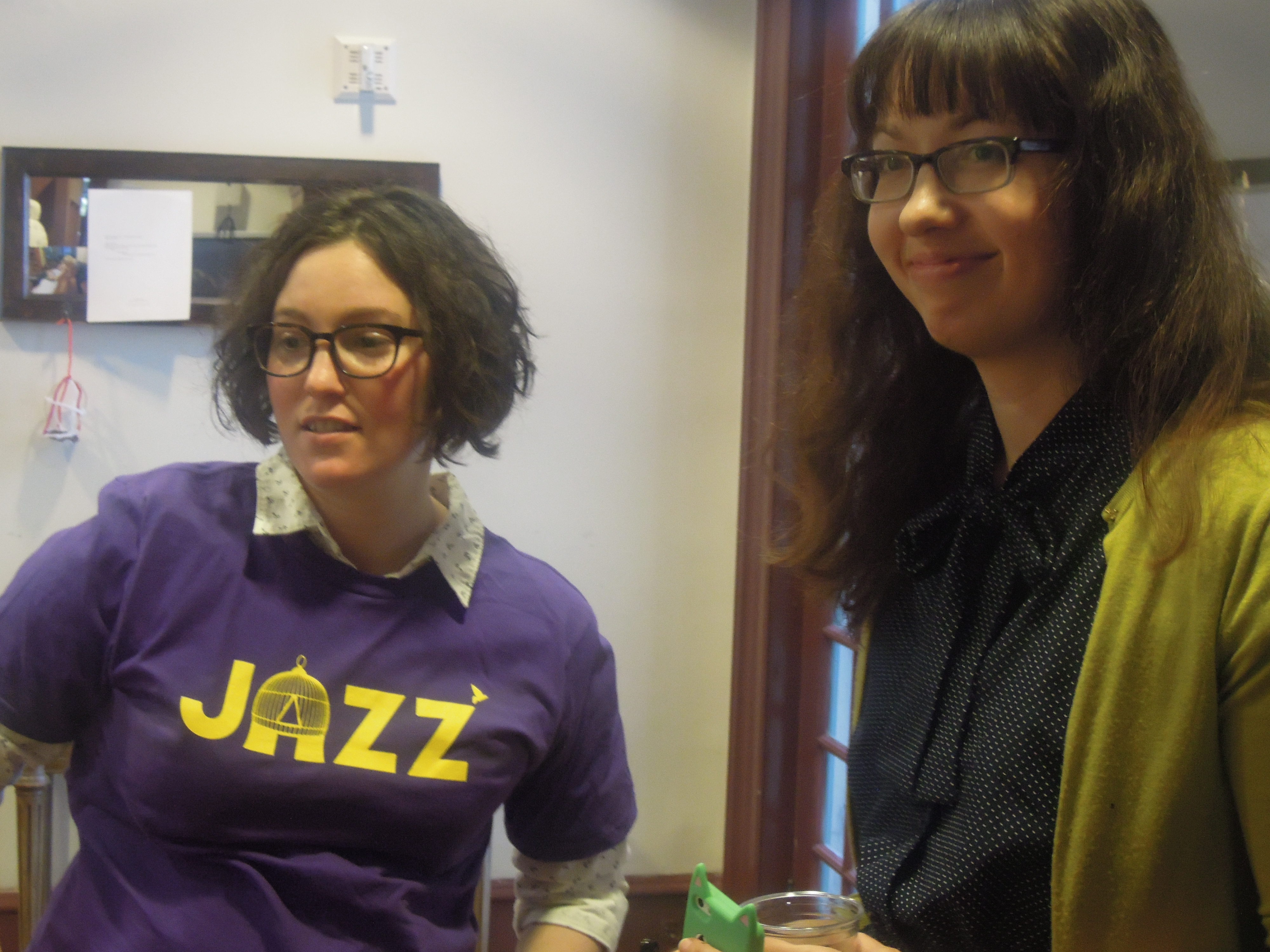
February 20, 2014: Marathon Reading of Toni Morrison's Jazz
This year's Marathon Reading is of the novel Jazz by Pulitzer and Nobel Prize-winning author Toni Morrison. One of Morrison's most-loved books, Jazz famously opens with the line, "Sth, I know that woman," and continues with an exploration of literary forms and conventions that echo jazz signatures such as improvisation and call and response. Whether you've never read the Readers will take turns reading the book aloud from start to finish, while enjoying snacks pulled from the pages of the book. All are welcome to listen, and all are welcome to read. To sign up, please visit here.
December 10, 2013: Entrepreneurial Journalism Pitch Night
- watch: a video recording of this event via KWH-TV
- listen: to an audio recording of this event
Penn's Entrepreneurial Journalism students have spent the semester dreaming up new journalism platforms. Tonight they'll present their ideas to a panel of distinguished journalists, venture capitalists, and Internet pioneers. With $7,500 in seed money on the line, it's going to be an exciting evening for anyone interested in the future of journalism.


December 5, 2013: Writing About Art: Glenn Ligon
- watch: a video recording of this event via KWH-TV (Recording begins midway through first talk)
- listen: to an audio recording of this event
Our second annual "Writing About Art" program gathers six speakers — curators, artists, art lovers, writers — each exploring a (different) piece of art by Glenn Ligon. The work of New York-based conceptual artist Glenn Ligon touches on a number of important themes including race, sexuality, identity, and the power of language. Frequently referencing his own life, American history, and other works of visual art and literature, Ligon's pieces are rich in intertextuality. Solo shows of Ligon's work have been featured at the Hirshhorn Museum and Sculpture Garden in Washington, D.C., Brooklyn Museum of Art, Dia Center for the Arts in New York, and elsewhere.
Hosted by Isaac Kaplan (C’15) and sponsored by Creative Ventures, the program will feature Anthony Elms, Chloe Kaufman, Kenneth Lum, Damon Reaves, and Gwendolyn DuBois Shaw.

November 11, 2013: Kanye West Fest
- watch: a video recording of this event via KWH-TV
- listen to an audio recording of this event
"Work it, make it, do it, makes us/Harder, better, faster, stronger." We all know who KANYE WEST is, but who is KANYE WEST? Our Kanye West Fest will feature local poets, feminists, fashion and music editors, faculty, students, and other movers and shakers (including Penn's Chaplain Howard) exploring all things KANYE WEST, each from a unique angle of approach: religion, gender, music, poetry, media coverage, branding, hype, and more. Don't act like we never told ya. Don't act like we never told ya.
- Sarah Blake is a poet and the creator of kanyewestpoetry.com. (watch)
- Greg Corbin is the Founder and Executive Director of Philly Youth Poetry Movement (PYPM). (watch)
- Chaplain Charles Howard (Rev. Charles L. Howard, Ph.d) is the University of Pennsylvania Chaplain and a regular contributor to the Huffington Post. (watch)
- Erich Kessel is sophomore in CAS majoring in History of Art. (watch)
- Drew Millard is the Assistant Editor of Noisey.com, VICE Magazine's music blog. (watch)
- Arielle Pardes is a KWH staffer and a senior in CAS. She is also a Women, Gender and Sexuality Studies major and columnist for the DP. (watch)
- Devon Powers is an Assistant Professor of Communication at Drexel University. Researches "the intersections between music, history, and the circulation of culture" (watch)
- Ivy Sole is a CAS junior, Excelano Project member and rap artist. (watch)
Kelly Writers House Podcast #31 features an excerpt from this event. Click here to listen.
November 16, 2013: The True Cost of Coal
- watch: a video recording of this event via KWH-TV
- listen to an audio recording of this event
With a gigantic portable mural teeming with intricate images of plants and animals from the most bio-diverse temperate forest on the planet, the Bees will share (and seek) stories of how coal mining and Mountaintop Removal affect communities and ecosystems throughout Appalachia and beyond. This mural also looks to the future, raising questions about resistance, regeneration, and remediation while celebrating stories of struggle from mountain communities. The TRUE COST OF COAL will challenge all of us who casually flip on a light switch to examine our own connections to MTR- and to think about what we can do to stop it from within our own communities.
Worker Bee has been cross pollinating the grassroots since the early 2000's, using detailed mosaic style images to share stories and experiences from the frontlines of social injustice and creating critical analysis of the world around us. Understanding the the stories and images shared through the work of the Beehive Collective does not come from an individual, Worker Bee represents the many individuals and communities that make this work possible.


November 6, 2013: Writing About TV
- watch: a video recording of this event via KWH-TV
- listen to an audio recording of this event


October 29, 2013: Literature and Psychoanalysis Together
- watch: a video recording of this event via KWH-TV
- listen to an audio recording of this event
Siri Hustvedt is an American novelist and essayist. Hustvedt is the author of a book of poetry, five novels, two books of essays, and a work of non-fiction. Her books include: The Blindfold (1992), The Enchantment of Lily Dahl (1996), What I Loved (2003), for which she is best known, The Sorrows of an American (2008), and The Shaking Woman or A History of My Nerves (2010). Her work has been translated into over thirty languages.
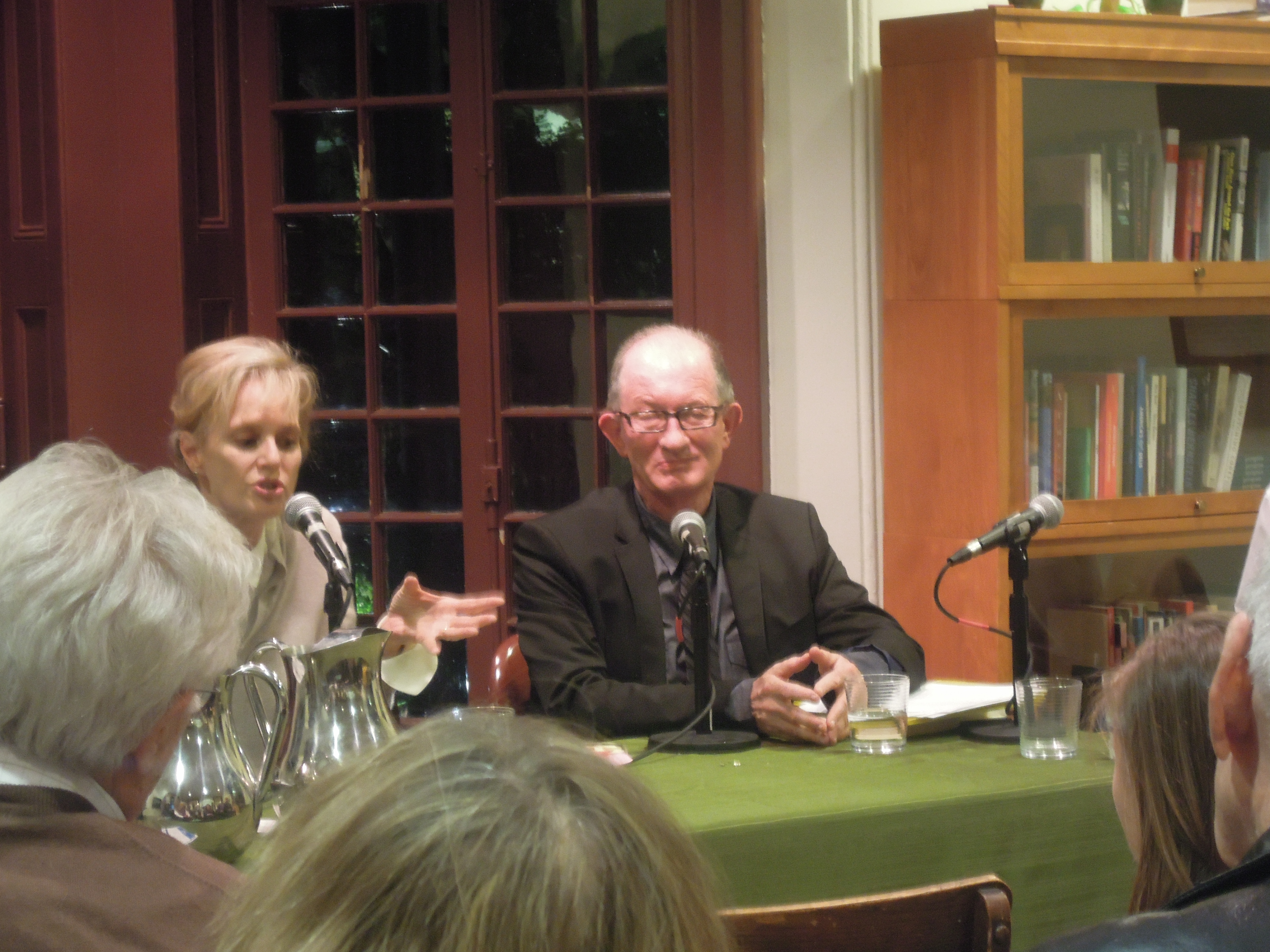

October 24, 2013: Joni Fest
- watch: a video recording of this event via KWH-TV
- listen to an audio recording of this event
Al Filreis, Greg Djanikian, and Anthony DeCurtis join forces once again to bring us our third annual Song Symposium, this time on the works of Joni Mitchell. One by one, this Writers House musical triumvirate and six of their friends will lead us through an analysis of a different song by this musician, who Rolling Stone has called "one of the greatest songwriters ever."
|
|
|
October 22, 2013: Blonde on Blonde
- watch: a video recording of this event via KWH-TV
- listen to an audio recording of this event
Bob Dylan continues his enduring presence as one of the greatest American songwriters. Join us for a lunchtime discussion of one of his seminal albums -- Blonde on Blonde -- and to reflect on a career that continues to surprise and inspire more than 50 years down the line.
Blonde on Blonde is the seventh studio album by singer-somngwriter Bob Dylan, released in 1966 by Columbia Records. The album completed the trilogy of rock albums Dylan recorded in 1965 and 1966, starting with Bringing It All Back Home and Highway 61 Revisited. Critics often rank Blonde on Blonde as one of the greatest albums of all time. Combining the expertise of Nashville session musicians with a modernist literary sensibility, the album's songs have been described as operating on a grand scale musically, while featuring lyrics critic Michale Gray has called "a unique blend of the visionary and the colloquial".

October 16, 2013: Reinventing the Classroom
- watch: a video recording of this event via KWH-TV
- listen to an audio recording of this event
Professors Al Filreis and Kevin Werbach, who have each led wildly successful massive open online courses ("MOOCs"), will lead an informal conversation about this new learning mode, touching upon the challenges and possibilities MOOCs represent and the changes they augur for on-campus teaching.
Al Filreis is Kelly Professor, Faculty Director of the Kelly Writers House, Director of the Center for Programs in Contemporary Writing, Co-Director of PennSound, and Publisher of Jacket2—all at the University of Pennsylvania. Among his books are Secretaries of the Moon, Wallace Stevens & the Actual World, Modernism from Left to Right, and Counter—Revolution of the Word. He has taught a massive open online course, "ModPo," to 36,000 students.
Kevin Werbach is a leading expert on the legal, business, and public policy dimensions of the Network Age. He is associate professor of Legal Studies at The Wharton School, University of Pennsylvania, and the founder of Supernova Group, a technology consulting firm. He co-led the review of the Federal Communications Commission for the Obama Administration’s Presidential Transition Team, and then served as an expert advisor on broadband issues to the FCC and US Department of Commerce. A pioneer in the emerging field of gamification, Werbach is the co-author of For the Win: How Game Thinking Can Revolutionize Your Business. Over 140,000 students worldwide have taken his massive online course on the topic, and he was named Wharton’s first “Iron Prof” for his presentation, All I Really Need to Know I Learned in World of Warcraft.
Previously, Werbach organized Supernova, a leading executive technology conference; served as Editor of Release 1.0: Esther Dyson’s Monthly Report; and was Counsel for New Technology Policy at the FCC during the Clinton Administration, where he helped develop the US Government’s Internet and e-commerce policies. He has authored numerous scholarly and popular articles in leading publications, and appears frequently in print, online, and broadcast media. He is graduate of UC Berkeley and Harvard Law School.
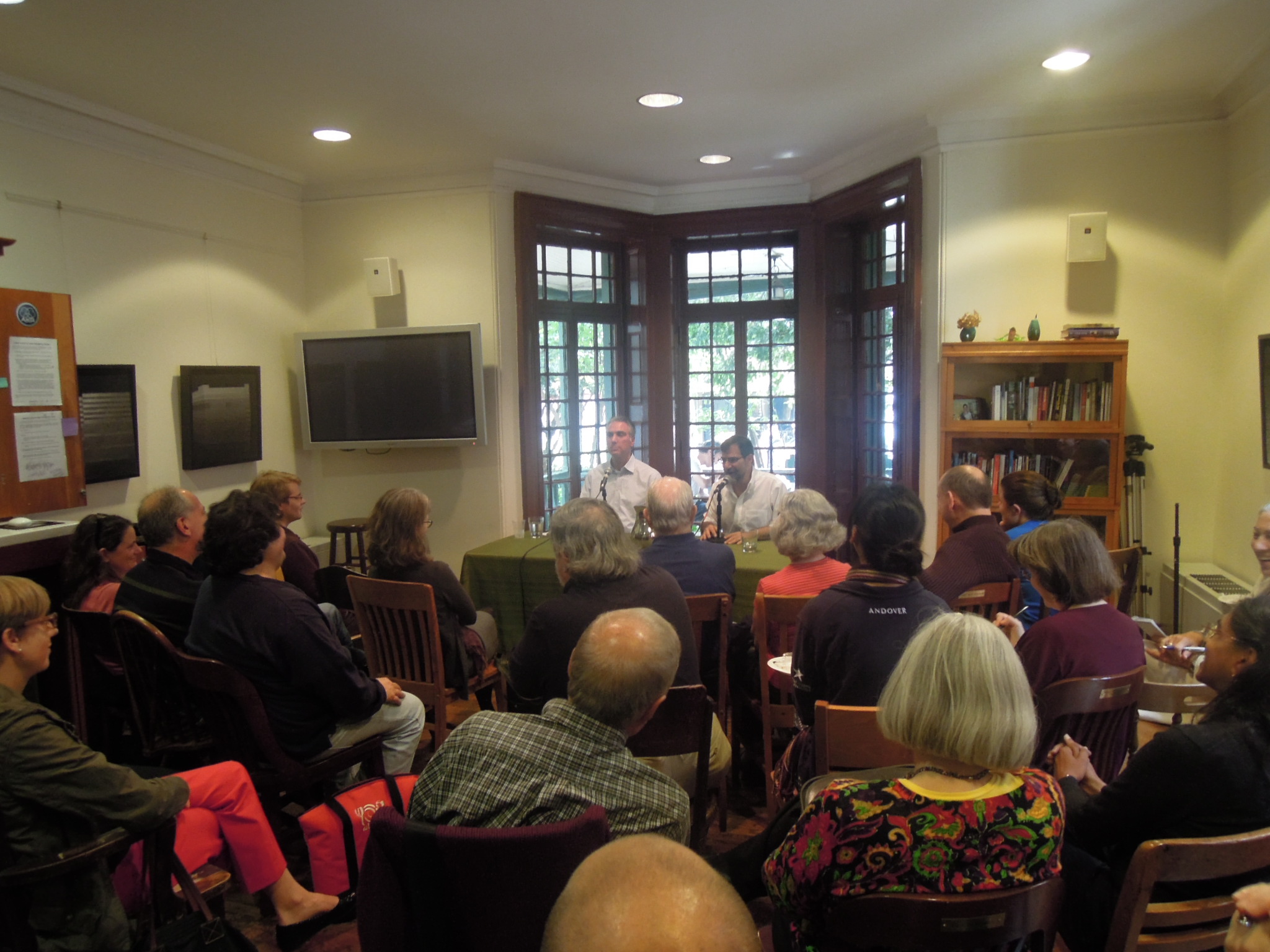
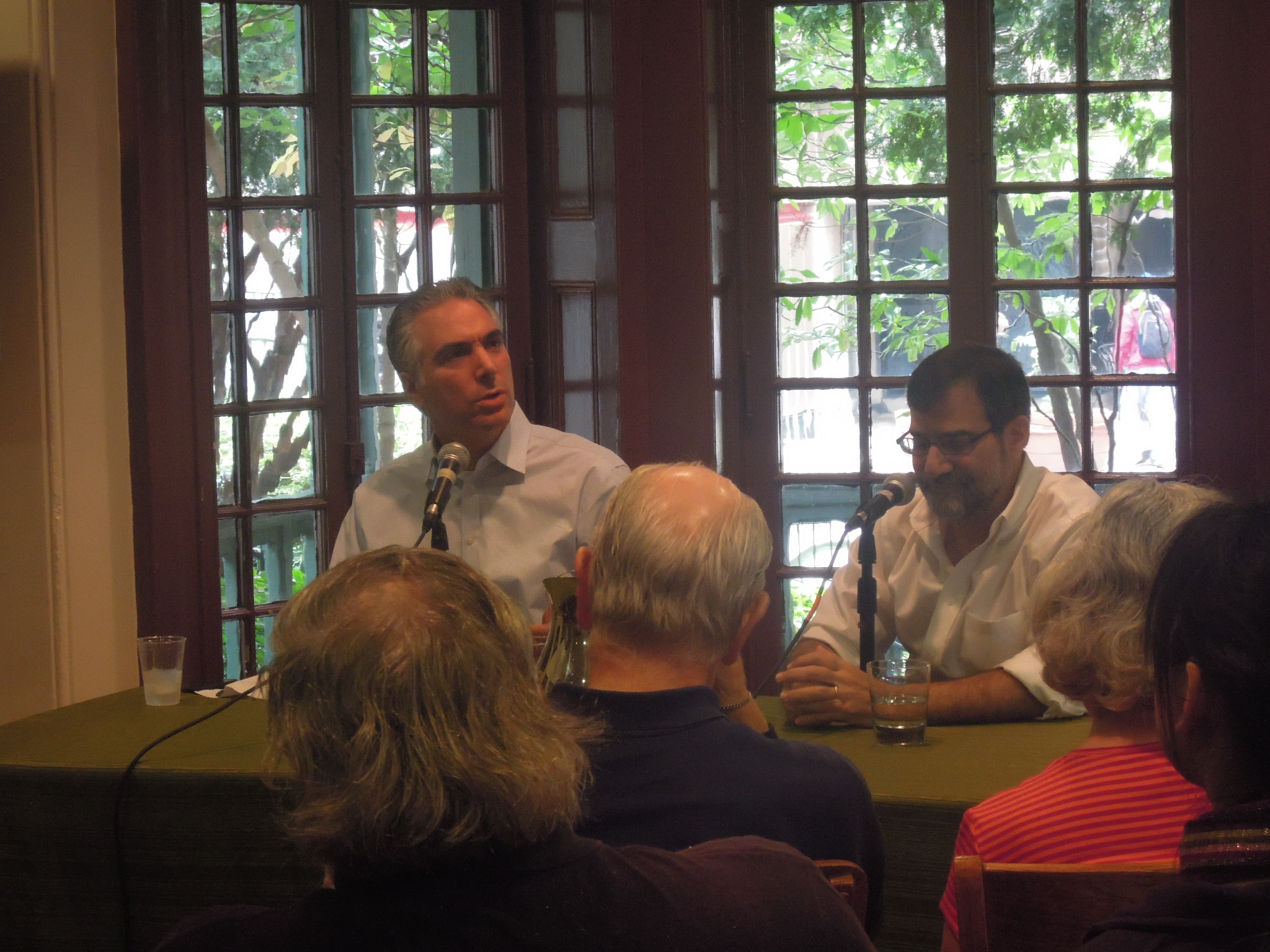
October 16, 2013: A Conversation with Inga Saffron
- watch: a video recording of this event via KWH-TV
- listen to an audio recording of this event
Inga Saffron, the architecture critic for the Philadelphia Inquirer, has been writing about urban design issues for over a decade. She has reviewed some of the most memorable new projects of the era— including Gehry’s Disney Hall, Koolhaas’ Seattle Library and New York’s High Line. But her primary interest is in writing about the less-heralded places that people encounter in their daily lives—offices and casinos, parking garages and parks. Inga became a design critic after working for many years as a news reporter, and she melds a critic’s sensibility with a reporter’s ability to ferret out a story. For her, that story is Philadelphia’s struggle to maintain its urbanity, livability and distinctiveness in the face of pressure from a homogenizing, car-oriented culture. She writes about that effort in a weekly column, “Changing Skyline,” and has been influential in shaping the public conversation in Philadelphia about design and planning issues. Her advocacy was instrumental in convincing city officials to focus on Philadelphia’s neglected Delaware waterfront. She has been a finalist for the Pulitzer Prize three times since 2004, and received the Gene Burd Urban Journalism Award in 2010.
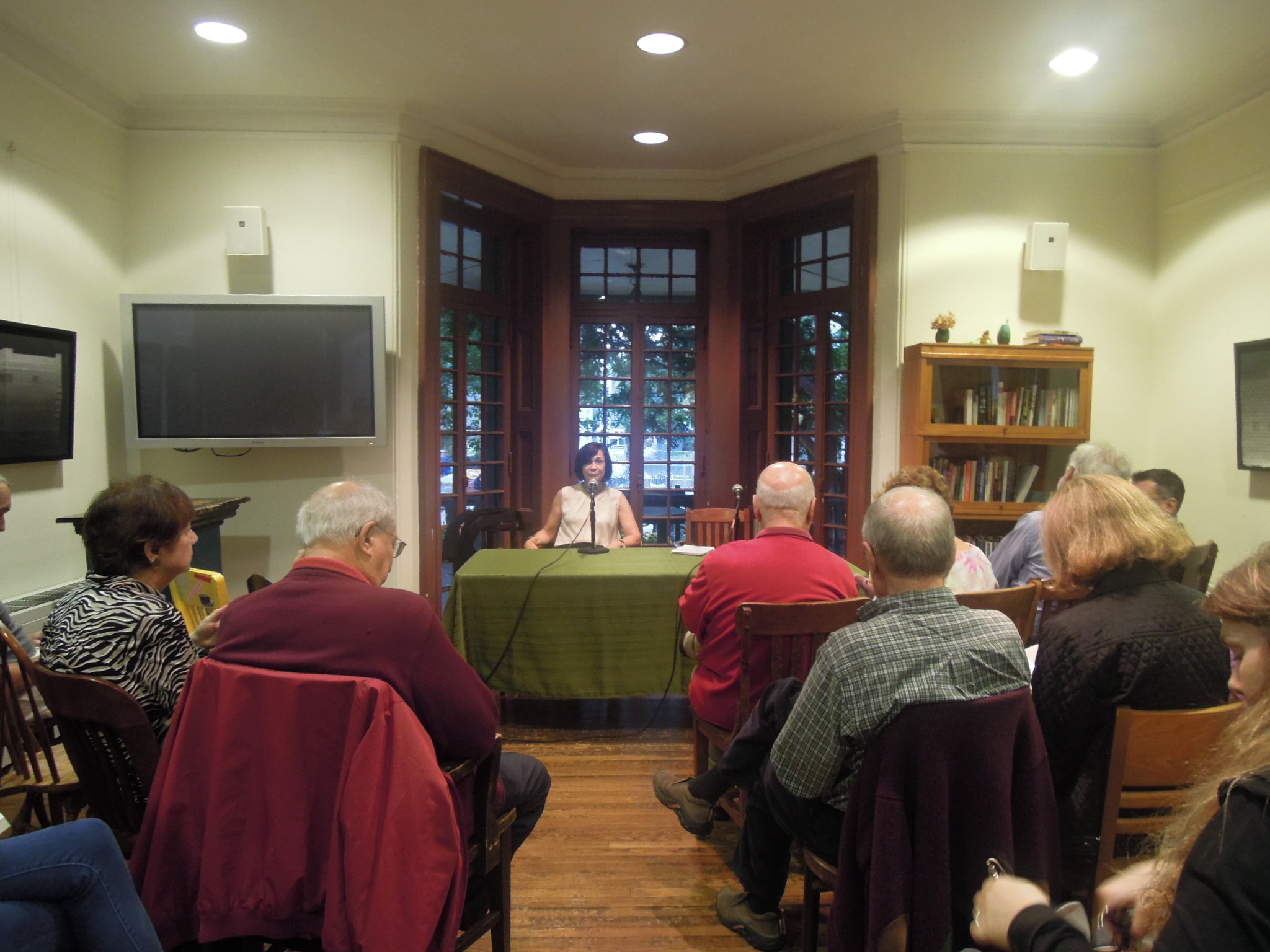
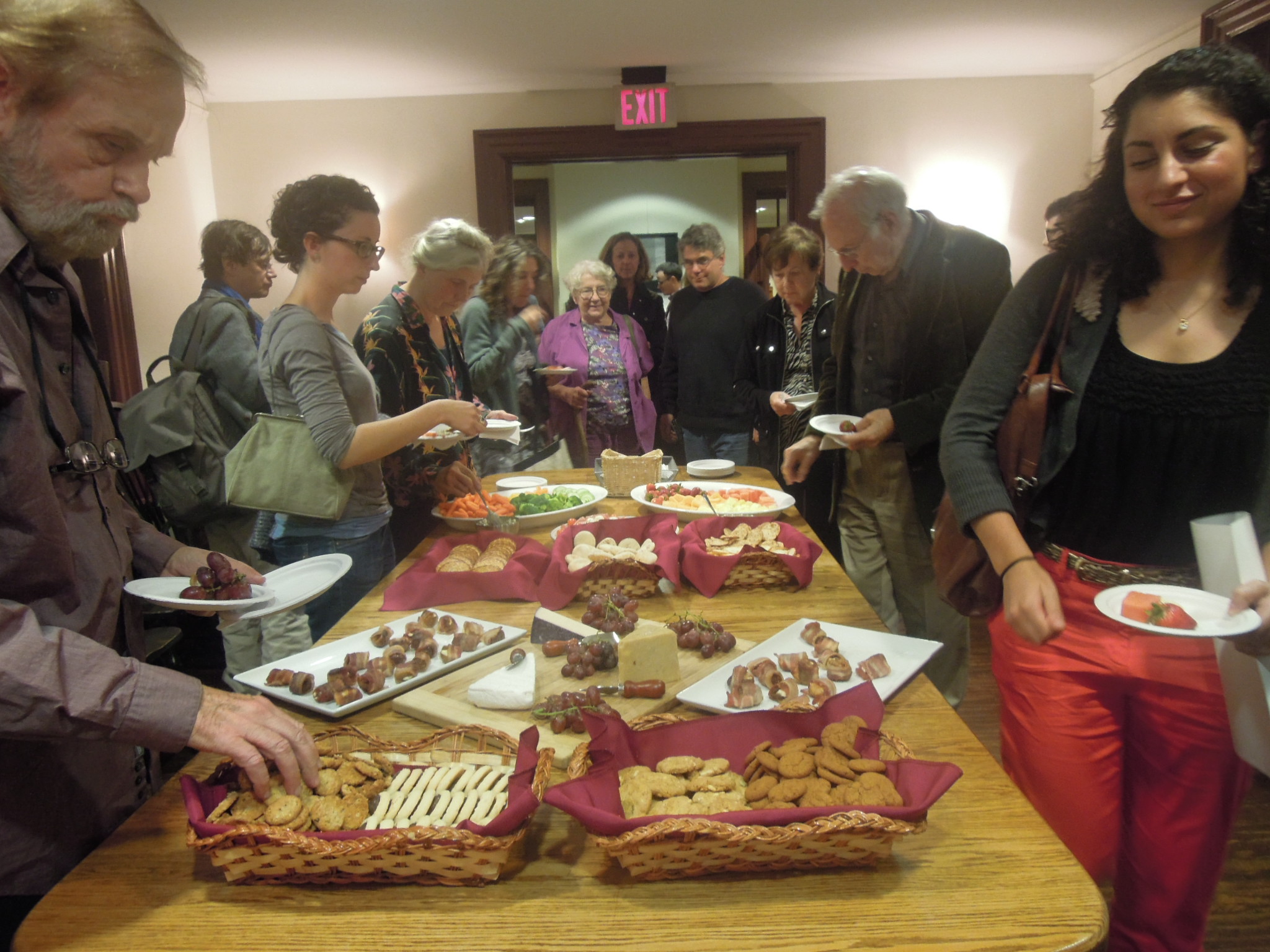
October 14, 2013: A Performance by Jaap Blonk
- watch: a video recording of this event via KWH-TV
- listen to an audio recording of this event
Jaap Blonk (born 1953 in Woerden, Holland) is a self-taught composer, performer and poet. He went to university for mathematics and musicology but did not finish those studies. In the late 1970s he took up saxophone and started to compose music. A few years later he discovered his potential as a vocal performer, at first in reciting poetry and later on in improvisations and his own compositions. For almost two decades the voice was his main means for the discovery and development of new sounds. From around the year 2000 on Blonk started work with electronics, at first using samples of his own voice, then extending the field to include pure sound synthesis as well. He took a year off of performing in 2006. As a result, his renewed interest in mathematics made him start a research of the possibilities of algorithmic composition for the creation of music, visual animation and poetry. As a vocalist, Jaap Blonk is unique for his powerful stage presence and almost childlike freedom in improvisation, combined with a keen grasp of structure. He has performed around the world, on all continents. With the use of live electronics the scope and range of his concerts has acquired a considerable extension. Besides working as a soloist, he collaborated with many musicians and ensembles in the field of contemporary and improvised music, like Maja Ratkje, Mats Gustafsson, Joan La Barbara, The Ex, the Netherlands Wind Ensemble and the Ebony Band. He premiered several compositions by the German composer Carola Bauckholt, including a piece for voice and orchestra. A solo voice piece was commissioned by the Donaueschinger Musiktage 2002. On several occasions he collaborated with visual computer artist Golan Levin.
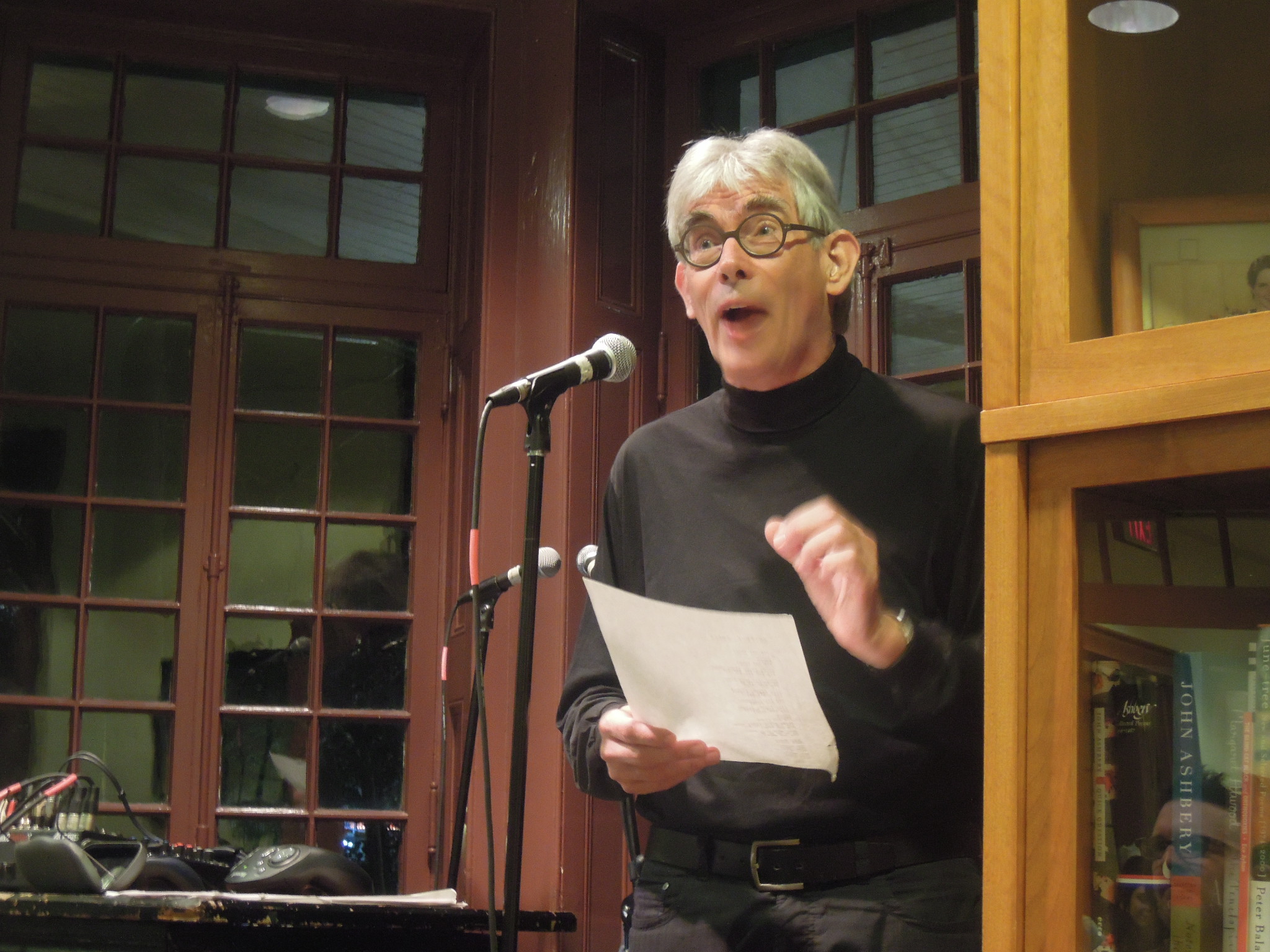
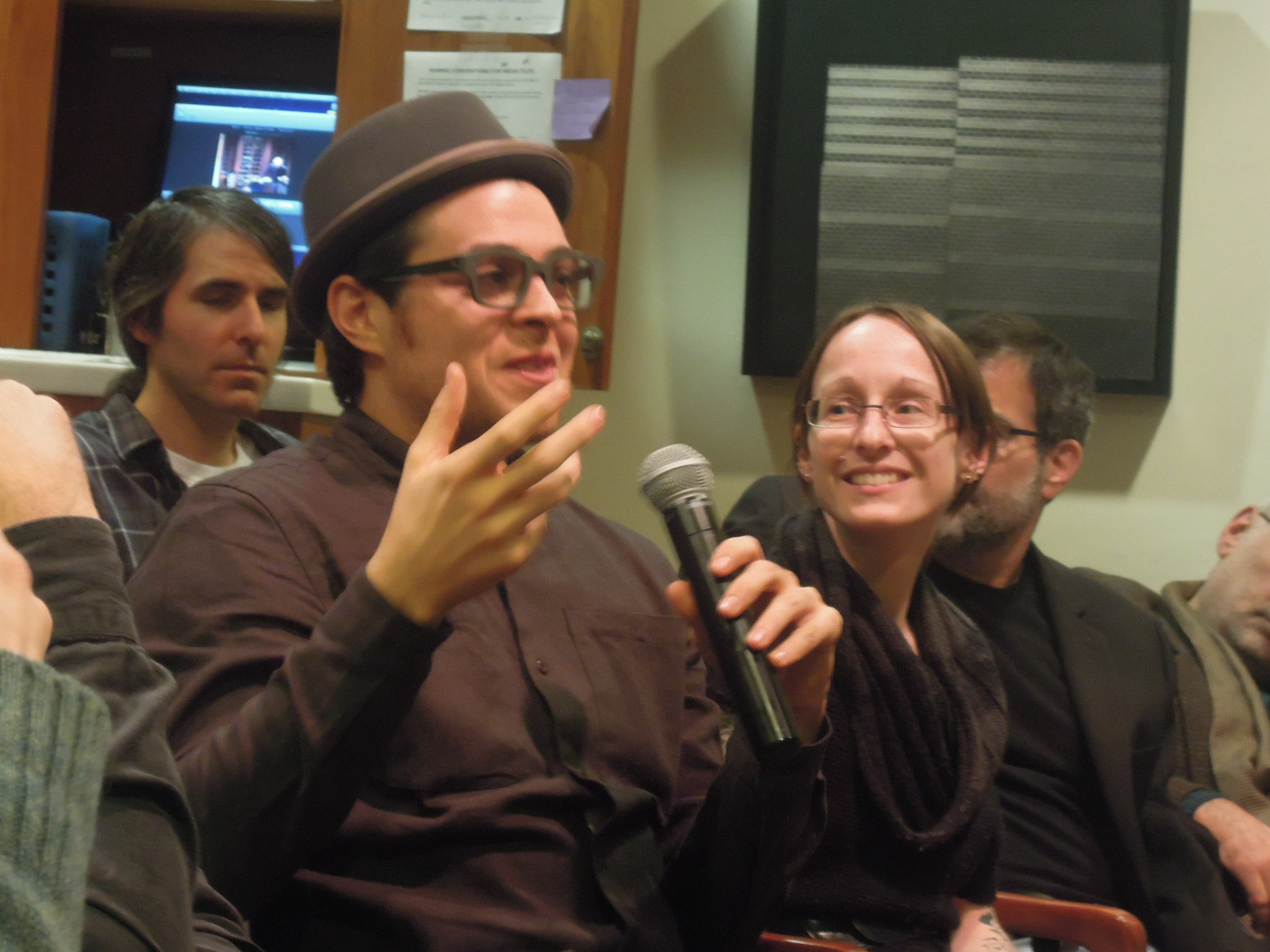
October 7, 2013: Edible Books Party
Our Edible Book Party will celebrate works of art inspired by books and created in kitchens. All are welcome to join the festival, to browse the library of edible titles, or to contribute their own. Edible books could show up as depictions of literary characters or scenes, interpretations of titles or themes, or sculptures of actual books. Prizes will be awarded in a variety of categories.
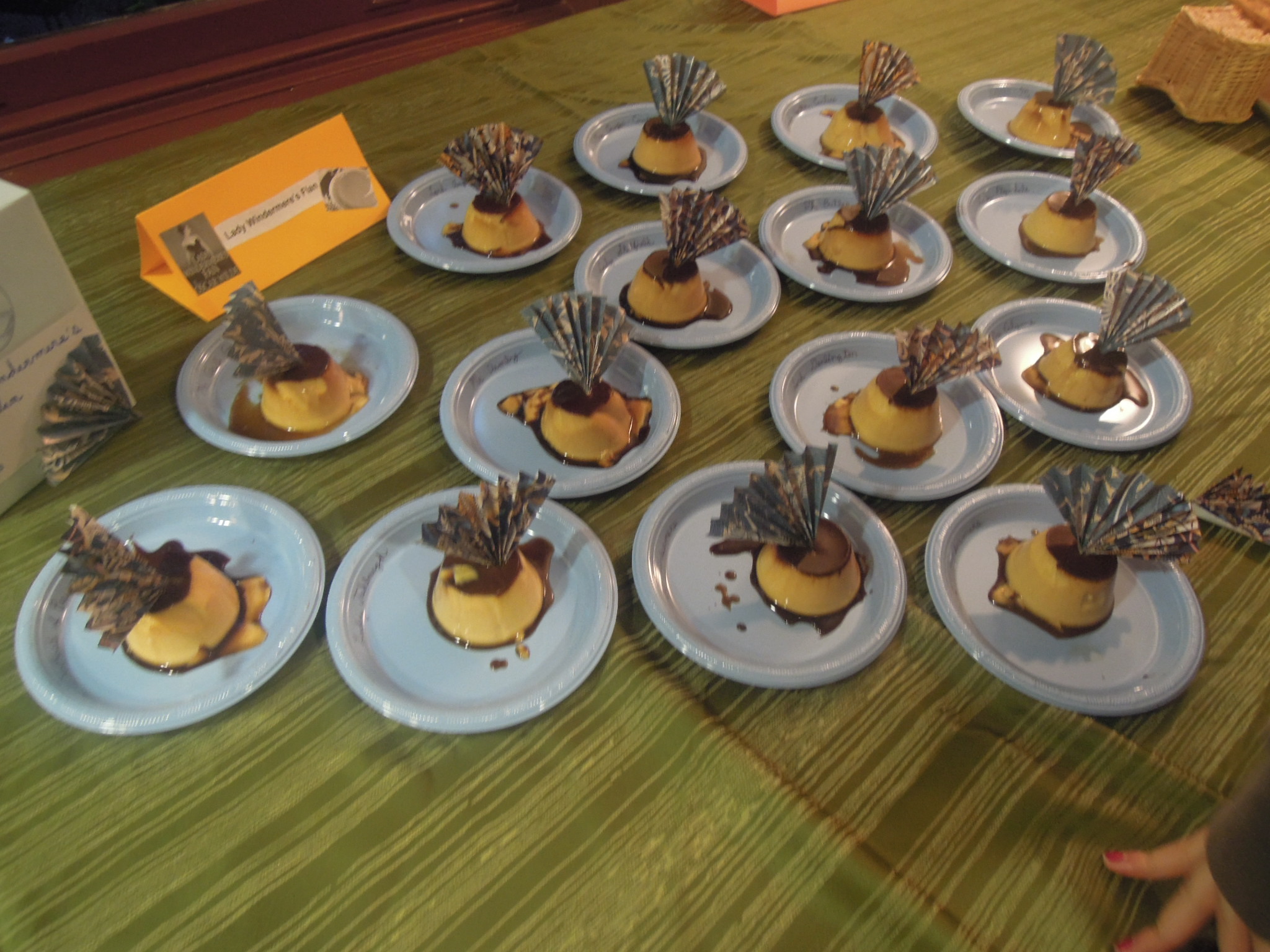
October 1, 2013: Meredith Stiehm
- watch: a video recording of this event via KWH-TV
- listen to an audio recording of this event
Meredith Stiehm has chiefly contributed to the television series Cold Case (as creator and show runner/head writer), ER, and NYPD Blue. She won an Emmy Award in 1998 for "Outstanding Writing for a Drama Series" on NYPD Blue. In 2004, Stiehm was one of five women at CBS who were in charge of a television series.
Although her later work exemplifies Stiehm's interest in high pressure, male-dominated environments, Stiehm got her start in the entertainment industry writing for Northern Exposure and, later, Beverly Hills, 90210.
In 2011, she joined the Showtime thriller Homeland as an executive producer, writing several episodes in the first two seasons.
FX had picked up Stiehm's drama series The Bridge for a 13-episode order, which is originally based on the Danish/Swedish series The Bridge. Set on the border between El Paso and Juárez, the show centers on two detectives — one from the U.S., Detective Sonya Cross (Diane Kruger), and one from Mexico, Marco Ruiz (Demián Bichir) — who must work together to hunt down a serial killer operating on both sides of the U.S.-Mexican border.
September 23, 2013: A Conversation with Michael Rauch
Michael Rauch is executive producer of the new USA Network original series Royal Pains. Rauch has written, produced and directed numerous projects in both film and television. He created and executive produced the CBS series Love Monkey with Tom Cavanagh, Judy Greer, Larenz Tate and Jason Priestley, as well as the ABC Family series Beautiful People with Daphne Zuniga and the CW series Life is Wild Rauch also wrote and directed the independent feature In the Weeds for Miramax starring Ellen Pompeo, Bridget Moynahan, Molly Ringwald and Eric Bogosian. He also directed and produced Bogosian in the filmed version of the performer's off-Broadway show for IFC, Wake Up and Smell the Coffee.

April 11, 2013: Twit Crit Blog Launch
- watch: a video recording of this event via KWH-TV
- listen: to an audio recording of this event on PennSound
This launch event for “a super cool new blog project about Twitter writing” (Lily Applebaum) had attendees gasping for breath and complaining of stomach pains from laughing too hard. After an introduction from Madeline Wattenbarger detailing the aim of Twit Crit – to create a unified space for serious writing about Twitter as a contemporary literary platform – Isaac Kaplan ushered Patricia Lockwood, poet and tweeter, to the podium. Lockwood put audience members through a grueling forty minutes of hilarious snark paired with thoughtful theoretical insight, warning audience members that she’d never given or attended a lecture (though of her shaking hands she said, “that’s not nervousness, that’s espresso”). Sighing romantically at the mention of Twitter, she dissected the social media platform into five functions: Twitter as Alter Ego, Twitter as Six-Word Story, Twitter as Real-Time Autobiography, Twitter as Meta-Internet, and Twitter as the Last Transmissions From Earth. Common themes throughout the event were Hemingway trying to sell baby shoes and Aaron Carter’s self-aware penis. On a more serious note, Lockwood, borrowing a quote from The Wire, also emphasized the need for “soft eyes” when examining this “simple, stubborn technology that grows through the cracks.” The poet concluded by reading a selection of her infamous Twitter sexts against a backdrop of Robin Williams playing a saxophone before guests attended a bird-themed reception featuring an excess of Peeps.

March 14, 2013: Timebank Presentation
- watch: a video recording of this event via KWH-TV
- listen: to an audio recording of this event
When Penn Timebank’s student founders say “time is money,” they really mean it. Julia Graber, Manon Vergerio, and Meghna Chandra explained the thought behind Penn’s newest (if not first) “network of reciprocity”(Graber) in this Creative Ventures program. A timebank, they noted, values a core economy over a monetary economy, venerating those jobs that seasoned timebank-organizer Marie called “beyond value”: caring for children or the elderly, working in public health, etc. Operating under the belief that “everyone is a valuable asset”(Vergerio), Penn Timebank allows members of its community to trade time as currency in an hour-for-hour exchange; one member’s experience in Georgian language tutoring might be reciprocated with another’s knowledge in computer efficiency, Indian cooking, spiritual/philosophical guidance, or even an ability to offer transportation to IKEA. When asked why Penn was an ideal timebank location, Graber cited Ithaca Hours and claimed, “we were jealous of Cornell.” Other highlights included tips for avoiding timebank-related trouble with the IRS and the social-work implications of coproduction models. To participate, sign up at penntimebank.org, or learn more at penntimebank.wordpress.com.
February 20, 2013: Round Up Holler Girl
- watch: a video recording of this event via KWH-TV
- listen: to an audio recording of this event
This gathering of New York performance artists made for a thought-provoking evening at the Writers House as Dan Fishback, Max Steele, and Erin Markey read from some of their more recent projects. Fishback, the 2012/2013 KWH ArtsEdge resident, began by asking permission to “get a little brainy” and expressing the hope that his piece would be the biggest downer of the night, so that things could only get better. He read from his “Thirty Nothing” project, which parallels the development of the AIDS crisis with Fishback’s own life, choosing an essay on “the absence of queer peoplehood” that dealt with the tragic suicide of Jamey Rodemeyer, Lady Gaga’s response, the absence of gay male role models, and the association of death with queer identity (illustrated through a Star Trek clip that “always gives [him] chills… even though it’s so stupid”). Fishback lightened up a bit while introducing Max Steele, asking, in relation to Max’s work, “have you ever seen a performance that’s so good that you’re kind of scared?” Steele took the stage in a cheerful mood and a buttoned-up shirt (complete with yellow accent plaid), and read from the next issue of his “psychedelic porno poetry zine,” adopting playful inflection and poetic syntax in accordance with the chameleonic behavior of his protagonist. Erin Markey followed with a Mayor Munchkin impression and a reminder that “my parents almost named me Kelly, and if they had, this would be my house.” Her slow, solemn reading about reinventing herself in Georgia, and a song about psoriasis, rounded out the night.
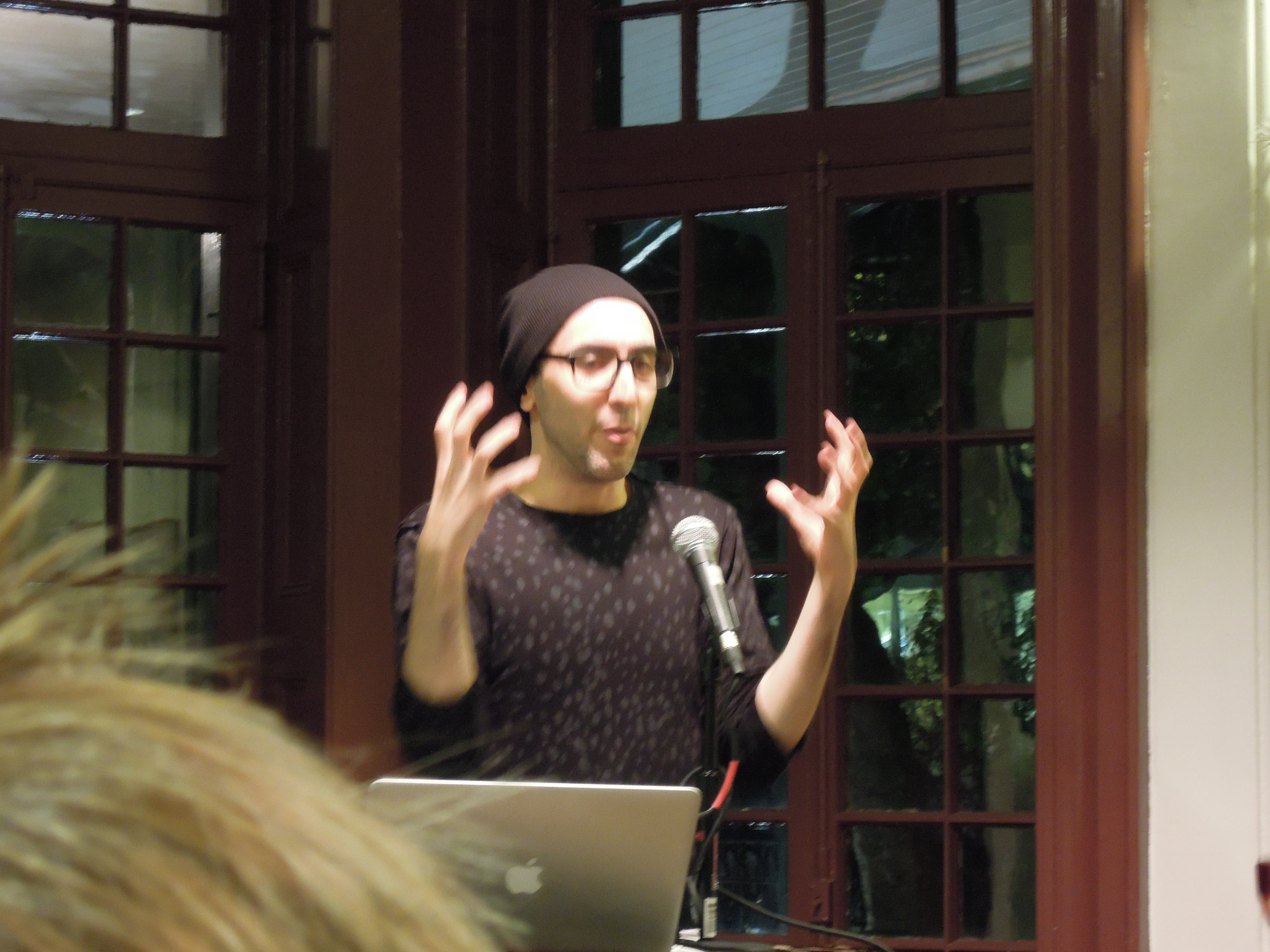
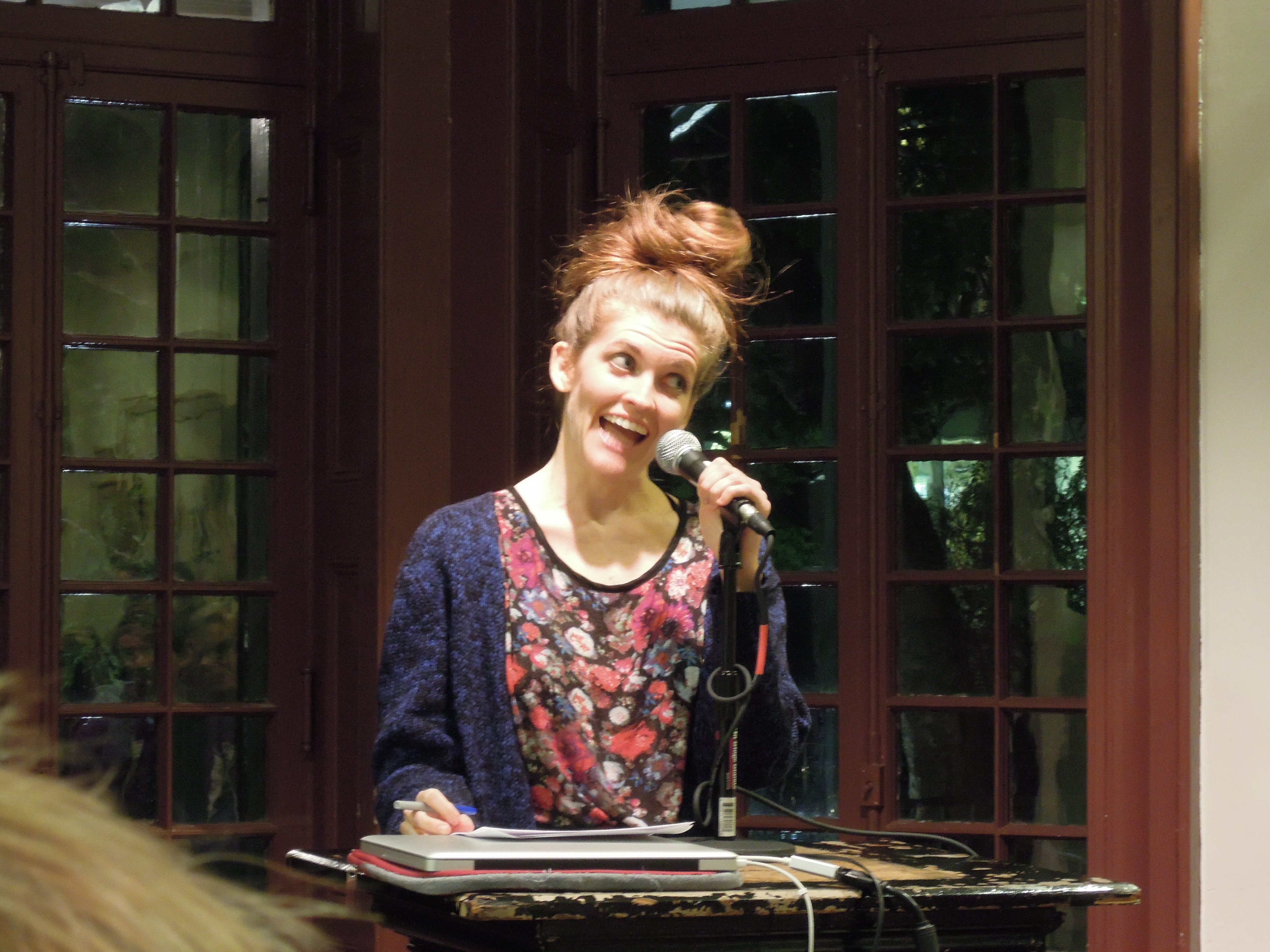
February 6, 2013: Sensible Nonsense
- watch: a video recording of this event via KWH-TV
- listen: to an audio recording of this event
In her eloquent introduction to this program Sensible Nonsense founder and former KWH work-study student Arielle Brousse reminded us of the legitimate artistry of our best-loved childhood stories — those books so captivating that you’d cart a picnic-basket’s worth of new ones home every week, so cherished that you thought about “losing” the library’s copy, or so resonant that you contemplated “potential misguided memorial tattoos” at the death of a favorite youth author. In this union of intelligent reflection and relatable nostalgia, it was clear that for these readers, children’s literature transcends its recommended age limits. Jess Bergman began with the origins of her love for “hurt-so-good catharsis,” The Velveteen Rabbit, while Isaac Kaplan invoked the power of oral storytelling by recounting his mother’s inventive “Pickle Car” saga about “an average, everyday, human-sized pickle” that just wanted to become a car. Chava Spivak-Brindorf traced her history of children’s-lit-derived lessons, lending insight into what Arielle called Chava’s “idealism that doesn’t wait around.” Victoria Ford described her very own “bad cases of stripes” (similar to the trials of lima-bean-loving Camilla Cream), and bonded with Penn professor Kathy DeMarco Van Cleve over South Carolina connections and young family members’ obsessions with Ninjago. The night concluded with an after-school-snack-laden reception. Get involved at http://sensiblenonsense.us.


January 30, 2013: Ken Lum
- watch: a video recording of this event via KWH-TV
- listen: to an audio recording of this event
“Ken Lum is here and he’s interesting,” said Al Filreis by way of
introduction in this lunch talk, an event meant to welcome the new
director of the undergraduate Fine Arts department to Penn. As attendees
picked away at their Indian food, Filreis asked Lum about his experience
growing up in East Vancouver: Lum elaborated on the multicultural
quality of the city as well as his personal experience of poverty,
explaining the influence of those conditions on the alterity of his
artwork. Aspirations for collaborative work between Lum and the Writers
House were stoked by Lum’s fascination with language, an interest, he
said, driven by his early bilingualism. When asked his impressions of
Philadelphia, Lum characterized it as “a deeply undertheorized city,”
and explored the possibilities of politicizing the LOVE statue. After a
glimpse at Lum’s thinking on communication between Penn’s
subject-specific bureaucracies, the artist treated audience members to
slides of his historically informed, subversive, and at times
“monumental” work.
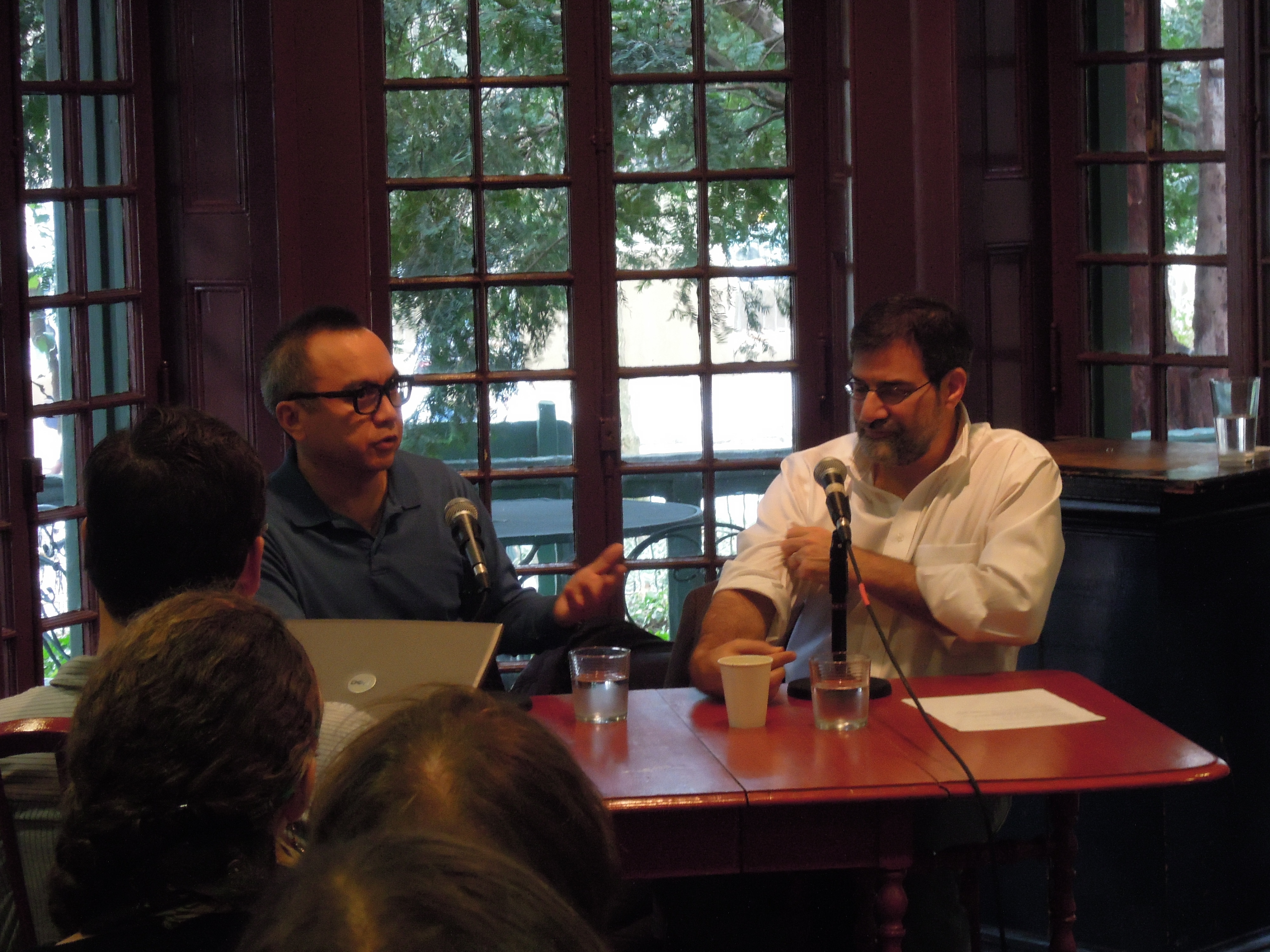
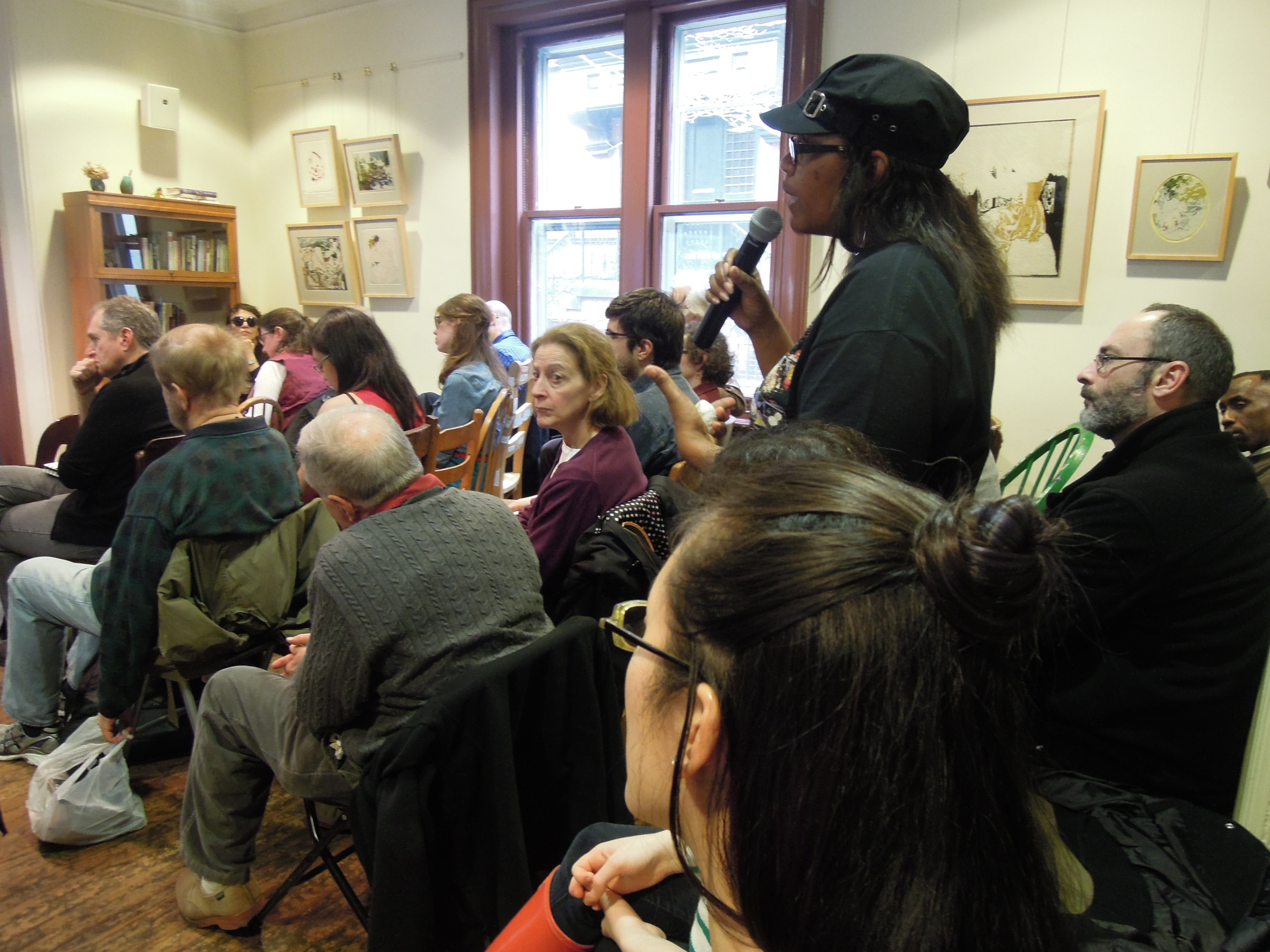
January 29, 2013: Edible Books Again!
This year’s edible books party perpetuated a strong Writers House tradition of literary food puns. With classics such as “A Raisin in the Bun” (literally, a raisin in a hot dog bun), “Pad Thai Rice Lost” (spilled takeout “representing [pad thai and rice’s] fall from grace” [Santi Cortes]), “Fifty Shades of Earl Grey,” “Some Cheese” (in honor of Fellow John Ashbery), and “Steve Cobs,” laughter was as plentiful as the glittery construction-paper crowns distributed to participants by Michelle Taransky and Alli Katz. Prizes were given in categories ranging from “Most Disturbing” to “Best Use of Food from Commons”; the empty plate for “The Hunger Games” even won “Most Conceptual.” At the end of the awards ceremony, guests feasted on the entries (with the exception of less appetizing entries like “Ketchup in the Rye”), be they visually appealing (The Very Hungry Caterpillar cupcakes) or mildly unsettling (“Animal Farm”).

December 6, 2012: Penn Appétit 5th Anniversary Celebration
- watch: a video recording of this event via KWH-TV
- listen: to an audio recording of this event
“It all started with my crush on Tom Devaney,” said Penn Appétit founder Emma Morgenstern at this celebration of the magazine’s fifth anniversary. It was in Devaney’s food writing class that the germ that sprouted Penn Appétit was planted for Morgenstern, whose reminiscences of photo shoots in “dirty, dirty Harrison” and moldy fudge hinted at the escapades and camaraderie that the PA staff shares. Since Morgenstern’s days, the magazine has garnered countless accolades – no surprise, said current editor Eesha Sardesai, “because everyone loves food” – thanks to an impressive lineage of editors-in-chief, all of whom returned for the night’s festivities. Following Morgenstern at the podium were Editor #2, Elise Dihlman-Maltzer, whose strategy was to make a point and retreat to let people get to the sensational reception food, and Editor #3, Alex Marcus, who, with a healthy dose of wonder, explained that not only does Penn Appétit surface in prospective students’ admissions essays, but that the food photographers at Cornell’s Crème de Cornell use “Penn Appétit” as an adjective to describe expert shots. The editors were reminded of the incredible talent that the magazine attracts as readings by Abigail Koffler, Monica Purmalek (reading Chelsea Goldinger), and Katie Behrman dazzled listeners with mouthwatering details on New York pizza, frozen chicken, and fresh French bread. Nicole Woon and Jillian De Filippo rounded out the literary portion with poems from multiple contributors on everything from the Lee Ahn Food Truck to the transcendence of Kool Aid, while Creative Director Maggie Edkins added that illustrations and cover photos associated with the magazine would be on display for all to salivate over.

November 7, 2012: Changing the Way We Drink
- watch: a video recording of this event via KWH-TV
- listen: to an audio recording of this event
Penn undergraduate Becca Goldstein has a history with craft spirits. Having worked in several distilleries, Goldstein, who moderated this discussion on the changing face of drinking, could well be considered an authority on the subject herself. She was in good company with liquor enthusiasts Jo Randell, who bartends at Fiume; James Yoakum, who founded New Jersey’s first craft distillery, Cooper River Distillers; and Drew Lazor, a local food and drink writer. The program began with the panelists’ agreement that whiskey was their drink of choice, and proceeded to cover topics including the absence of spirits in sustainability discussions, the importance of talking to your bartender, the influence of Mad Men and Boardwalk Empire on the reemergence of cocktails, and brand-name loyalty in popular drinking. General laughter met Goldstein’s inquiry about Philadelphia liquor laws, and panelists expanded on the difficulty of introducing craft liquors to the area; Lazor remarked that “Philly is just kind of more of … a beer and shot town.” The panelists qualified that this could be changing, however, as “stuff that your Italian grandfather drank at like 2 PM playing bocce ball” (again, Lazor) becomes more and more fashionable. The program wrapped up with advice to young (legal) drinkers on being adventurous, an explanation of vermouth, and favorite hangover cures.
October 24, 2012: Andrew Whiteman and Ariel Engle
Who knew that Andrew Whiteman of Canada’s Broken Social Scene was, in the words of Al Filreis, “a guy who likes PoemTalk”? Whiteman and his talented wife Ariel Engle indeed confessed to being both PoemTalk and ModPo enthusiasts during this night’s surreal performance, pausing as they recognized Internet-celebrity-TAs Molly O’Neill, Emily Harnett, and Max McKenna. The two journeyed through their musical reinterpretation of In the Pines by Alice Notley (a poet they discovered through PennSound) in narrative order for the fellow “poetry people” in attendance, an atypical move in their history of performing the record. Transitioning from drummed-up percussion to bluesy vocals to space-age synth and back again, the duo conducted instrumental conversations with Notley’s compelling work. Engle’s cutting voice – which has been complimented by Notley herself – and Whiteman’s buttery tones mellowed the poet’s darkest lines to haunting effect. In the question-and-answer session that followed, an awed audience dug up details on the constraint-based songwriting process used to produce the record, Alice Notley’s feelings on the work, and artistic decisions regarding the ordering of the songs.

October 9, 2012: Writing About Art: Marcel Duchamp
- watch: a video recording of this event via KWH-TV
- listen: to an audio recording of this event
Modeled after the ever-popular "7-up" series and 2011's Dylan-fest, Isaac Kaplan (C’15) organized the first ever "Writing About Art" program. It featured eight speakers, each having selected a (different) piece of art by Marcel Duchamp to describe, discuss, deconstruct, contextualize, riff off, etc. Novelist and keeper of the Institute of Contemporary Art’s blog “Miranda”, Rachel Pastan started the evening off right. Her talk on Bicycle Wheel (1913) highlighted Duchamp’s obsession with chance and made the audience want to visit the PMA and give the wheel a spin for themselves. Thomas Devaney utilized his poetical skills to deliver a hilarious, thought provoking way to create your own “personal trap” in the style of Duchamp’s 1917 work The Trap. Reminding us that the digital age hasn’t left Duchamp unscathed, the Writers House’s Lily Applebaum examined hashtags and the digital organization of Why Not Sneeze, Rose Selavy (1921) on the PMA’s website. ICA Staff Member and Penn Alum Grace Ambrose brought her expansive knowledge and charming style together in order to discuss Duchamp’s first work of installation art, First Papers of Surrealism (1942), which challenged the traditional art viewing experience. Student Henry Steinberg (C’13) created his own work of literary assemblage in homage to Torn Paper Self Portrait (1958). Things got explicit in every sense of the word as Philadelphia based artist Francie Shaw gave the crowd a detailed, extensive talk on the finer points of Duchamp’s masterwork Etant Donnes (1946). That same work was the focus of the venerable Penn professor and writer Jean-Michel Rabaté who explained Duchamp’s complex answer to the old question: when is a door not a door?

October 8, 2012: Charlie Morrow
Sound artist, composer, conceptualist
- watch: a video recording of this event via KWH-TV
- listen: to an audio recording of this event
Internationally acclaimed sound poet Charlie Morrow’s pointed gestures and linguistic complexities blurred the lines between performance and preface in this dynamic creative ventures program. After an introduction that spanned the poet’s history with sound, and included speculation on recording as communication between the living and the dead, Morrow removed his characteristic bowler hat for a reading that incorporated mime, speaking in tongues, the language of peepers and toadfish, and systematic patriotic vowel movement, concluding each poem with a quiet nod and a shy smile. Morrow was eager to include the audience in his experimental choruses, noting “a lot of what I’m doing is so obvious it would be more fun if you joined me,” and drew amiable laughter with such pieces as “Counting to Ten, the Long Way” and “Who Knows.” He also shared some of his more visual/graphic work, most notably his recent “Spells” composed of friends’ names. The event concluded with a question and answer session in which Morrow discussed the jingle business, the politics of listening, and the process of hearing a space.
September 11, 2012: New Queer Jewish Writing: Dan Fishback and Ezra Berkley Nepon
- watch: a video recording of this event via
KWH-TV
- listen: to an audio recording of this event
Exuberant readers Ezra Berkley Nepon and Dan Fishback fused humor and solemnity in this lively exploration of their queer Jewish writing. Nepon began with a piece about “metal-head Bar Mitzvah boy” Ben Hesherman, her former drag king alter ego. With tentative pauses and refreshing modesty, Nepon turned to more serious matters, including her outrage at seeing a girl bring a unicycle to Auschwitz, before reading from her play “Between Two Worlds” excerpts featured “alter-ego animals and stuff” as well as Coney Island carnival ride sex metaphors. Nepon concluded with an ode to the late Adrian Cooper in which she postured that “Yiddish realness is a performance of vernacular drag.” Jessica Lowenthal proceeded to introduce ArtsEdge resident Dan Fishback through a series of funny emails for “a flavor of the early years.” Fishback prefaced his reading with painful recollections of his less-than-enjoyable time as a Penn student – remarking that he didn’t know whether he was being attacked for being gay, anti-Zionist, or anti-war – and qualified that returning was a “triumph” rather than a trauma. With a self-mocking tone, he read a favorite “well-intentioned liberal” Daily Pennsylvanian column from his undergrad years, turning a supposed obsession with squirrels into a scathing critique of prewar America. To follow were a monologue, complete with sassy stage directions, in which Fishback considers Nihilism as “a nice metaphysical alternative,” and an excerpt from “Thirty Nothing” which involved mimed cigarette smoking, sultry asides, and an explanation of the difference between synecdoche and metonymy courtesy of Santi Cortes. In the Q&A that followed, the writers drew parallels between Jewish and queer traditions, defined “prostalgia,” discussed old queer Jewish writing, and fielded a difficult question on how “seen” queerness is in the modern day.
December 7, 2011: Material Construction
An Investigation in Text and Movement as Artistic Materials
In artistic practice and production, TEXT and MOVEMENT are materials with distinct texture, history, function, possibility, charge. This evening’s program includes five artists, working in choreography, performance, sound and the written word. Through a variety of multimedia performance, “reading” and participatory workshop, each of these artists will lead audience members through an embodied and communal investigation of text and movement: what they are, what they do, the overlap and interstice, the way instances of each construct space, bodies, and community, the possibility of a map, the relationships we find and make.
November 15, 2011: The Henry Ford of Literature
a talk by ArtsEdge Resident Rolf Potts
- watch: a video recording of this event via KWH-TV
- listen: to an audio recording of this event
ArtsEdge resident and travel writer Rolf Potts introduced us to the revolutionary “Little Blue Books” project of Emanuel Haldeman-Julius in this Creative Ventures program. Girard, Kansas, Potts told audience members, was once the unlikely hub of this 1920s “pop culture sensation,” sending titles from “How to Psycho-Analyze Yourself” to “How to Make All Types of Candy” to mailboxes and subway vending machines across the US. Haldeman-Julius’s socialist-literary vision brought over 300 million 5-to-10-cent pamphlet-books into publication for the enjoyment of the working class, and with prescient works on birth control and sex techniques, made room for various social revolutions to follow. Potts emphasized the “cinematic” nature of Haldeman-Julius’s life, starting with his revelatory encounter with an Oscar Wilde booklet, and charmed the audience with details on the publisher’s creative retitling of seemingly dry works. Potts segued into a question and answer session by discussing the possibility of a Haldeman-Julius biography and noteworthy take-aways for aspiring writers, concluding the evening with free Little Blue Books for all attendees.

November 10, 2011: Kristina Ford
The Trouble With City Planning: What New Orleans Can Teach Us
- watch: a video recording of this event via KWH-TV
- listen: to an audio recording of this event
The Urban Studies department cosponsored this packed Creative Ventures event on the aftermath of Katrina in the city of New Orleans. Six years after the storm, Kristina Ford reflected on the chaos that followed the tragedy from a city planning perspective. Reading from her recent book The Trouble With City Planning, Ford detailed with dismay the “every man for himself” approach to reconstruction in New Orleans on both local and federal levels, remembering her husband’s post-storm comment that “a lot of people around the country [were] licking their chops.” Ford’s personal attachment to the city was clear as she indicated the worst-flooded areas on a map, saying that these days, many such areas look “a lot like the savannah.” Nevertheless, Ford adhered to the belief that optimism is the “fundamental characteristic” of city planners, and that Katrina actually offered a “rare opportunity” for planners to do what they are meant to do: “to engage in a conversation about the future,” with heavy emphasis on citizen input. After a dynamic question and answer session, Ford concluded the event on a lighter note, saying, “that’s enough, soup’s on”; she referenced, of course, a legendary New-Orleans-themed reception that is still remembered fondly in the Writers House kitchen today.
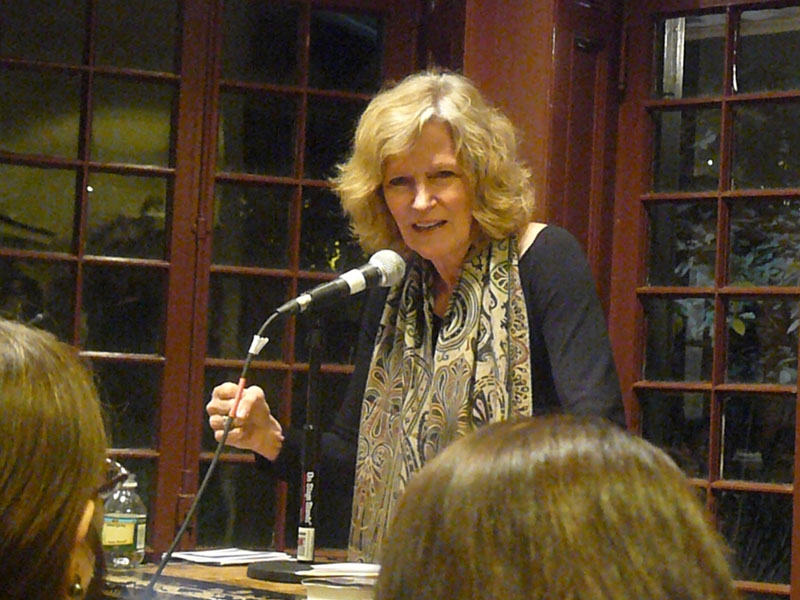
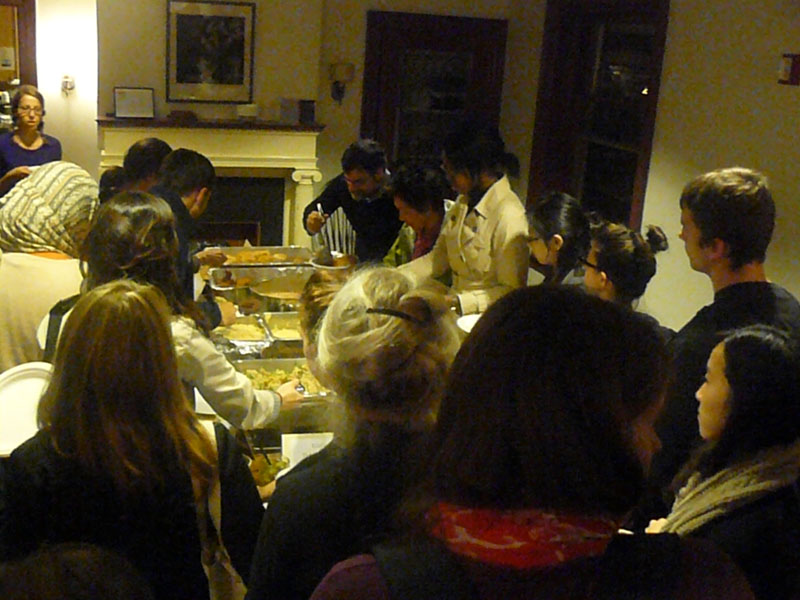
November 5, 2011: The Creative Economy
- watch: a video recording of this event via KWH-TV
- listen: to an audio recording of this event
This homecoming weekend event offered consolation to skeptical parents of English and Fine Arts majors, demonstrating the desirability of creativity in “real-world” jobs. Penn professor and moderator Peter Decherney introduced four power-player panelists before each spoke on their understanding of the broadly defined creative economy. Chief cultural officer of Philadelphia Gary Steuer provided an apt start to the program, emphasizing the importance of a “seamless flowing back and forth” between for-profit and non-profit arts endeavors in today’s knowledge economy. Cheryl J. Family of MTV added that for many corporations, creative leadership is considered a “secret sauce” despite the hesitation many companies display towards the term; oval-shaped Kleenex boxes and content-theft muffin halves were among her intriguing examples. Despite a slightly nervous start which she attributed to her lack of instrument, musician and “lover of crazy ideas” Veronica Jerkiewicz spoke eloquently about her performance project Classical Revolution. GRID magazine’s Alex Mulchay took a somewhat contrarian approach to creative culture by critiquing Daniel Pink’s assertions in Erin Gautsche’s recommended read A Whole New Mind. During the question and answer session, panelists described the statistically proven success of employees with arts backgrounds, the movement “to turn STEM to STEAM” (adding “arts” to “science, technology, engineering, and math”), minimizing pejorative connotations surrounding creativity, the triple bottom line, and the perplexing appeal of The Jersey Shore.
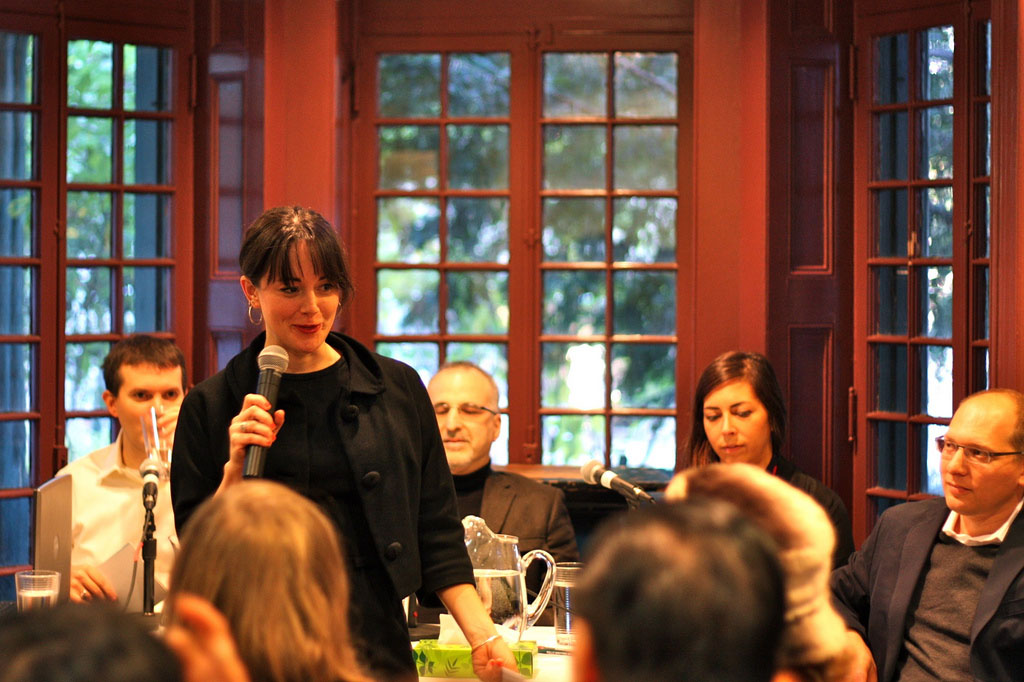
November 2, 2011: Judy's Turn
- watch: a video recording of this event via KWH-TV
- listen: to an audio recording of this event
The Writers House echoed with ’60s pop hits during this roller-coaster of a play written and directed by Penn senior Violette Carb. The atmosphere was festive from the start, as the Arts Café was transformed into both a performance space and a casual party setting (a pastel-clad Josh Herren didn’t hesitate to bop along to the introductory music). Audience members quickly learned that they were at Davy’s party, where Julie and her boyfriend Johnny have a fight over his class ring. Julie’s ex-friend, the notoriously easy Judy, and Johnny soon have a jealousy-inducing encounter in his “red-and-cream Thunderbird,” leading Julie to fight back. Before long all three confused high-schoolers find themselves in the same room, culminating in a revealing fight scene that lends insight about the play’s earlier appearance at the 2011 Fringe Festival. Suddenly lines like “it’s girls like you that created so-called girls like me” take on new meaning as cross-dressing and gender-bending ensue, giving strange perspective on each initially archetypal character.
Written and directed by Violette Carb. Starring Brooks Russell as Johnny, Ansley Sawyer as Julie, and Markie Reichert as Judy.
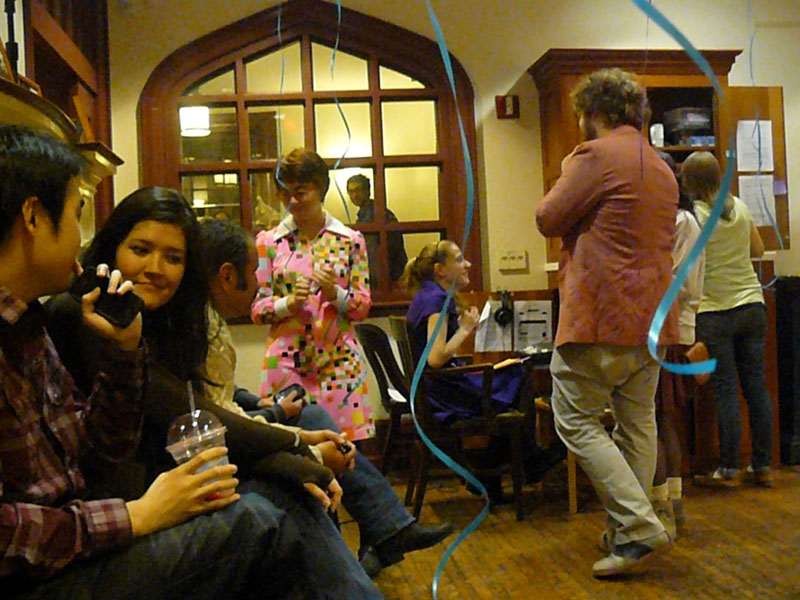
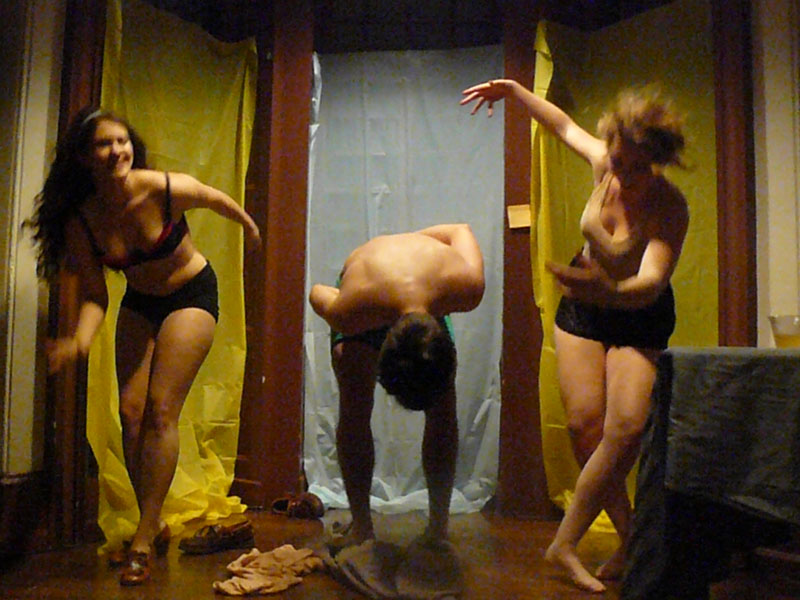
October 27, 2011: Flash Fiction Flash Mob
Inspiration comes in a flash. So do floods, and so do mobs. Immortality, too, in flashes photographic or cryogenic. Grins & knives flash, and a frowned-upon kind of trench-coated person, and loud bits of jewelry and expensive fashions. Flashes can illuminate or blind, solidify or disintegrate, define or erase, overflow or disappear.
And what is the relationship between writing & time? How much time does it take to write? How much time do we get back by reading? Or is it the other way around?
Whether you think of yourself as a "writer" or not, we're sure that you've got some creative urges you're dying to indulge. So come one and come all! Join us for an evening of group writing exercises that will explore some unconventional ways of approaching writing, exercises that will push you a little outside your usual frame of mind and free you up for some exciting creative possibilities. It'll definitely be more than a little silly, but you can't look dignified while having fun, y'know?
A series of three writers' workshops-in-miniature, each run by a different leader, each lasting about half an hour, will give you the opportunity to create short works in a short time alongside a group of other busy scribblers as we test different angles of approach to the page & each other. These extemporaneous writings will be later collected into a small anthology and made available over the web—and perhaps even a small chapbook! Participants will receive copies to commemorate the event.
There'll be tea & cookies & other munchable things, too. It'll be cozy!
Our inaugural Flash Fiction Flash Mob exercise leaders are Sam Allingham, Timothy Leonido, and Thomson Guster.
October 15, 2011: Re:Activism in Philadelphia
We are pleased to announce the first round of play of Re:Activism in Philadelphia, brought about through the collaboration of the Kelly Writers House's Creative Ventures program, the Institute of Contemporary Art, and the University of Pennsylvania's Urban Studies department.
Created by Colleen Macklin, Associate Professor of Design and Technology at Parsons and Design Director of PETLab, Re:Activism is a big urban game designed to involve its participants in their city's history of activism and public protest. The game requires its players to move about the city performing challenges at sites relevant to the history of activism, highlighting the continued significance of protest sites through conducting interviews with passersby, staging reenactments of past protests, and making creative use of protest tactics (e.g. creation of protest signs, distribution of literature) in order to gather points.
Originally designed for play in New York City, Re:Activism Philadelphia will take its players on a unique journey through Philadelphia's rich history of activism, celebrating the legacy of protest while educating its players with instances of historical activist causes, such as the Philadelphia Female Anti-Slavery Society (formed in 1833), as well as engaging them in more familiar contemporary issues, such as the school budget protests at the Criminal Justice Center in March of 2011.
The event will begin at 11:30 AM at the ICA (118 S. 36th St.) and end at the Kelly Writers House. Accept the challenge and join us for Re:Activism Philadelphia!" To RSVP, go to www.icaphila.org.
Re:Activism is a game that explores a city's history of protests, riots, and other forms of political unrest. Players competitively navigate sitesof local struggle and resistance, documenting activism-based challenges with cellphones and using SMS. This interactive game allows participants to "play their city," drawing parallels between struggles, unearth moments of local radical history, and theatrically subvert business-as-usual. Re:Activism is a collaboration between ICA, Kelly Writers House and the Department of Urban Studies, and is supported by the Office of the Provost of the University of Pennsylvania. RSVP required, visit www.icaphila.org for more details.
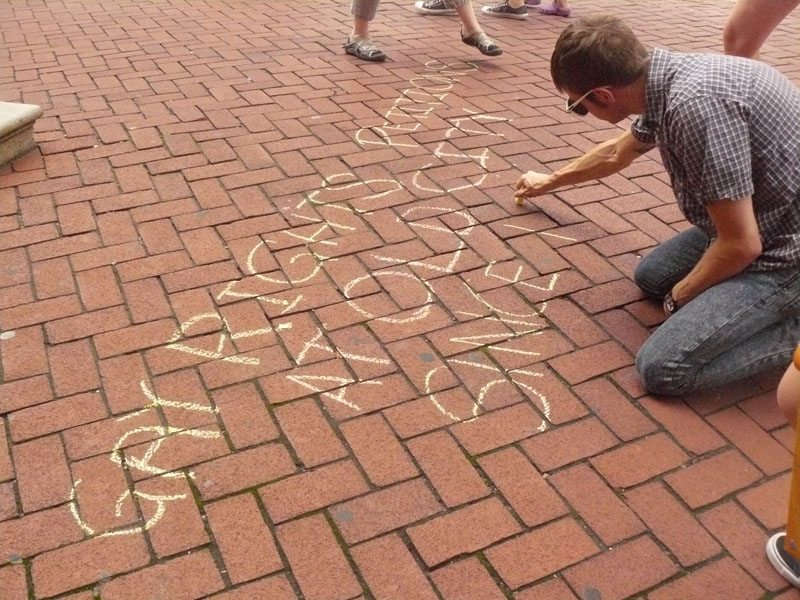
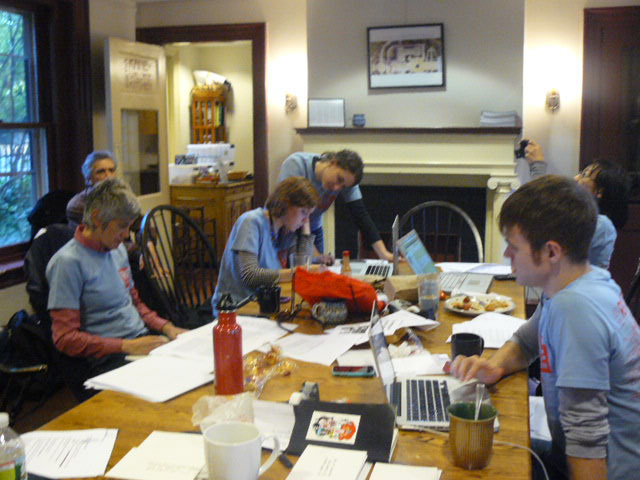
October 5, 2011: An Edible Book Party
The Kelly Writers House hosts an Edible Book Party celebrating works of art inspired by books and created in kitchens. All are welcome to join the festival to browse the library of edible titles or to contribute their own. Edible books could show up as depictions of literary characters or scenes, interpretations of titles or themes, or sculptures of actual books. Prizes will be awarded in a variety of categories, including "most punny," "most literal" and the "creative spirit award." Come hungry, come curious, and apply to Erin Gautsche for grocery funds to create and display your favorite story as an Edible Book.